


Im heutigen schnelllebigen Geschäftsumfeld ist die Kunst, erfolgreiche Meetings zu führen, wichtiger denn je: Die Art und Weise, wie wir geschäftlich interagieren, wandelt sich stetig und verbindet traditionelle Methoden mit modernen technologischen Werkzeugen.
Bei einem erfolgreichen Business-Meeting geht es heute nicht mehr nur um die Tagesordnung, sondern darum, ein Umfeld für Zusammenarbeit, Effizienz und Innovation zu schaffen. In diesem Artikel beleuchten wir die wichtigsten Strategien und bewährten Methoden für Meetings, die nicht nur ihre Ziele erreichen, sondern die Teilnehmer auch inspirieren und einbinden.
Vom Einsatz modernster Technologie bis hin zum Verständnis der menschlichen Interaktion im digitalen Zeitalter bieten wir Ihnen einen umfassenden Leitfaden, um die Kunst von produktiven Meetings in der Geschäftswelt zu meistern. Fangen wir an?
Was ist ein Business-Meeting?
Ein Business-Meeting ist eine Zusammenkunft von Personen, sei es persönlich oder virtuell, die ein gemeinsames Ziel im Zusammenhang mit dem Betrieb oder der Entwicklung eines Unternehmens verfolgen. Diese Treffen können in Umfang und Art variieren – von kurzen täglichen Abstimmungen bis hin zu aufwendigen Jahreskonferenzen.
Zu den Teilnehmern können Mitarbeiter, Führungskräfte, Stakeholder oder externe Partner gehören, deren Hauptanliegen es ist, Kommunikation, Entscheidungsfindung und Problemlösung zu fördern.
Was macht ein Business-Meeting erfolgreich?
Die Kriterien für ein erfolgreiches Business-Meeting gehen heute weit über die traditionellen Aspekte von Agenda und Anwesenheit hinaus.
Die Effektivität solcher Meetings misst sich heute daran, wie gut sie Innovationen fördern, Entscheidungen vorantreiben und ein kollaboratives Umfeld schaffen.
Dies sind die Faktoren, die zum Erfolg eines geschäftlichen Meetings beitragen:
- Klare Ziele und eine strukturierte Agenda: Ein klar definiertes Ziel, unterstützt durch eine strukturierte Agenda, schafft die Grundlage für eine fokussierte Diskussion und trägt zu engagierteren und effektiveren Meetings bei.
- Inklusive Teilhabe: Der Wert eines Meetings steigt, wenn unterschiedliche Perspektiven gehört und respektiert werden. Dies verbessert die Qualität der Diskussion und fördert das Zugehörigkeitsgefühl sowie den gegenseitigen Respekt im Team.
- Effektiver Einsatz von Technologie: Da sich viele geschäftliche Meetings vom traditionellen Büro in den digitalen Raum verlagert haben, nutzen Unternehmen häufig Videokonferenz-Plattformen, Kollaborationssoftware und KI-gestützte Analysetools, um die Kommunikation zu erleichtern und den Überblick über Diskussionen und Entscheidungen zu behalten. Darüber hinaus kann die Nutzung von ChatGPT zur Erstellung von Präsentationen die Effizienz dieser Meetings steigern, indem schnell gut strukturierte Folien erstellt werden, die die wichtigsten Punkte und Beschlüsse zusammenfassen.
- Zeitmanagement: Sicherzustellen, dass keine Zeit verschwendet wird, hilft dabei, den Fokus und die Energie aufrechtzuerhalten, was zu produktiveren Ergebnissen führt.
- Konkrete Ergebnisse: Meetings sollten in klaren und umsetzbaren Ergebnissen münden, mit definierten Aufgaben, zugewiesenen Verantwortlichkeiten und festen Fristen, um sicherzustellen, dass das Meeting zu greifbaren Resultaten führt.
- Nachbereitung und Verantwortlichkeit: Regelmäßige Updates zu Aufgaben und Fortschrittsberichte helfen dabei, die Dynamik und Verantwortlichkeit aufrechtzuerhalten. Dieser fortlaufende Prozess sorgt dafür, dass das Team engagiert bleibt und sich auf die im Meeting gesetzten Ziele konzentriert.
- Anpassungsfähigkeit und kontinuierliche Verbesserung: Erfolgreiche Meetings entwickeln sich mit den sich wandelnden geschäftlichen Anforderungen und dem Feedback der Teilnehmer weiter. Die Offenheit für innovative Formate, Strukturen oder Technologien kann die Effektivität von Meetings erheblich steigern.
- Emotionale Intelligenz und Führung: Effektive Führung, geprägt von emotionaler Intelligenz, aktivem Zuhören und Entscheidungsfreude, kann ein Meeting zielgerichtet steuern und gleichzeitig ein positives und produktives Umfeld für die beteiligten Mitarbeiter schaffen.
8 Arten von Business-Meetings
Die Welt der Business-Meetings ist vielfältig, wobei jede Art einen einzigartigen Zweck erfüllt und unterschiedliche Bedürfnisse innerhalb eines Unternehmens abdeckt.
Hier sind acht wichtige Arten von Business-Meetings, die für den Unternehmenserfolg entscheidend sind:
- Formelle Meetings
- Informelle Meetings
- Entscheidungsmeetings
- Planungsmeetings
- Projektstatus- / Update-Meetings
- Innovationsmeetings
- Teambuilding-Meetings
- Problemlösungsmeetings
1. Formelle Meetings
Formelle Meetings bilden das Rückgrat unternehmerischer Entscheidungsfindung, da an ihnen häufig das Senior Management und wichtige Stakeholder beteiligt sind. Sie werden in der Regel weit im Voraus geplant und folgen einem strengen Protokoll.
Der Zweck kann von Finanzberichten bis hin zur strategischen Planung reichen. Formelle Meetings erfordern oft eine detaillierte Vorbereitung, und die Ergebnisse haben in der Regel erhebliche Auswirkungen auf die Ausrichtung des Unternehmens.
2. Informelle Meetings
Informelle Meetings sind entspannter und spontaner. Sie schaffen ein Umfeld, das offenen Dialog, Kreativität und schnelle Problemlösungen fördert. Sie sind ein Nährboden für innovative Ideen und führen oft zu unkonventionellen Lösungen.
3. Entscheidungsmeetings
Entscheidungsmeetings sind entscheidend für die Steuerung des Geschäftsbetriebs. Sie bringen die wichtigsten Entscheidungsträger zusammen, um spezifische Themen oder Chancen zu diskutieren, zu debattieren und zu einem Abschluss zu bringen.
Effektive Entscheidungsmeetings zeichnen sich durch klare Ziele, informierte Teilnehmer und einen strukturierten Prozess zur Bewertung von Optionen und zur Entscheidungsfindung aus.
4. Planungsmeetings
Planungsmeetings sind unerlässlich, um Ziele zu setzen, Strategien zu skizzieren und sich auf zukünftige Projekte oder Veranstaltungen vorzubereiten. In diesen Sitzungen werden Zeitpläne, Ressourcen, Verantwortlichkeiten und potenzielle Herausforderungen besprochen, was zu klaren Roadmaps und Aktionsplänen führt. Darüber hinaus stellen sie sicher, dass alle Beteiligten auf dem gleichen Stand sind und ihre Rolle bei der Erreichung der gesetzten Ziele verstehen.
5. Projektstatus- / Update-Meetings
Diese Kategorie umfasst regelmäßige Meetings zur Überwachung des aktuellen Status laufender Projekte. Sie helfen dabei, das Team auf Kurs zu halten, Hindernisse aus dem Weg zu räumen und Zeitpläne oder Ressourcen bei Bedarf anzupassen. Effektive Update-Meetings sind prägnant und fokussiert und bieten eine Plattform für eine transparente Kommunikation über den Projektstatus.
6. Innovationsmeetings
Innovationsmeetings dienen dazu, neue Ideen zu generieren und kreative Lösungen für auftretende geschäftliche Probleme zu finden. Methoden wie Brainstorming, Mindmapping oder Design Thinking werden häufig eingesetzt, um die Kreativität anzuregen und die kollektive Intelligenz der Gruppe zu nutzen.
7. Teambuilding-Meetings
Teambuilding-Meetings dienen dazu, die persönlichen Beziehungen und die Dynamik zwischen Geschäftspartnern durch einen informellen Austausch zu stärken. Solche Treffen können Aktivitäten, Spiele oder Diskussionen beinhalten, die darauf abzielen, Vertrauen aufzubauen, die Kommunikation zu verbessern und das Gefühl von Zusammenhalt und Zusammenarbeit zu fördern.
8. Problemlösungs-Meetings
Problemlösungs-Meetings werden in der Regel abgehalten, um spezifische Herausforderungen oder Probleme innerhalb eines Teams oder Projekts anzugehen. Sie erfordern meist einen kooperativen Ansatz, bei dem die Teilnehmer gemeinsam ein Problem analysieren, potenzielle Lösungen identifizieren und bewerten sowie über das weitere Vorgehen entscheiden.
10 Schritte für effektive Business-Meetings
Wenn Sie ein effektives Business-Meeting leiten möchten, benötigen Sie eine strategische Vorgehensweise.
Hier sind 10 Schritte, die Ihnen helfen, produktive Business-Meetings zu führen:
- Definieren Sie das Meeting-Ziel
- Erstellen Sie eine Agenda für das Meeting
- Wählen Sie die richtigen Teilnehmer aus
- Versenden Sie die Einladungs-E-Mail
- Halten Sie sich an die Agenda
- Führen Sie ein präzises Protokoll
- Entwickeln Sie eine Strategie zur Umsetzung der Maßnahmen
- Nutzen Sie eine Methode zur Kommunikation nach dem Meeting
- Versenden Sie eine Follow-up-E-Mail
- Feedback einholen
1. Definieren Sie das Meeting-Ziel
Viele Meetings scheitern an fehlenden klaren Zielen. Indem Sie klare Zielefestlegen, können Sie bereits im Vorfeld entscheiden, ob ein Meeting überhaupt notwendig ist.
Beginnen Sie damit, das spezifische Problem oder die Gelegenheit zu identifizieren, die das Meeting erforderlich macht. Was möchten Sie bis zum Ende des Meetings erreicht haben? Suchen Sie eine Entscheidung, ein Brainstorming für neue Ideen, Informationen oder einen Konsens? Das Ergebnis sollte auf das identifizierte Problem oder die Gelegenheit abgestimmt sein.
Stellen Sie sicher, dass Ihre Meeting-Ziele SMART sind: Spezifisch, Messbar, Attraktiv, Realistisch und Terminiert.
Statt eines vagen Ziels wie „Projektfortschritt besprechen“ könnten Sie beispielsweise formulieren: „Bis zum Ende des Meetings entscheidet das Team über die nächsten Schritte des Projekts, wobei jeder Aufgabenpunkt einem Teammitglied zugewiesen und mit einer Deadline versehen wird.“
PROFI-TIPP: Klare Ziele sind entscheidend, aber bleiben Sie während des Meetings flexibel. Unerwartete Erkenntnisse oder Probleme können auftreten, auf die Sie eingehen müssen, ohne dabei die Hauptziele aus den Augen zu verlieren. Wenn ein neues Thema aufkommt, das eine längere Diskussion erfordert, sollten Sie dafür ein separates Meeting ansetzen.
2. Erstellen Sie die Meeting-Agenda
Nicht alle Themen sind gleich wichtig; manche sind dringender oder relevanter als andere. Eine gut strukturierte Agenda dient als Fahrplan, der die Teilnehmer durch die Diskussion führt, sicherstellt, dass die wichtigsten Punkte behandelt werden, und dabei hilft, den Fokus und die Produktivität aufrechtzuerhalten.
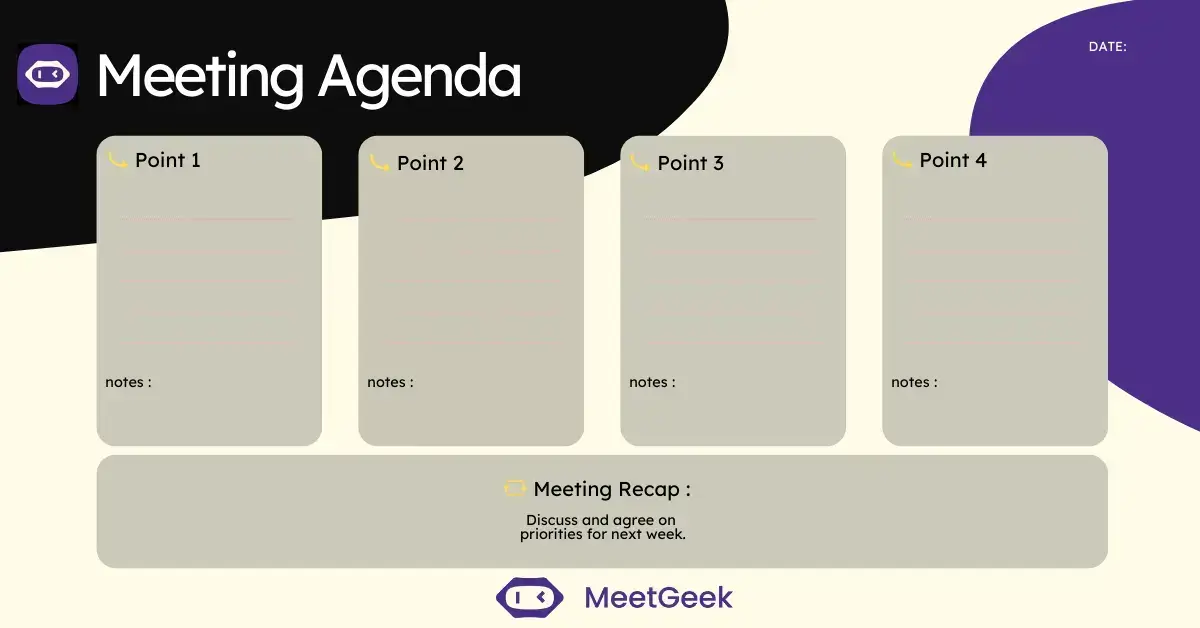
So erstellen Sie eine Agenda für ein geschäftliches Meeting:
- Legen Sie die wichtigsten Themen und Diskussionspunkte fest, die während des Meetings behandelt werden müssen.
- Fassen Sie sich bei den Beschreibungen kurz und verwenden Sie eine handlungsorientierte Sprache.
- Planen Sie für jeden Tagesordnungspunkt einen realistischen Zeitrahmen ein, berücksichtigen Sie dabei jedoch die Komplexität und Bedeutung des Themas.
- Denken Sie daran, Zeit für Vorstellungsrunden, Pausen und organisatorische Angelegenheiten einzuplanen.
- Ordnen Sie die Tagesordnungspunkte logisch an und achten Sie darauf, wie die Themen ineinander übergehen.
- Geben Sie an, wer den jeweiligen Tagesordnungspunkt leitet und welche Ergebnisse oder Resultate erwartet werden.
PROFI-TIPP: Holen Sie sich Input von den Teilnehmenden, wenn Sie die Agenda erstellen. Sie haben möglicherweise wertvolle Erkenntnisse oder spezifische Themen, die sie ansprechen möchten. Senden Sie die Tagesordnung zudem rechtzeitig vor dem Meeting an alle Teilnehmenden, damit diese sich vorbereiten, Informationen sammeln und einen konstruktiven Beitrag leisten können.
3. Wählen Sie die richtigen Teilnehmenden aus
Die richtige Mischung an Teilnehmenden kann produktive Diskussionen vorantreiben, die Zusammenarbeit fördernund sicherstellen, dass Entscheidungen effizient getroffen werden.
Ermitteln Sie zunächst die für jeden Tagesordnungspunkt erforderliche Expertise und das nötige Fachwissen und bestimmen Sie die wichtigsten Stakeholder, die zu deren Umsetzung beitragen können.
Identifizieren Sie außerdem Entscheidungsträger oder Personen mit Entscheidungsbefugnis für Tagesordnungspunkte, die Beschlüsse oder Genehmigungen erfordern, um den Entscheidungsprozess zu beschleunigen und Verzögerungen zu vermeiden.
PROFI-TIPP: Auch wenn es wichtig ist, wichtige Stakeholder und Experten einzubeziehen, sollten Sie eine überschaubare Gruppengröße anstreben. Beobachter sollten nur dann anwesend sein, wenn ihr Beitrag einen wesentlichen Mehrwert bietet oder sie aus Gründen der Transparenz und Compliance erforderlich sind.
Obwohl Manager in der Regel das letzte Wort haben, sollten Sie vorrangig Personen einbeziehen, die direkt von den Ergebnissen des Meetings betroffen sind. Dies stellt sicher, dass ihre Bedenken gehört und ihre Beiträge berücksichtigt werden, was ein Gefühl der Eigenverantwortung und Akzeptanz schafft.
PROFI-TIPP #2: Bestimmen Sie Ersatzteilnehmer für den Fall, dass primäre Teilnehmer verhindert sind, um sicherzustellen, dass das Meeting auch bei unvorhergesehenen Terminkonflikten reibungslos ablaufen kann.
4. Versenden der Meeting-Einladung per E-Mail
Eine effektive Einladungs-E-Mail stellt nicht nur sicher, dass alle wichtigen Teilnehmer über die Details des Meetings informiert sind, sondern gibt auch den Ton für ein produktives Meeting vor.
Hier sind die Schritte für den Versand der perfekten Einladungs-E-Mail für ein geschäftliches Meeting:
- Beginnen Sie mit einer aussagekräftigen Betreffzeile: Formulieren Sie eine Betreffzeile, die den Zweck und die Wichtigkeit des Meetings vermittelt. Zum Beispiel: „Einladung: Quartals-Vertriebsmeeting – Handlungsbedarf“.
- Sprechen Sie die Empfänger korrekt an: Personalisieren Sie Ihre E-Mail, indem Sie die Empfänger mit ihrem Namen ansprechen. Verwenden Sie professionelle Titel (z. B. Herr, Frau, Dr.), es sei denn, ein lockererer Ton ist aufgrund Ihrer Unternehmenskultur und Ihrer Beziehung zu den Empfängern angemessen.
- Beginnen Sie mit einer professionellen Begrüßung: Eröffnen Sie Ihre E-Mail mit einer höflichen und professionellen Anrede, wie „Sehr geehrter Herr Peterson“ oder „Hallo zusammen“. Vermeiden Sie allzu informelle Begrüßungen, insbesondere bei der Kommunikation mit externen Stakeholdern.
- Zweck des Meetings angeben: Nennen Sie im ersten Absatz kurz und prägnant den Zweck des Meetings sowie die konkreten Ziele, die Sie erreichen möchten, um den Empfängern den nötigen Kontext zu geben.
- Datum, Uhrzeit und Dauer angeben: Geben Sie Datum, Uhrzeit und die voraussichtliche Dauer des Meetings an. Planen Sie Meetings zu angemessenen Zeiten und fügen Sie Zeitzoneninformationen hinzu, falls die Teilnehmer aus verschiedenen Regionen kommen. Verwenden Sie ein leicht verständliches Format, wie zum Beispiel „Dienstag, 30. Januar 2024, von 10:00 bis 11:30 Uhr (GMT)“.
- Meeting-Agenda beifügen: Fügen Sie die Agenda des Meetings bei oder binden Sie sie direkt in die E-Mail ein, damit sich die Teilnehmer vorbereiten und den Ablauf des Meetings nachvollziehen können.
- Ort oder Details zum virtuellen Meeting nennen: Bei einem persönlichen Treffen geben Sie den genauen Ort an, idealerweise mit einem Link zu einer Karte. Bei virtuellen Meetings nennen Sie die Plattform (z. B. Zoom, Microsoft Teams) und stellen Sie die notwendigen Zugangsdaten bereit, einschließlich Meeting-ID und Passwort.
- Erforderliche Vorbereitung angeben: Falls sich die Teilnehmer im Voraus vorbereiten oder bestimmte Unterlagen mitbringen müssen, kommunizieren Sie diese Anforderungen klar und deutlich.
- Um Rückmeldung (RSVP) bitten: Bitten Sie die Empfänger höflich, ihre Teilnahme bis zu einem bestimmten Datum zu bestätigen, um die Teilnehmerzahl abschätzen und gegebenenfalls Anpassungen vornehmen zu können.
- Dank aussprechen: Schließen Sie die E-Mail mit einem höflichen Dank für die Zeit und die Teilnahme der Empfänger ab.
- Signatur und Kontaktinformationen: Fügen Sie Ihren vollständigen Namen, Ihre Berufsbezeichnung und Ihre Kontaktdaten in Ihre E-Mail-Signatur ein, damit die Empfänger Sie bei Fragen oder Anliegen erreichen können.
5. An die Meeting-Agenda halten
Eine effektive Agenda zu erstellen ist erst der Anfang; die eigentliche Herausforderung besteht darin, sie während des geschäftlichen Meetings auch einzuhalten.
Der erste Schritt besteht darin, einen Moderator für das Meeting zu bestimmen, der für den Gesprächsfluss und die Struktur verantwortlich ist. Wählen Sie jemanden, der geschickt darin ist, die Zeit im Blick zu behalten und den Fokus zu wahren.

Wenn eine Diskussion länger dauert als geplant, sollte der Moderator eingreifen und vorschlagen, das Thema später erneut aufzugreifen oder einen Folgetermin zu vereinbaren, um es detaillierter zu besprechen.
Wenn jemand einen Kommentar oder eine Frage einbringt, die nicht zum Thema gehört, gehen Sie kurz darauf ein und lenken Sie das Gespräch dann zurück zum Leitfaden. Sie könnten zum Beispiel sagen: „Das ist ein interessanter Punkt, aber lassen Sie uns das separat besprechen, nachdem wir unseren aktuellen Tagesordnungspunkt abgeschlossen haben.“
PROFI-TIPP #1: Erstellen Sie einen „Parkplatz“, auf dem themenfremde oder weniger dringende Punkte für eine spätere Diskussion notiert werden können. Dies verhindert, dass das aktuelle Meeting vom Kurs abkommt, und stellt gleichzeitig sicher, dass wichtige Anliegen nicht vergessen werden.
PROFI-TIPP #2: Auch wenn es wichtig ist, sich an den ursprünglichen Plan zu halten, seien Sie offen für leichte Abweichungen, wenn diese positiv zu den Zielen des Meetings beitragen. Entscheiden Sie nach eigenem Ermessen, ob Sie neue Themen vertiefen oder mit der geplanten Agenda fortfahren möchten.
6. Führen Sie präzise Protokolle
Ihre Fähigkeit, wesentliche Informationen, Entscheidungen und Aufgaben festzuhalten, ist entscheidend, um Verantwortlichkeiten zu klären und sicherzustellen, dass wertvolle Erkenntnisse bewahrt und umgesetzt werden.
So führen Sie ein Meeting-Protokoll bei geschäftlichen Meetings:
- Nutzen Sie die richtigen Hilfsmittel: Wählen Sie die passenden Werkzeuge für Ihre Notizen aus. Ob Notizbuch und Stift oder eine digitale App – entscheiden Sie sich für das, was für Sie am besten funktioniert und effizientes Mitschreiben ermöglicht.
- Schaffen Sie eine klare Struktur: Etablieren Sie ein strukturiertes Notizformat , das Bereiche für Datum, Teilnehmer, Tagesordnungspunkte, wichtige Diskussionspunkte, Entscheidungen und Aufgaben enthält. Ein einheitliches Format sorgt dafür, dass Ihre Notizen übersichtlich und leicht nachvollziehbar bleiben.
- Aktiv zuhören: Konzentrieren Sie sich auf die Hauptpunkte, wesentlichen Erkenntnisse und getroffenen Entscheidungen. Versuchen Sie nicht, alles wortwörtlich zu protokollieren, da dies überfordernd und kontraproduktiv sein kann.
- Fassen Sie die wichtigsten Punkte zusammen: Halten Sie das Wesentliche der Diskussionen und Entscheidungen fest, indem Sie prägnante Formulierungen und Aufzählungspunkte verwenden. Heben Sie Aufgaben hervor und weisen Sie diese den entsprechenden Personen zu.
- Halten Sie fest, wer was gesagt hat: Wenn relevant, ordnen Sie Kommentare oder Beiträge bestimmten Teilnehmern zu. Dies ist besonders wichtig, wenn unterschiedliche Meinungen festgehalten werden oder wenn dokumentiert werden muss, wer für bestimmte Aufgaben verantwortlich ist.
- Bleiben Sie objektiv: Konzentrieren Sie sich auf sachliche Informationen und den Inhalt des Meetings. Vermeiden Sie es, persönliche Meinungen oder Wertungen in Ihre Dokumentation einfließen zu lassen.
- Verwenden Sie Abkürzungen und Symbole: Entwickeln Sie ein System aus Abkürzungen und Symbolen, um effizienter zu notieren. Verwenden Sie beispielsweise „A“ für „Aufgabe“, „F“ für „Frage“ oder Pfeile, um Entscheidungen zu kennzeichnen.
- Bleiben Sie am Ball: Achten Sie darauf, dass Ihre Notizen mit dem Tempo des Meetings Schritt halten. Bitten Sie bei Bedarf höflich um eine kurze Pause, falls das Gespräch zu schnell voranschreitet.
- Überprüfen und klären: Gehen Sie am Ende jedes Tagesordnungspunkts oder regelmäßig während des Meetings Ihre Notizen durch, um sicherzustellen, dass sie korrekt und vollständig sind. Wenn etwas unklar ist, zögern Sie nicht, den Sprecher um eine Erläuterung zu bitten.
Wenn regelmäßige Meetings an Ihrem Arbeitsplatz zum Standard gehören oder das Mitschreiben die Effektivität Ihrer Besprechungen beeinträchtigt, sollten Sie eine Meeting-Automatisierungsplattform wie MeetGeek nutzen, um den gesamten Prozess zu optimieren.
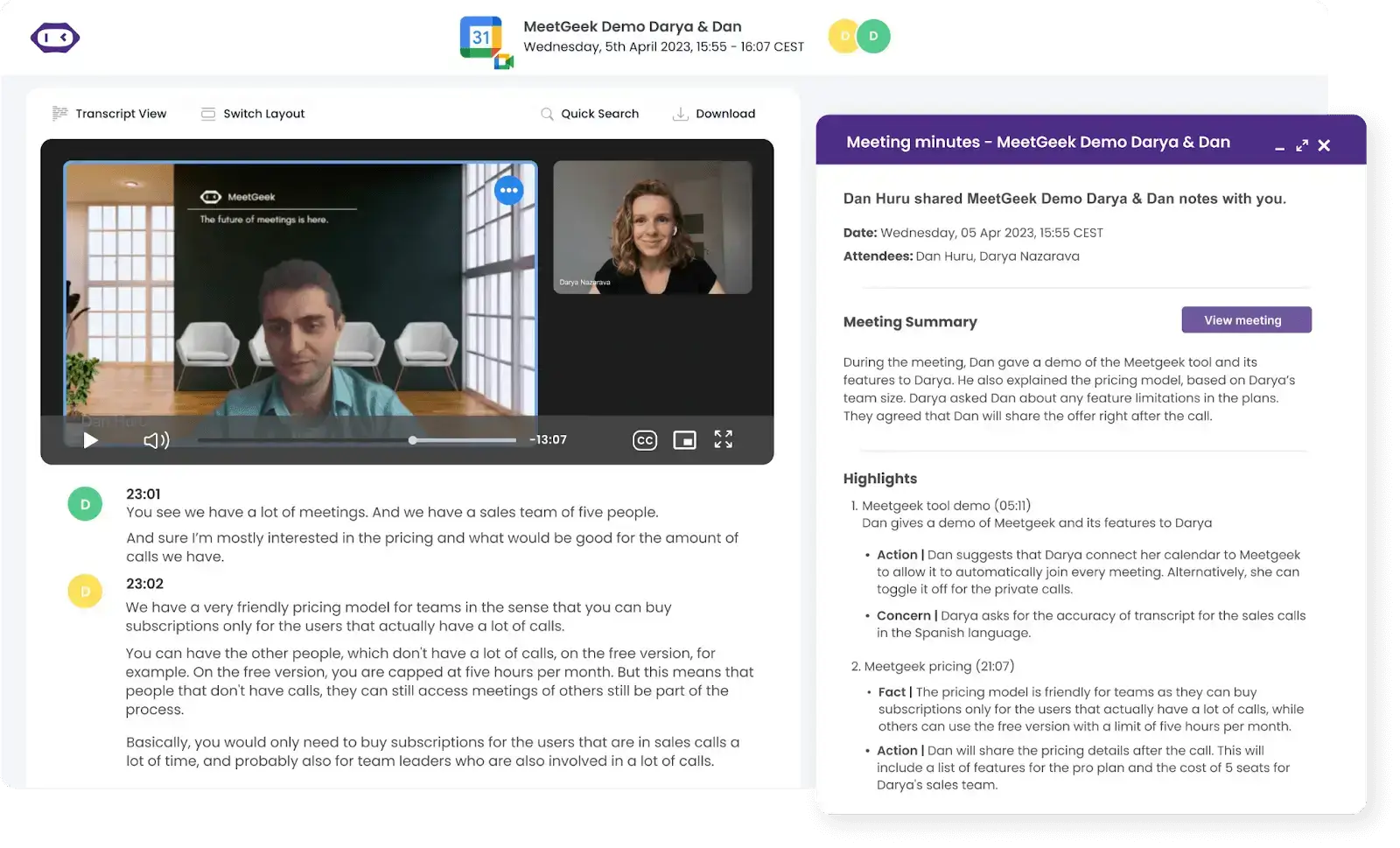
So können Sie MeetGeek für Ihre geschäftlichen Meetings einsetzen:
- Automatisierte Aufzeichnung und Transkription: MeetGeek nimmt automatisch an den Meetings in Ihrem Kalender teil und erstellt ein umfassendes Archiv, in dem alle Ihre Besprechungsinformationen gespeichert werden.
- KI-Zusammenfassungen: Verschwenden Sie keine Stunden mehr damit, die wichtigsten Punkte aus Ihren Meetings herauszufiltern – lassen Sie das die KI-Algorithmen von MeetGeek für Sie erledigen.
- Extraktion von Aufgaben: MeetGeek extrahiert das Was, das Werund das Wann aus jedem Ihrer Meetings, damit garantiert keine Aufgabe in Vergessenheit gerät.
- Nahtlose Integration: Ob CRM-Software, Wissensdatenbanken oder Projektmanagement-Tools – MeetGeek lässt sich problemlos in Ihren bestehenden Tech-Stack integrieren.
- Anpassbare Workflows: Für ein vollautomatisiertes Erlebnis können Sie Workflows erstellen, die die Verbreitung Ihrer Meeting-Daten optimieren.
- Meeting-Analyse: MeetGeek liefert Meeting-Berichte, mit denen Sie die Effektivität Ihrer geschäftlichen Besprechungen bewerten können.
7. Entwickeln Sie eine Strategie zur Umsetzung Ihrer Aufgaben
Erfolgreich umgesetzte Aufgaben sind der Motor für Fortschritt und die Umsetzung von Entscheidungen. Doch die Fähigkeit, eine Strategie zur Erledigung dieser Aufgaben effektiv zu entwickeln und umzusetzen, unterscheidet erfolgreiche Profis vom Rest.
Nehmen Sie sich nach dem Meeting etwas Zeit, um alle Aufgaben durchzugehen, einschließlich einer klaren Beschreibung der Aufgabe, der verantwortlichen Person oder des Teams sowie der Frist für die Fertigstellung.
Bewerten Sie anschließend die Wichtigkeit und Dringlichkeit jeder Aufgabe. Kategorisieren Sie diese basierend auf ihrer Auswirkung und den Fristen. Priorisieren Sie Aufgaben, die einen wesentlichen Einfluss auf die Gesamtziele haben.
Je nach Komplexität der einzelnen Aufgaben sollten Sie diese in kleine, umsetzbare Schritte unterteilen. Dies macht den Ausführungsprozess überschaubarer und ermöglicht eine schrittweise Erledigung.
Stellen Sie abschließend die erforderlichen Ressourcen bereit – sei es Personal, Budget, Technologie oder Material –, um die Umsetzung der Aufgaben effektiv zu unterstützen.
PROFI-TIPP: Wenn Sie noch einen Schritt weiter gehen möchten, erstellen Sie einen Verantwortlichkeitsplan, um sicherzustellen, dass Aufgaben nicht vergessen oder verzögert werden. Führen Sie regelmäßige Follow-up-Meetings oder Check-ins durch, um den Fortschritt zu verfolgen.
8. Nutzen Sie eine Methode für die Kommunikation nach dem Meeting
Erfahrene Geschäftsleute wissen, dass das Finden und Nutzen der richtigen Kommunikationsmethode nach dem Meeting entscheidend für Produktivität und Verantwortlichkeit ist.
Nutzen Sie Projektmanagement-Software oder Kollaborationstools, um die Kommunikation nach dem Meeting zu erleichtern. Diese Plattformen ermöglichen eine einfache Nachverfolgung von Aufgaben, Echtzeit-Updates zu den besprochenen Themen und eine transparente Zusammenarbeit innerhalb der gesamten Gruppe.
Stellen Sie sicher, dass Ihr bevorzugtes Tool den Teammitgliedern oder Geschäftspartnern Zugriff auf die notwendigen Ressourcen, Informationen und Unterstützung bietet, damit sie ihre Aufgaben effektiv erledigen können.
9. Senden Sie eine Follow-up-E-Mail
Das Versenden einer Follow-up-E-Mail nach einem Geschäftstermin ist ein entscheidender Schritt, um die Kommunikation aufrechtzuerhalten, Kernpunkte zu festigen und sicherzustellen, dass Aufgaben zeitnah erledigt werden.
Alternativ können Sie MeetGeek diese Arbeit für Sie erledigen lassen, damit Sie sich den zusätzlichen Aufwand sparen und sich auf das Wesentliche konzentrieren können: das Handeln. MeetGeek nutzt fortschrittliche KI-Algorithmen, die Follow-up-E-Mails mit allen relevanten Meeting-Informationen erstellen, einschließlich Aufgaben, Zusammenfassungen oder sogar vollständigen Transkripten.

Hier ist eine umfassende Checkliste für den Versand einer effektiven Follow-up-E-Mail nach einem Geschäftstermin:
- Senden Sie die Nachbereitung zeitnah nach dem Meeting, damit die Diskussion bei allen präsent bleibt.
- Beginnen Sie mit einer professionellen Anrede und sprechen Sie die Empfänger mit Namen und Titel an.
- Bedanken Sie sich für die Zeit und die Beiträge der Teilnehmer während des Meetings. Das sorgt für eine positive Grundstimmung.
- Fassen Sie die wichtigsten Themen und Entscheidungen des Meetings kurz zusammen. Dies unterstreicht die Ziele und Ergebnisse des Treffens.
- Listen Sie die Aufgaben auf, die während des Meetings vergeben wurden. Verwenden Sie Aufzählungszeichen oder nummerierte Listen, um die Übersichtlichkeit zu erhöhen.
- Geben Sie für jede Aufgabe die verantwortliche Person sowie die vereinbarte Frist an. Das schafft Verbindlichkeit.
- Fügen Sie alle relevanten Dokumente, Ressourcen oder Referenzen bei, die die Teilnehmer zur Erledigung ihrer Aufgaben benötigen.
- Skizzieren Sie die nächsten Schritte und betonen Sie, wie wichtig eine zeitnahe Umsetzung ist.
- Bleiben Sie professionell und vermeiden Sie unnötigen Fachjargon oder langatmige Erklärungen.
- Wählen Sie einen Betreff, der den Zweck der E-Mail widerspiegelt, wie zum Beispiel „Nachbereitung unseres Meetings am [Datum]“.
- Lesen Sie Ihre E-Mail gründlich Korrektur, um Fehler zu vermeiden und die Klarheit sicherzustellen.
- Schließen Sie die E-Mail mit einem Dank für die Teilnahme und die Zusammenarbeit ab.
- Versehen Sie die E-Mail mit Ihrem Namen, Titel, Unternehmen und Ihren Kontaktdaten, damit man Sie leicht erreichen kann.
- Stellen Sie sicher, dass die Nachbereitung an alle Meeting-Teilnehmer gesendet wird, auch an diejenigen, die zwar keine direkten Aufgaben haben, aber auf dem Laufenden bleiben müssen.
10. Feedback einholen
Feedback nach einem geschäftlichen Meeting einzuholen, ist eine wertvolle Methode, um zukünftige Treffen zu verbessern und die allgemeine Produktivität zu steigern.
Um effektiv Feedback zu erhalten, sollten Sie Ihre Anfrage innerhalb eines angemessenen Zeitrahmens versenden – idealerweise ein oder zwei Tage nach dem Meeting, solange die Diskussionen noch frisch sind.
Heben Sie bestimmte Aspekte des Meetings hervor, zu denen Sie Feedback wünschen, wie etwa die Relevanz der Tagesordnung, die Struktur des Meetings, die Qualität der Moderation oder die allgemeine Effektivität. Betonen Sie zudem, dass Sie ehrliches und konstruktives Feedback begrüßen, egal ob positiv oder negativ.
Nennen Sie eine angemessene Frist für die Einreichung des Feedbacks, um zeitnahe Antworten zu gewährleisten, und danken Sie den Teilnehmern im Voraus für ihre Bereitschaft, Feedback zu geben.
PROFI-TIPP: Bieten Sie Flexibilität, indem Sie verschiedene Feedback-Kanäle bereitstellen, wie etwa eine direkte Antwort per E-Mail, eine Online-Umfrage oder sogar ein persönliches Feedback-Gespräch. Wenn Sie auf die Vorlieben der Teilnehmer eingehen, erhöhen Sie die Wahrscheinlichkeit für Rückmeldungen.
Führen Sie erfolgreiche Business-Meetings mit MeetGeek!
In der sich ständig wandelnden Geschäftswelt bleiben produktive Meetings der Kern effektiver Kommunikation, Zusammenarbeit und Entscheidungsfindung. Wenn Sie die in diesem Artikel beschriebenen Prinzipien befolgen, können Sie jedes Ihrer Business-Meetings in eine dynamische und wirkungsvolle Sitzung verwandeln, die echte Ergebnisse liefert.
Um Ihre Meeting-Erfahrung weiter zu verbessern und die neuesten Fortschritte in der Meeting-Technologie zu nutzen, sollten Sie MeetGeekin Betracht ziehen. Diese innovative Plattform kombiniert KI-gestützte Funktionen mit einer benutzerfreundlichen Oberfläche, um Ihre Meeting-Prozesse zu optimieren – von der automatisierten Aufzeichnung und Protokollierung bis hin zur datengestützten Analyse und effizienten Nachbereitung!





.avif)