


Die meisten unproduktiven Besprechungen scheitern, weil niemand den Zweck des Meetings klar genug definiert hat.
Eine gut ausgearbeitete Tagesordnung unterscheidet ein produktives Meeting von einem Gespräch, das sich über mehrere Stunden hinzieht, wertvolle Zeit verbrennt und ohne klare Aktionspunkte endet. Wenn Ihr Team regelmäßig Geschäftstreffen verlässt und sich nicht sicher ist, was die nächsten Schritte, Verantwortlichkeiten oder getroffenen Entscheidungen sind, liegt das Problem in der Regel an der Struktur.
In diesem Handbuch erfahren Sie, wie Sie eine Vorlage für eine Tagesordnung erstellen, mit der Sie Zeit sparen, Besprechungsteilnehmer aufeinander abstimmen und effektivere Besprechungen in Ihrem gesamten Unternehmen durchführen können, von Teambesprechungen über Vertriebsbesprechungen bis hin zu formellen Vorstandssitzungen.
Was ist eine Vorlage für eine Tagesordnung?
EIN Tagesordnung der Sitzung Die Vorlage ist eine wiederverwendbare Gliederung, mit der Sie Besprechungen einheitlich planen und organisieren können. Anstatt vor jeder Teambesprechung bei Null anzufangen, verwenden Sie ein strukturiertes Format, das sicherstellt, dass alle wichtigen Details behandelt werden.
Im Kern definiert eine Sitzungsagenda:
- Der Zweck des Treffens
- Klare Besprechungsziele und Hauptziele
- Die Diskussionsthemen oder Tagesordnungspunkte
- Die für jedes Thema vorgesehene Zeit
- Die Sitzungsteilnehmer und ihre Verantwortlichkeiten
- Die erwarteten Ergebnisse und Folgeaufgaben
Wenn Sie die Vorlagen für die Tagesordnung in Ihrem Team standardisieren, stellen Sie sicher, dass Besprechungen einheitlich vorbereitet, durchgeführt und dokumentiert werden. Im Laufe der Zeit reduziert dies den Zeitaufwand für unnötige Diskussionen erheblich und verbessert die Zusammenarbeit im Team.
Warum die meisten Besprechungen zu unproduktiven Besprechungen werden
Viele Teams gehen davon aus, dass Besprechungen von Natur aus ineffizient sind. In Wirklichkeit haben die meisten unproduktiven Besprechungen die gleichen Ursachen:
- Keine klar definierten Besprechungsziele
- Zu viele Diskussionspunkte sind in der begrenzten Sitzungszeit gepackt
- Keine Eigenverantwortung für jeden Tagesordnungspunkt
- Keine Dokumentation von Sitzungsprotokoll
- Kein System zur Nachverfolgung der Aktionspunkte vor dem nächsten Meeting
Ohne einen strukturierten Plan werden Konversationen erweitert, um die verfügbare Zeit auszufüllen. Aus einer 30-minütigen Teambesprechung werden 60 Minuten. Aus einer strategischen Diskussion wird ein vages Brainstorming. Die Leute wiederholen dieselben Ideen in der nächsten Besprechung, weil niemand die Entscheidungen richtig verfolgt hat.
Eine effektive Tagesordnung löst diese Probleme, bevor das Meeting überhaupt beginnt.
Die wichtigsten Bestandteile einer effektiven Sitzungsagenda
Bevor Sie eine kostenlose Vorlage für eine Besprechungsagenda verwenden, ist es wichtig zu verstehen, warum eine Besprechungsagenda tatsächlich funktioniert.
Eine effektive Tagesordnung besteht nicht nur aus einer Liste von Diskussionsthemen. Es handelt sich um eine strukturierte Gliederung, die den Zweck der Besprechung mit klaren Zielen, zielgerichteten Gesprächen und messbaren nächsten Schritten verbindet. Ganz gleich, ob Sie eine Teambesprechung, Verkaufsbesprechung, Personalbesprechung oder eine formelle Vorstandssitzung planen, es gelten dieselben Kernkomponenten.
Hier erfahren Sie, was Ihre Agenda beinhalten sollte und warum jedes Element wichtig ist.
1. Einzelheiten des Treffens
Fangen Sie mit den Grundlagen an:
- Titel der Sitzung
- Datum
- Uhrzeit des Treffens
- Standort oder virtueller Link, z. B. Microsoft-Teams oder Zoom
Diese Details wirken einfach, schaffen aber Klarheit und reduzieren Reibung. Wenn sich Besprechungen wiederholen, trägt eine einheitliche Formatierung auch dazu bei, die Konsistenz in Ihrem Unternehmen sicherzustellen.
Klare Besprechungsdetails wecken Erwartungen und verhindern Verwirrung in letzter Minute.
2. Der Zweck des Treffens
Jedes Treffen sollte eine Frage klar beantworten: Warum sind wir hier?
Der Zweck des Treffens definiert den Grund für das Gespräch. Es bringt die Teilnehmer zusammen, bevor die Diskussion beginnt, und verhindert, dass in der Besprechung Ideen, die nichts miteinander zu tun haben, abdriftet.
Der Zweck könnte beispielsweise sein:
- Überprüfen Sie die vierteljährliche Leistung
- Budgetzuweisung genehmigen
- Halten Sie sich an den Zeitplan für die Produkteinführung
Wenn der Zweck unklar ist, nimmt der Zeitaufwand zu und die Ergebnisse sinken. Wenn es spezifisch ist, werden Besprechungen von Haus aus produktiver.
3. Wichtigste Ziele
Die Ziele des Treffens setzen den Zweck in messbare Ergebnisse um.
Nennen Sie zwei bis vier klare Ziele, die definieren, wie Erfolg am Ende des Meetings aussieht. Diese könnten Folgendes beinhalten:
- Schließen Sie die Anbieterauswahl ab
- Weisen Sie die Verantwortung für Folgeaufgaben zu
- Genehmigen Sie die nächste Kampagnenstrategie
Starke Ziele sorgen dafür, dass das Gespräch konzentriert bleibt und es einfacher ist, den Fortschritt vor dem nächsten Meeting zu verfolgen.
4. Teilnehmer und Rollen
Listen Sie die Besprechungsteilnehmer auf und klären Sie gegebenenfalls deren Beteiligung.
Nicht jedes Teammitglied benötigt das gleiche Maß an Beteiligung. Die Identifizierung, wer für die Präsentation, Genehmigung oder Mitarbeit verantwortlich ist, gewährleistet eine bessere Vorbereitung und eine stärkere Zusammenarbeit im Team.
Dieser Schritt hilft auch, überfüllte Besprechungen zu vermeiden, bei denen zu viele Teilnehmer die Entscheidungsfindung verzögern.
5. Tagesordnungspunkte mit Zeitblöcken und Zuständigkeiten
Dies ist der Kern Ihrer Besprechungsagenda.
Teilen Sie das Meeting in klare Tagesordnungspunkte oder Diskussionsthemen auf. Priorisieren Sie sie nach Wichtigkeit und Dringlichkeit. Geben Sie für jeden Tagesordnungspunkt Folgendes an:
- Ein kurzer Titel
- Das verantwortliche Teammitglied
- Die zugewiesene Zeit
Zeitblöcke schützen wertvolle Zeit und sorgen dafür, dass die Diskussion ausgewogen bleibt. Eigenverantwortung gewährleistet Rechenschaftspflicht und Vorbereitung.
Ohne diese beiden Elemente werden Besprechungen oft über ihre geplante Zeit hinaus verlängert und wichtige Entscheidungen bleiben ungelöst.
6. Unterstützende oder relevante Dokumente
Wenn die Diskussion von Daten, Berichten oder früheren Sitzungsprotokollen abhängt, nehmen Sie Links zu relevanten Dokumenten direkt in die Tagesordnung auf.
Das Teilen von Materialien im Voraus über Google Docs, Microsoft Word oder Ihre Kollaborationsplattform ermöglicht es den Teilnehmern, sich angemessen vorzubereiten. Dadurch verlagert sich der Schwerpunkt der Besprechung von der Überprüfung von Informationen auf das Treffen von Entscheidungen.
Vorbereitete Teilnehmer führen zu effektiveren Besprechungen.
7. Aktionspunkte und Folgeaufgaben
Keine Tagesordnung ist vollständig ohne einen eigenen Abschnitt für Aktionspunkte.
In jeder Aufgabe sollte klar angegeben werden:
- Was muss getan werden
- Wer ist verantwortlich
- Die Frist
Die Dokumentation von Folgeaufgaben gewährleistet die Rechenschaftspflicht und verhindert wiederholte Gespräche in zukünftigen Besprechungen. Es schafft auch Kontinuität zwischen diesem Meeting und dem nächsten Meeting.
Wenn diese Komponenten konsistent in Ihren Agenda-Vorlagen enthalten sind, werden Besprechungen strukturiert, vorhersehbar und ergebnisorientiert statt reaktiv und unproduktiv.
Eine kostenlose Vorlage für die Tagesordnung für Besprechungen, die Sie anpassen können
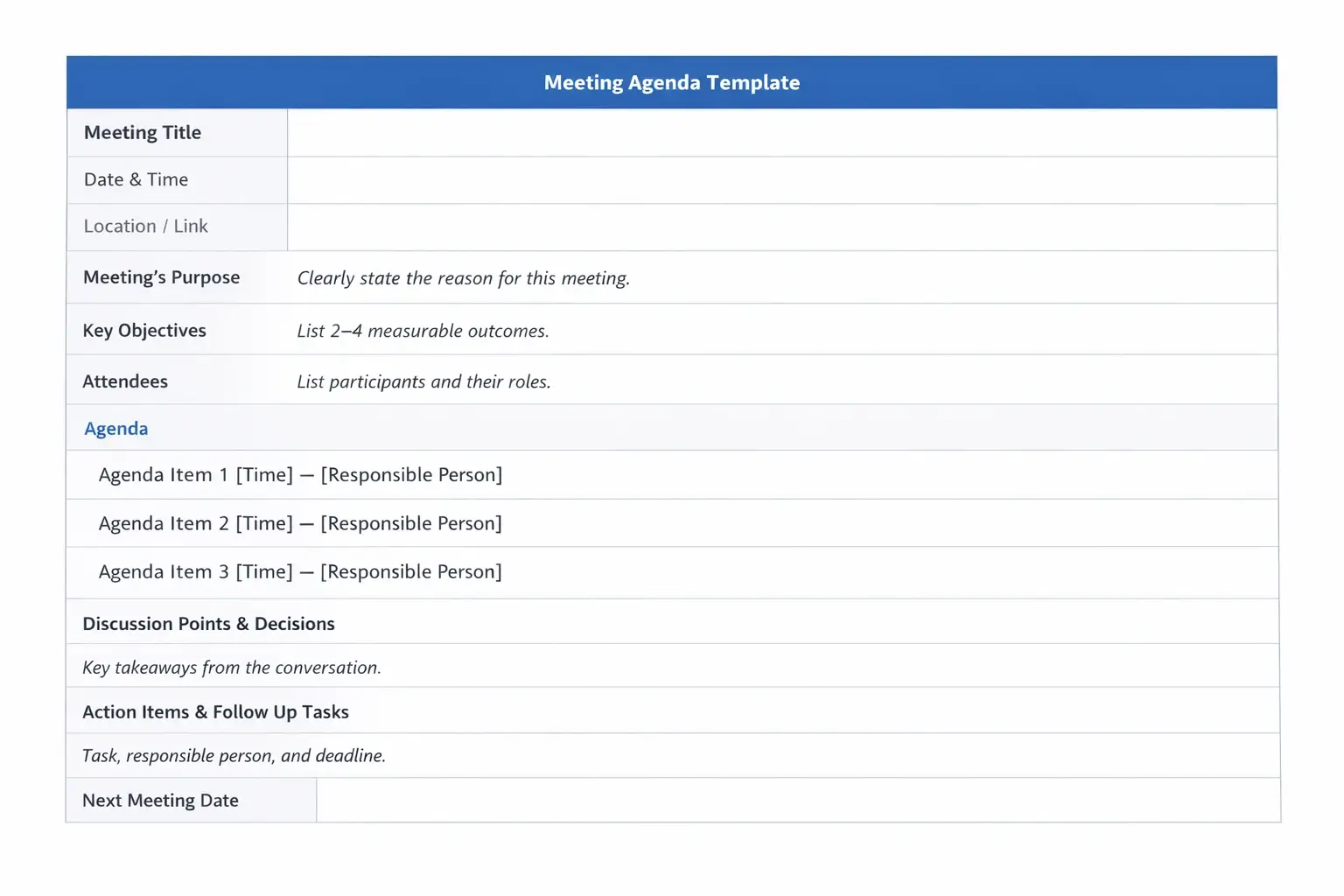
Hier ist eine praktische Vorlage für die grundlegende Tagesordnung, die Sie für die meisten Geschäftstreffen verwenden können:
Titel der Sitzung
Datum und Uhrzeit des Treffens
Standort oder Link (Microsoft Teams, Zoom usw.)
Zweck des Treffens
Geben Sie deutlich an, warum dieses Treffen stattfindet.
Wichtigste Ziele
Nennen Sie 2—4 messbare Ergebnisse.
Teilnehmer
Listen Sie die Besprechungsteilnehmer auf und klären Sie gegebenenfalls deren Rolle.
Tagesordnung
- Tagesordnungspunkt 1 (Zeitblock + verantwortlich)
- Tagesordnungspunkt 2 (Zeitblock + verantwortlich)
- Tagesordnungspunkt 3 (Zeitblock + verantwortlich)
Diskussionspunkte und Entscheidungen
Fassen Sie die wichtigsten Erkenntnisse während des Gesprächs zusammen.
Aktionspunkte und Folgeaufgaben
Geben Sie Aufgabe, verantwortliche Person und Frist an.
Nächster Sitzungstermin
Diese Beispielagenda kann leicht an die Tagesordnung einer Teambesprechung, die Struktur von Verkaufsbesprechungen oder das Format für wiederkehrende Mitarbeiterbesprechungen angepasst werden.
Das fehlende Stück: Was passiert nach dem Treffen?
Selbst die beste Vorlage für eine Besprechungsagenda schlägt fehl, wenn Folgeaufgaben nicht ordnungsgemäß verfolgt werden.
Hier verlieren viele Teams an Dynamik. Die Notizen sind in Google Docs verstreut. Das Sitzungsprotokoll ist unvollständig. Niemand überprüft Entscheidungen vor der nächsten Sitzung. Aktionselemente verschwinden in den Posteingängen.
Das Ergebnis? Die gleiche Diskussion wiederholt sich Wochen später.
Um wirklich effektivere Besprechungen abzuhalten, benötigen Sie zwei Dinge:
- Eine starke Agenda vor dem Treffen
- Ein zuverlässiges System, um alles danach zu erfassen, zu organisieren und zu verfolgen
Wie MeetGeek Ihre Agenda in messbare Ergebnisse umwandelt
Eine strukturierte Tagesordnung hilft Ihnen bei der Vorbereitung. MeetGeek stellt sicher, dass nichts verloren geht, sobald das Gespräch beginnt.
MeetGeek ist ein KI-Besprechungsassistent, der automatisch strukturierte Besprechungsnotizen für Besprechungen auf Zoom, Microsoft Teams und Google Meet aufzeichnet, transkribiert und generiert. Es funktioniert sowohl mit Bot- als auch mit No-Bot-Aufnahmeoptionen und unterstützt Teams aller Größen.
-1%202.webp)
Mit MeetGeek kannst du:
- Generieren Sie automatisch klare Sitzungsprotokolle
- Erfassen Sie wichtige Diskussionspunkte, die auf Ihre Agenda abgestimmt sind
- Aktionspunkte extrahieren und zuweisen
- Verfolgen Sie die Folgeaufgaben vor dem nächsten Meeting
- Suchen Sie sofort nach vergangenen Besprechungen
- Analysieren Sie Besprechungszeiten und Engagement-Trends
- Verwenden Sie den KI-Sprachagent, um Fragen zu früheren Besprechungen zu stellen, Entscheidungen abzurufen und Erkenntnisse aus früheren Gesprächen zu gewinnen
Anstatt manuell Notizen in Microsoft Word zu schreiben oder zwischen mehreren Google Docs zu wechseln, erhält Ihr Team automatisch strukturierte Zusammenfassungen und klare nächste Schritte.
Diese Kombination aus einer gut ausgearbeiteten Besprechungsagenda und KI-gestützter Dokumentation reduziert den Zeitaufwand für Verwaltungsarbeiten erheblich und erhöht die Rechenschaftspflicht im gesamten Team.
Bewährte Verfahren für die Tagesordnung
Die Erstellung einer Tagesordnung ist eine Sache. Sie effektiv zu nutzen ist eine andere. Diese bewährten Methoden tragen dazu bei, dass Ihre Agenda die Ergebnisse Ihrer Besprechung tatsächlich verbessert und nicht zu einem Dokument wird, das niemand liest.
1. Konzentrieren Sie sich bei der Tagesordnung auf das Ergebnis und nicht auf die Aktivitäten
Viele Tagesordnungen listen Aktivitäten statt Ergebnisse auf. Zum Beispiel ist „Marketing-Update“ eine Aktivität. „Entscheiden Sie sich für die Ausrichtung der Kampagne für das zweite Quartal“ ist ein Ergebnis.
Bevor Sie Ihre Tagesordnung fertigstellen, überprüfen Sie jeden Punkt und fragen Sie sich: Welche Entscheidung, welche Ausrichtung oder welche Fortschritte sollten aus dieser Diskussion hervorgehen? Wenn das erwartete Ergebnis unklar ist, verfeinern Sie den Tagesordnungspunkt. Ergebnisorientierte Tagesordnungen führen zu produktiven Besprechungen, da sie nicht nur zu Gesprächen, sondern auch zu Fortschritten führen.
2. Beschränken Sie die Tagesordnungspunkte, um die Sitzungszeit zu schützen
Eine der Hauptursachen für unproduktive Besprechungen ist die Überlastung der Tagesordnung. Der Versuch, zu viele Diskussionsthemen in einer einzigen Sitzung zu behandeln, führt häufig zu überstürzten Entscheidungen oder unvollendeten Gesprächen.
Seien Sie realistisch in Bezug auf Ihre zugewiesene Zeit. Wenn Ihre Besprechungszeit 45 Minuten beträgt, planen Sie keine 90 Minuten Inhalt ein. Priorisieren Sie die wichtigsten Ziele und verschieben Sie Themen mit geringerer Auswirkung auf das nächste Meeting. Eine disziplinierte Planung verhindert Überschreitungen und schützt die wertvolle Zeit Ihres Teams.
3. Senden Sie die Tagesordnung frühzeitig und rechnen Sie mit der Vorbereitung
Eine Agenda funktioniert nur, wenn die Teilnehmer sie als Vorbereitungsmaterial behandeln und nicht als Live-Dokument, das zu Beginn der Telefonkonferenz enthüllt wird.
Teilen Sie die Tagesordnung im Voraus mit und setzen Sie die Erwartung, dass die Besprechungsteilnehmer die relevanten Dokumente überprüfen und vorbereitet sind. Dadurch verlagert sich die Dynamik vom passiven Zuhören hin zum aktiven Beitrag. Besprechungen werden strategischer, wenn die Teilnehmer informiert und bereit sind, sich zu engagieren.
4. Verwenden Sie die Agenda, um Diskussionen in Echtzeit zu verwalten
Während des Treffens sollte die Tagesordnung als Leitfaden dienen, nicht nur als Plan.
Wenn sich das Gespräch ändert, kehren Sie zum aktuellen Tagesordnungspunkt zurück. Wenn ein neues Thema auftaucht, das nicht dem Zweck der Besprechung entspricht, sollten Sie es für eine zukünftige Sitzung festhalten, anstatt zuzulassen, dass es die Diskussion zum Scheitern bringt. Diese Praxis sorgt dafür, dass die Besprechungen konzentriert bleiben, ohne wertvolle Ideen zu verwerfen.
5. Schließen Sie jedes Meeting mit klaren nächsten Schritten ab
Selbst ein gut strukturiertes Meeting verliert an Wirkung, wenn es ohne definierte Aktionspunkte endet.
Reservieren Sie sich die letzten Minuten, um Entscheidungen zusammenzufassen, Verantwortlichkeiten zu bestätigen und Termine zu klären. Dadurch wird die Rechenschaftspflicht gestärkt und die Kontinuität bis zur nächsten Sitzung gewährleistet. Ohne diesen Schritt verbringen Teams in der nächsten Sitzung oft damit, ungelöste Punkte erneut zu besprechen.
Arten von Besprechungen und wie sich Ihre Agenda anpassen sollte
Tagesordnung der Teamsitzung
Die Tagesordnung einer Teambesprechung konzentriert sich in der Regel auf die Ausführung. Bei diesen Besprechungen geht es um Statusaktualisierungen, Blockaden, sich ändernde Prioritäten und kurzfristige nächste Schritte. Bei der Tagesordnung sollten Klarheit und Zeitkontrolle im Vordergrund stehen, damit Aktualisierungen nicht die gesamte Besprechungszeit in Anspruch nehmen. Da Teambesprechungen häufig wiederkehrend sind, ist Konsistenz wichtig. Jedes Mal dieselbe Struktur zu verwenden, hilft dem Team, Fortschritte zu verfolgen, Ergebnisse zu vergleichen und die Rechenschaftspflicht zwischen einer Besprechung und der nächsten sicherzustellen.
Verkaufsgespräche
Verkaufsgespräche sind leistungsorientiert und stark metrikorientiert. Die Tagesordnung eines Verkaufsgesprächs konzentriert sich in der Regel auf den Zustand der Pipeline, Umsatzziele, Konversionsdaten, Einwände und neue Geschäftschancen. Die Ziele sollten messbar und mit Ergebnissen verknüpft sein. In diesem Zusammenhang muss die Agenda die Diskussion auf Zahlen stützen und gleichzeitig Raum für Strategie und Coaching lassen. Klare Handlungspunkte sind unerlässlich, damit die Chancen nach Ende der Sitzung nicht ins Stocken geraten.
Mitarbeiterbesprechungen
Bei Personalbesprechungen kommen oft mehrere Abteilungen zusammen, was die Komplexität erhöht. Auf der Tagesordnung sollten die bereichsübergreifende Abstimmung, wichtige Aktualisierungen und gemeinsame Prioritäten im Vordergrund stehen. Da mehr Teilnehmer beteiligt sind, wird es besonders wichtig, die Verantwortung für jeden Tagesordnungspunkt festzulegen und relevante Dokumente im Voraus gemeinsam zu nutzen. Ohne Struktur können Mitarbeiterbesprechungen schnell über die zugewiesene Zeit hinaus dauern und den Fokus verlieren.
Tagesordnung der Vorstandssitzung
EIN Tagesordnung der Vorstandssitzung erfordert ein höheres Maß an Formalität und Dokumentation. Diese Treffen beinhalten in der Regel die Überprüfung und Genehmigung früherer Sitzungsprotokolle, Finanzaktualisierungen, strategische Planungsgespräche und formelle Entscheidungen, die die langfristige Ausrichtung beeinflussen. Zeitdisziplin ist von entscheidender Bedeutung, und die genaue Erfassung wichtiger Details ist für Unternehmensführung und Rechenschaftspflicht unerlässlich. Im Gegensatz zu Betriebsbesprechungen sind bei Vorstandsgesprächen häufig klare Aufzeichnungen und dokumentierte Genehmigungen erforderlich.
Treffen zum Projektstart
Die Tagesordnung einer Besprechung zum Projektstart ist so konzipiert, dass sie von Anfang an für eine einheitliche Vorgehensweise sorgt. Der Schwerpunkt sollte auf der Definition von Umfang, Zeitplänen, Verantwortlichkeiten, Risiken und Erwartungen liegen. Das Ziel des Treffens ist Klarheit. Wenn die Tagesordnungen zu Beginn vage sind, kann sich Verwirrung durch den gesamten Projektlebenszyklus ziehen. Eine starke Struktur stellt sicher, dass jedes Teammitglied die Ziele und seine Rolle versteht, bevor mit der Ausführung begonnen wird.
Von Treffen zu Momentum
Besprechungen sind nicht der Feind der Produktivität. Schlechte Planung und schwache Umsetzung sind es.
Eine aussagekräftige Vorlage für die Tagesordnung hilft Ihnen, den Zweck der Besprechung zu verdeutlichen, sich auf die richtigen Diskussionsthemen zu konzentrieren, die vorgegebene Zeit einzuhalten und jedes Gespräch mit klaren Handlungspunkten zu beenden. Ganz gleich, ob es sich um eine Teambesprechung, eine Verkaufsbesprechung oder eine Vorstandssitzung handelt, die Struktur macht aus der aufgewendeten Zeit messbare Fortschritte.
Planung allein reicht jedoch nicht aus. Ohne genaue Besprechungsnotizen und nachverfolgbare Folgeaufgaben verliert selbst die beste Agenda an Wirkung.
MeetGeek stellt sicher, dass jedes Meeting aufgezeichnet, zusammengefasst und automatisch in klare nächste Schritte umgewandelt wird. Und bei sich wiederholenden Anrufen können AI Voice Agents strukturierte Besprechungen in Ihrem Namen durchführen und sofort organisierte Ergebnisse liefern.
Wenn Sie weniger unproduktive Besprechungen und mehr echte Ergebnisse wünschen, MeetGeek kostenlos testen.
Häufig gestellte Fragen
Wie schreibe ich die Tagesordnung einer Sitzung?
Definieren Sie zunächst den Zweck des Treffens und die 2—4 klaren Ziele. Listen Sie dann die Tagesordnungspunkte in der Reihenfolge ihrer Prioritäten auf, weisen Sie jedem Thema eine verantwortliche Person zu und weisen Sie realistische Zeitblöcke zu. Fügen Sie relevante Dokumente im Voraus hinzu und lassen Sie Platz für Aktionspunkte und nächste Schritte. Eine starke Tagesordnung sorgt dafür, dass die Diskussion konzentriert bleibt und messbare Ergebnisse erzielt werden.
Was sind die 4 Ps einer Tagesordnung?
Die 4 Ps stehen in der Regel für Zweck, Produkt, Teilnehmer und Prozess. Zweck definiert, warum das Meeting stattfindet. Das Produkt verdeutlicht das gewünschte Ergebnis oder die gewünschte Entscheidung. Die Teilnehmer identifizieren, wer teilnehmen muss. Der Prozess beschreibt, wie die Diskussion strukturiert wird, um das Ziel innerhalb der vorgesehenen Zeit zu erreichen.
Was ist die 40/20/40-Regel für Besprechungen?
Die 40/20/40-Regel besagt, dass 40 Prozent des Erfolgs einer Besprechung auf die Vorbereitung, 20 Prozent auf das, was während des Meetings passiert, und 40 Prozent auf die Nachbereitung zurückzuführen sind. Mit anderen Worten, Planung und Maßnahmen nach dem Meeting sind genauso wichtig wie das Gespräch selbst. Ohne klare Folgeaufgaben kann selbst ein produktives Meeting an Wirkung verlieren.





.avif)