


La mayoría de las reuniones improductivas fracasan porque nadie ha definido el propósito de la reunión con suficiente claridad.
Una agenda de reuniones bien elaborada es lo que separa una reunión productiva de una conversación que se prolonga durante varias horas, consume un tiempo valioso y termina sin puntos de acción claros. Si tu equipo abandona regularmente las reuniones de negocios sin saber cuáles serán los pasos a seguir, las responsabilidades o las decisiones que se van a tomar, el problema suele ser la estructura.
En esta guía, aprenderás a crear una plantilla de agenda de reuniones que te ayude a ahorrar tiempo, alinear a los participantes de la reunión y organizar reuniones más eficaces en toda la organización, desde reuniones de equipo y reuniones de ventas hasta reuniones formales de la junta directiva.
¿Qué es una plantilla de agenda de reuniones?
UN agenda de la reunión La plantilla es un esquema reutilizable que le ayuda a planificar y organizar reuniones de forma coherente. En lugar de empezar desde cero antes de cada reunión de equipo, utilizas un formato estructurado que garantiza que se cubran todos los detalles importantes.
En esencia, la agenda de una reunión define:
- El propósito de la reunión
- Metas claras de la reunión y objetivos clave
- Los temas de discusión o puntos del orden del día
- El tiempo asignado para cada tema
- Los participantes de la reunión y sus responsabilidades
- Los resultados esperados y las tareas de seguimiento
Cuando estandarizas las plantillas de agenda en todo tu equipo, garantizas la coherencia en la forma en que se preparan, llevan a cabo y documentan las reuniones. Con el tiempo, esto reduce drásticamente el tiempo dedicado a discusiones innecesarias y mejora la colaboración en equipo.
Por qué la mayoría de las reuniones se vuelven improductivas
Muchos equipos asumen que las reuniones son intrísecamente ineficientes. En realidad, la mayoría de las reuniones improductivas comparten las mismas causas fundamentales:
- No hay objetivos de reunión claramente definidos
- Hay demasiados puntos de discusión acumulados en el tiempo limitado de la reunión
- No hay propiedad de cada tema de la agenda
- No hay documentación de actas de la reunión
- No hay un sistema para rastrear los puntos de acción antes de la próxima reunión
Sin un plan estructurado, las conversaciones se amplían hasta cubrir el tiempo disponible. Una reunión de equipo de 30 minutos se convierte en 60 minutos. Una discusión estratégica se convierte en una vaga lluvia de ideas. La gente repite las mismas ideas en la siguiente reunión porque nadie hizo un seguimiento adecuado de las decisiones.
Una agenda de reuniones eficaz resuelve estos problemas incluso antes de que comience la reunión.
Los componentes clave de una agenda de reuniones eficaz
Antes de usar una plantilla gratuita para agenda de reuniones, es importante entender qué hace que una agenda de reunión funcione realmente.
Una agenda de reunión eficaz no es solo una lista de temas de discusión. Es un esquema estructurado que conecta el propósito de la reunión con objetivos claros, una conversación enfocada y los próximos pasos mensurables. Ya sea que esté planificando una reunión de equipo, reuniones de ventas, reuniones de personal o una reunión formal de la junta directiva, se aplican los mismos componentes básicos.
Esto es lo que debe incluir tu agenda y por qué cada elemento es importante.
1. Detalles de la reunión
Comience con lo básico:
- Título de la reunión
- Fecha
- Hora de reunión
- Ubicación o enlace virtual, como Microsoft Teams o Zoom
Estos detalles parecen simples, pero crean claridad y reducen la fricción. Cuando las reuniones son periódicas, un formato uniforme también ayuda a garantizar la coherencia en toda la organización.
Los detalles claros de las reuniones establecen expectativas y evitan confusiones de última hora.
2. El propósito de la reunión
Cada reunión debe responder claramente a una pregunta: ¿por qué estamos aquí?
El propósito de la reunión define el motivo de la conversación. Alinea a los asistentes antes de que comience la discusión y evita que la reunión se centre en ideas no relacionadas.
Por ejemplo, el propósito podría ser:
- Revise el desempeño trimestral
- Apruebe la asignación presupuestaria
- Alinee el cronograma de lanzamiento del producto
Cuando el propósito no está claro, el tiempo empleado aumenta y los resultados disminuyen. Cuando es específfico, las reuniones se vuelven más productivas por diseño.
3. Objetivos clave
Los objetivos de la reunión traducen el propósito en resultados medibles.
Enumere de dos a cuatro objetivos claros que definan cómo será el éxito al final de la reunión. Estos podrían incluir:
- Finalizar la selección de proveedores
- Asigne la propiedad a las tareas de seguimiento
- Apruebe la próxima estrategia de campaña
Los objetivos sólidos mantienen la conversación centrada y facilitan el seguimiento del progreso antes de la próxima reunión.
4. Asistentes y funciones
Haga una lista de los participantes de la reunión y aclare su participación si es necesario.
No todos los miembros del equipo necesitan el mismo nivel de participación. Identificar quién es responsable de presentar, aprobar o contribuir garantiza una mejor preparación y una mayor colaboración en equipo.
Este paso también ayuda a evitar reuniones superpobladas en las que el número excesivo de asistentes ralentiza la toma de decisiones.
5. Temas del orden del día con bloques de tiempo y propiedad
Este es el núcleo de la agenda de su reunión.
Divida la reunión en puntos claros del orden del día o temas de debate. Prioricelos en función de su importancia y urgencia. Para cada punto de la agenda, incluye:
- Un título corto
- El miembro responsable del equipo
- El tiempo asignado
Los bloques de tiempo protegen un tiempo valioso y garantizan que la discusión se mantenga equilibrada. La propiedad garantiza la responsabilidad y la preparación.
Sin estos dos elementos, las reuniones a menudo se extienden más allá de la hora programada y dejan decisiones clave sin resolver.
6. Documentos justificativos o pertinentes
Si la discusión depende de datos, informes o actas de reuniones anteriores, incluye enlaces a los documentos relevantes directamente en la agenda.
Compartir materiales por adelantado a través de Google Docs, Microsoft Word o tu plataforma de colaboración permite a los participantes prepararse adecuadamente. Esto cambia el enfoque de la reunión, pasando de la revisión de la información a la toma de decisiones.
Los asistentes preparados conducen a reuniones más eficaces.
7. Elementos de acción y tareas de seguimiento
Ninguna agenda de reunión está completa sin una sección dedicada a elementos de acción.
Cada tarea debe indicar claramente:
- Qué hay que hacer
- Quién es el responsable
- La fecha límite
La documentación de las tareas de seguimiento garantiza la responsabilidad y evita que se repitan las conversaciones en futuras reuniones. También crea continuidad entre esta reunión y la siguiente.
Cuando estos componentes se incluyen de manera consistente en las plantillas de la agenda, las reuniones se vuelven estructuradas, predecibles e impulsadas por los resultados en lugar de ser reactivas e improductivas.
Una plantilla gratuita para agenda de reuniones que puedes adaptar
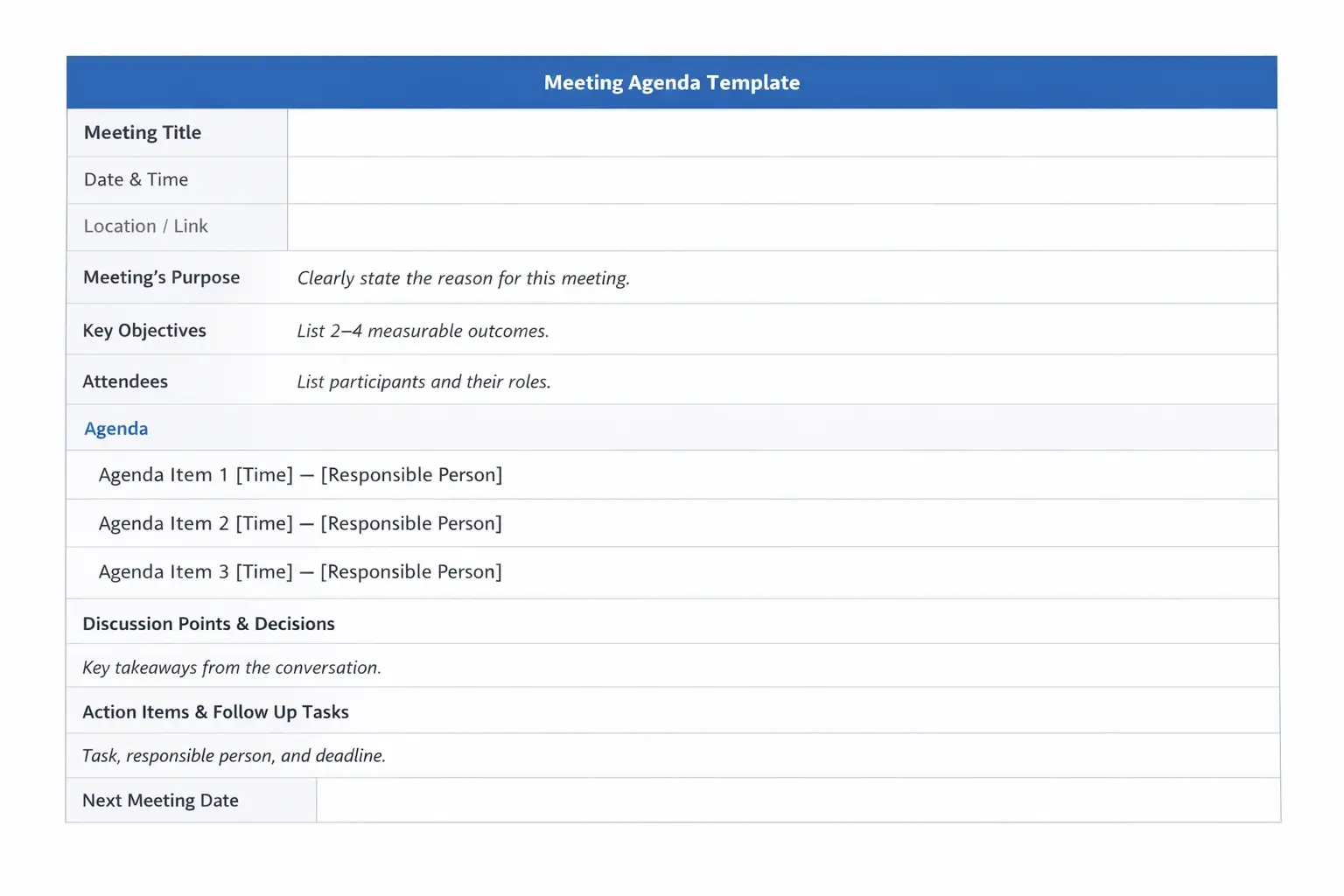
Esta es una plantilla práctica y básica para agenda de reuniones que puedes usar para la mayoría de las reuniones de negocios:
Título de la reunión
Fecha y hora de la reunión
Ubicación o enlace (Microsoft Teams, Zoom, etc.)
Propósito de la reunión
Indique claramente por qué se celebra esta reunión.
Objetivos clave
Enumere de 2 a 4 resultados medibles.
Asistentes
Haga una lista de los participantes de la reunión y aclare su función si es necesario.
Orden del día
- Punto 1 del orden del día (bloque de tiempo + responsable)
- Punto 2 del orden del día (bloque de tiempo + responsable)
- Tema 3 del orden del día (bloque de tiempo + responsable)
Puntos de debate y decisiones
Resuma las principales conclusiones de la conversación.
Elementos de acción y tareas de seguimiento
Incluya la tarea, la persona responsable y la fecha límite.
Fecha de la próxima reunión
Este ejemplo de agenda se puede adaptar fácilmente a una agenda de reuniones de equipo, a una estructura de reuniones de ventas o a un formato de reuniones de personal periódicas.
La pieza que falta: ¿qué pasa después de la reunión?
Incluso la mejor plantilla de agenda de reuniones falla si las tareas de seguimiento no se rastrean correctamente.
Aquí es donde muchos equipos pierden impulso. Las notas están dispersas por Google Docs. Las actas de las reuniones están incompletas. Nadie revisa las decisiones antes de la próxima reunión. Los elementos de acción desaparecen en las bandejas de entrada.
¿El resultado? La misma discusión se repite semanas después.
Para que las reuniones sean realmente más eficaces, necesita dos cosas:
- Una agenda sólida antes de la reunión
- Un sistema confiable para capturar, organizar y rastrear todo lo posterior
Cómo MeetGeek convierte su agenda en resultados medibles
Una agenda de reuniones estructurada le ayuda a prepararse. MeetGeek garantiza que no se pierda nada una vez que comience la conversación.
MeetGeek es un asistente de reuniones con IA que graba, transcribe y genera automáticamente notas de reuniones estructuradas para reuniones en Zoom, Microsoft Teams y Google Meet. Funciona con opciones de grabación con y sin bot y es compatible con equipos de todos los tamaños.
-1%25202.webp)
Con MeetGeek, puedes:
- Genere automáticamente actas de reuniones claras
- Capture los puntos de discusión clave alineados con su agenda
- Extraer y asignar elementos de acción
- Realice un seguimiento de las tareas de seguimiento antes de la próxima reunión
- Busca en las reuniones anteriores de forma instantánea
- Analice el tiempo de las reuniones y las tendencias de participación
- Usa el agente de voz de IA para hacer preguntas sobre reuniones anteriores, recuperar decisiones y sacar a la luz información de conversaciones anteriores
En lugar de escribir notas manualmente en Microsoft Word o cambiar entre varios documentos de Google Docs, tu equipo obtiene resúmenes estructurados y aclara los pasos siguientes de forma automática.
Esta combinación de una agenda de reuniones bien elaborada y documentación basada en inteligencia artificial reduce drásticamente el tiempo dedicado al trabajo administrativo y aumenta la responsabilidad en todo el equipo.
Mejores prácticas para la agenda de reuniones
Crear una agenda de reuniones es una cosa. Usarlo de manera efectiva es otra. Estas mejores prácticas ayudan a garantizar que su agenda realmente mejore los resultados de las reuniones en lugar de convertirse en un documento que nadie lee.
1. Mantenga la agenda centrada en los resultados, no en las actividades
Muchas agendas enumeran actividades en lugar de resultados. Por ejemplo, la «actualización de marketing» es una actividad. «Decidir la dirección de la campaña del segundo trimestre» es un resultado.
Antes de finalizar su agenda, revise cada punto y pregunte: ¿qué decisión, alineación o progreso debería surgir de esta discusión? Si el resultado esperado no está claro, refina el punto del orden del día. Las agendas basadas en los resultados conducen a reuniones productivas porque generan avances, no solo conversaciones.
2. Límite los puntos de la agenda para proteger el tiempo de reunión
Una de las principales causas de las reuniones improductivas es la sobrecarga de la agenda. Intentar abordar demasiados temas de discusión en una sola sesión a menudo resulta en decisiones apresuradas o conversaciones inconclusas.
Sea realista con respecto al tiempo asignado. Si el tiempo de reunión es de 45 minutos, no planifique 90 minutos de contenido. Priorice los objetivos más importantes y aplace los temas de menor impacto hasta la próxima reunión. La disciplina en la planificación evita los excesos y protege el valioso tiempo de su equipo.
3. Envíe la agenda con tiempo y espere a que esté preparada
Una agenda solo funciona si los asistentes la tratan como material de preparación, no como un documento en vivo revelado al inicio de la convocatoria.
Comparta la agenda con anticipación y establezca la expectativa de que los participantes de la reunión revisen los documentos relevantes y vengan preparados. Esto cambia la dinámica de la escucha pasiva a la contribución activa. Las reuniones se vuelven más estratégicas cuando los asistentes llegan informados y listos para participar.
4. Utilice la agenda para gestionar la discusión en tiempo real
Durante la reunión, la agenda debe funcionar como una guía, no solo como un plan.
Si la conversación se desvía, vuelve al punto actual de la agenda. Si surge un nuevo tema que no está alineado con el propósito de la reunión, apúntelo para una sesión futura en lugar de permitir que desvíe la discusión. Esta práctica mantiene la concentración de las reuniones sin descartar ideas valiosas.
5. Cierre cada reunión con los próximos pasos claros
Incluso una reunión bien estructurada pierde impacto si termina sin elementos de acción definidos.
Reserve las actas finales para resumir las decisiones, confirmar las responsabilidades y aclarar los plazos. Esto refuerza la rendición de cuentas y garantiza la continuidad antes de la próxima reunión. Sin este paso, los equipos suelen dedicar la siguiente sesión a revisar los puntos no resueltos.
Tipos de reuniones y cómo debe adaptarse su agenda
Agenda de la reunión del equipo
La agenda de una reunión de equipo suele centrarse en la ejecución. Estas reuniones se centran en las actualizaciones de estado, los obstáculos, los cambios en las prioridades y los próximos pasos a corto plazo. La agenda debe priorizar la claridad y el control del tiempo para que las actualizaciones no consuman todo el tiempo de la reunión. Como las reuniones de equipo suelen ser recurrentes, la coherencia es importante. Usar la misma estructura cada vez ayuda al equipo a hacer un seguimiento del progreso, comparar los resultados y garantizar la responsabilidad entre una reunión y la siguiente.
Reuniones de ventas
Reuniones de ventas se basan en el rendimiento y están altamente orientados a las métricas. La agenda de una reunión de ventas suele centrarse en el estado de los procesos, los objetivos de ingresos, los datos de conversión, las objeciones y las nuevas oportunidades de negocio. Los objetivos deben ser medibles y estar vinculados a los resultados. En este contexto, la agenda debe mantener la discusión basada en números y, al mismo tiempo, dejar espacio para la estrategia y el entrenamiento. Los puntos de acción claros son esenciales para que las oportunidades no se detengan una vez finalizada la reunión.
Reuniones de personal
Las reuniones de personal suelen reunir a varios departamentos, lo que aumenta la complejidad. La agenda debe enfatizar la alineación interfuncional, las actualizaciones clave y las prioridades compartidas. Dado que hay más asistentes involucrados, es especialmente importante definir la titularidad de cada elemento de la agenda y compartir los documentos pertinentes con antelación. Sin una estructura, las reuniones del personal pueden ampliarse rápidamente más allá del tiempo asignado y perder el enfoque.
Agenda de la reunión de la junta
UN agenda de la reunión de la junta requiere un mayor nivel de formalidad y documentación. Estas reuniones suelen incluir la revisión y aprobación de las actas de las reuniones anteriores, las actualizaciones financieras, las discusiones sobre la planificación estratégica y las decisiones formales que influyen en la dirección a largo plazo. La disciplina del tiempo es fundamental, y capturar los detalles importantes con precisión es esencial para la gobernanza y la rendición de cuentas. A diferencia de las reuniones operativas, las discusiones de la junta directiva suelen requerir registros claros y aprobaciones documentadas.
Reuniones de lanzamiento del proyecto
La agenda de la reunión inicial del proyecto está diseñada para crear una alineación desde el principio. El enfoque debe centrarse en definir el alcance, los plazos, las responsabilidades, los riesgos y las expectativas. El propósito de la reunión es la claridad. Cuando las agendas iniciales son vagas, la confusión puede prolongarse durante todo el ciclo de vida del proyecto. Una estructura sólida garantiza que cada miembro del equipo comprenda los objetivos y su función antes de que comience la ejecución.
De las reuniones al impulso
Las reuniones no son el enemigo de la productividad. La mala planificación y el débil seguimiento sí lo son.
Una plantilla sólida para la agenda de la reunión te ayuda a aclarar el propósito de la reunión, a centrarte en los temas de debate correctos, a respetar el tiempo asignado y a terminar cada conversación con puntos de acción claros. Ya sea una reunión de equipo, una reunión de ventas o una reunión de la junta directiva, la estructura convierte el tiempo empleado en un progreso mensurable.
Sin embargo, la planificación por sí sola no basta. Sin notas precisas de las reuniones y sin un seguimiento de las tareas de seguimiento, incluso la mejor agenda pierde impacto.
MeetGeek garantiza que cada reunión se grabe, resuma y convierta automáticamente en pasos siguientes claros. Además, en el caso de las llamadas repetitivas, los agentes de voz de IA pueden organizar reuniones estructuradas en tu nombre y ofrecer resultados organizados al instante.
Si quieres menos reuniones improductivas y más resultados reales, prueba MeetGeek gratis.
Preguntas frecuentes
¿Cómo escribo la agenda de una reunión?
Comience por definir el propósito de la reunión y de 2 a 4 objetivos claros. Luego, haga una lista de los puntos de la agenda en orden de prioridad, asigne una persona responsable a cada tema y asigne bloques de tiempo realistas. Incluya los documentos pertinentes con antelación y deje espacio para los puntos de acción y los próximos pasos. Una agenda de reuniones sólida mantiene la discusión centrada y garantiza resultados mensurables.
¿Cuáles son las 4 P de la agenda de una reunión?
Las 4 P suelen representar Propósito, Producto, Participantes y Proceso. El propósito define por qué se lleva a cabo la reunión. El producto aclara el resultado o la decisión deseados. Los participantes identifican quién debe asistir. El proceso describe cómo se estructurará la discusión para lograr el objetivo dentro del tiempo asignado.
¿Qué es la regla 40/20/40 para las reuniones?
La regla 40/20/40 sugiere que el 40 por ciento del éxito de la reunión proviene de la preparación, el 20 por ciento de lo que sucede durante la reunión y el 40 por ciento del seguimiento. En otras palabras, la planificación y la acción posterior a la reunión son tan importantes como la conversación en sí misma. Sin tareas de seguimiento claras, incluso una reunión productiva puede perder su impacto.




.avif)