.avif)

É ilegal gravar alguém sem sua permissão?
Gravar uma conversa pode ser legal em algumas situações e ilegal em outras. Este guia explica quando é permitido gravar alguém sem permissão nos EUA e na UE, como as leis de consentimento funcionam e como evitar problemas legais.

✅ Free meeting recording & transcription
💬 Automated sharing of insights to other tools.
Gravar conversas está mais fácil do que nunca. Um toque rápido em seu telefone, em um assistente de reunião ou em um aplicativo de gravação de voz pode capturar uma discussão inteira em segundos. Mas antes de pressionar o botão de gravação, surge uma pergunta importante: é ilegal gravar alguém sem sua permissão?
A resposta depende muito de onde a gravação ocorre. As regras nos Estados Unidos são diferentes das da União Europeia, e cada região segue sua própria estrutura legal para gravar conversas.
Nos EUA, as regras geralmente giram em torno das leis de consentimento unipartidário e das leis de consentimento bipartidário, o que significa que a legalidade da gravação de conversas geralmente depende do estado em que a gravação acontece.
Na União Europeia, as regras são diferentes. A gravação de conversas é fortemente moldada pelas leis de privacidade e pelo Regulamento Geral de Proteção de Dados (GDPR), que enfatiza o consentimento, a transparência e a proteção de dados pessoais.
Neste artigo, analisaremos os regulamentos dos EUA e da UE e os detalharemos para que seja mais fácil entendê-los e segui-los, não importa onde suas reuniões virtuais estejam ocorrendo.
Nota: Este artigo fornece informações gerais sobre leis de gravação e leis de privacidade. Não é aconselhamento jurídico.
Como as leis de gravação funcionam nos Estados Unidos
Nos EUA, gravar conversas é regulamentado por uma combinação de leis federais e estaduais.
No nível federal, a regra principal vem da Lei Federal de Escovas Eletrônicas, que faz parte da Lei de privacidade de comunicações eletrônicas (ECPA). De acordo com essa lei, a gravação de uma conversa geralmente é permitida, desde que pelo menos uma pessoa envolvida na conversa concorde com a gravação.
Esse princípio é comumente chamado de regra de consentimento de uma parte.
Isso significa que, se você fizer parte da conversa, a lei federal geralmente permite gravar áudio ou gravar uma conversa telefônica sem informar as outras partes.
No entanto, as leis estaduais podem ser mais rígidas do que as federais. Se um estado exigir o consentimento de todas as partes, essas regras mais rígidas se aplicam. A violação dessas regras pode levar a penalidades criminais ou civis de acordo com as leis estaduais de privacidade.
Em outras palavras, a legalidade de fazer gravações de áudio ou conversas de gravação de vídeo geralmente depende de onde a gravação acontece.
Consentimento unipartidário versus leis de consentimento bipartidário

O maior fator que determina se é ilegal gravar alguém sem sua permissão é o tipo de lei de consentimento partidário em seu estado.
Estados de consentimento de uma parte
A maioria dos estados dos EUA segue as leis de consentimento de um partido.
Nesses estados, a gravação geralmente é permitida, desde que pelo menos uma pessoa envolvida na conversa concorde com a gravação. A pessoa que dá o consentimento pode ser a pessoa que está fazendo a gravação.
Em termos práticos, isso significa que, se você fizer parte da conversa, geralmente poderá gravá-la, seja uma chamada telefônica ou uma discussão presencial, sem precisar primeiro da permissão dos outros participantes.
Exemplos de estados de consentimento de uma parte incluem:
- Dakota do Norte
- Carolina do Sul
- Rhode Island
- Texas
- Nova York
Nesses estados, geralmente é permitido gravar chamadas telefônicas ou conversas presenciais das quais você faz parte.
No entanto, gravar uma conversa da qual você não faz parte ainda pode ser considerado espionagem ilegal e violar as leis de escutas telefônicas.
Estados de consentimento de todas as partes (consentimento bipartidário)
Alguns estados têm leis de consentimento de todas as partes mais rígidas, também chamadas de leis de consentimento bipartidário.
Nesses estados de consentimento de todas as partes, todas as pessoas envolvidas na conversa devem dar consentimento antes do início da gravação.
Os exemplos incluem:
- Califórnia
- Flórida
- Illinois
- Pensilvânia
- Washington
Nesses estados, gravar conversas secretamente sem consentimento explícito pode levar a graves acusações criminais.
Até mesmo gravar suas próprias conversas sem informar outros participantes pode violar a lei em um estado de consentimento bipartidário.
Quando pode ser legal gravar alguém
Há várias situações comuns em que a gravação geralmente é permitida pela legislação dos EUA.
1. Gravando suas próprias conversas
Se você mora em um estado de consentimento unipartidário, geralmente pode gravar uma conversa desde que seja um dos participantes, mesmo que as outras pessoas envolvidas não saibam que a gravação está acontecendo.
Isso pode incluir situações como:
- gravando chamadas telefônicas
- gravando reuniões de negócios
- gravando entrevistas ou chamadas de vendas
- gravando conversas presenciais das quais você participa
No entanto, a lei se aplica de forma diferente entre os estados, portanto, verificar as leis estaduais locais é sempre importante.
2. Gravação em espaços públicos
A gravação geralmente é permitida em locais públicos onde os indivíduos não têm uma expectativa razoável de privacidade. Em ambientes como esses, as pessoas geralmente podem ser vistas ou ouvidas por outras pessoas, o que aumenta a probabilidade de a gravação ser considerada legal.
Os exemplos incluem:
- parques
- calçadas
- reuniões públicas
- protestos
- eventos acessíveis ao público
O registro de funcionários públicos desempenhando funções em locais públicos também é geralmente protegido por princípios de liberdade de expressão apoiados por decisões da Suprema Corte.
3. Gravando vídeo de segurança
Em um estado de consentimento bipartidário, gravar uma conversa sem a permissão clara de todos os envolvidos pode levar a consequências legais significativas. Se todos os participantes não concordarem com a gravação, a pessoa que está gravando pode estar violando as leis estaduais de escuta telefônica ou privacidade.
No entanto, gravações de áudio capturadas por câmeras de segurança ainda podem acionar leis de escutas telefônicas em certos estados.
Quando gravar alguém pode ser ilegal
Mesmo em estados de consentimento unipartidário, certas situações tornam a gravação ilegal.
1. Gravando conversas privadas das quais você não faz parte
Gravar secretamente conversas privadas entre outras partes sem se envolver na conversa pode violar a Lei Federal de Escutas Eletrônicas e as leis estaduais de escutas telefônicas.
Isso geralmente é considerado espionagem ilegal.
2. Gravação em espaços privados
Gravar alguém em um ambiente privado onde há uma expectativa razoável de privacidade geralmente é ilegal.
Os exemplos incluem:
- banheiros
- vestiários
- quartos
- quartos de hotel
- consultórios médicos
Esses espaços privados são protegidos pelas leis de privacidade, mesmo que a gravação ocorra em sua própria propriedade.
3. Gravação sem consentimento em estados de consentimento de todas as partes
Em um estado de consentimento bipartidário, gravar conversas sem o consentimento explícito de todas as partes envolvidas pode resultar em graves consequências legais.
Isso inclui:
- gravando chamadas telefônicas secretamente
- fazendo gravações de áudio de reuniões
- gravando conversas presenciais sem aviso prévio
A violação das leis de consentimento bipartidário pode levar a penalidades criminais e ações civis.
Riscos legais de gravar alguém secretamente
Gravar alguém sem permissão pode acarretar riscos legais reais, dependendo da situação.
As possíveis consequências incluem:
- acusações criminais por violar as leis de escutas telefônicas
- penalidades civis ou danos em juízo
- uma ação civil por invasão de privacidade
- multas ou outras penalidades legais
Mesmo que a gravação em si não seja criminosa, compartilhar gravações secretas publicamente ainda pode causar problemas legais de acordo com as leis de privacidade ou trabalhistas.
É por isso que muitas empresas e organizações exigem consentimento prévio ou acordo por escrito antes de gravar reuniões ou conversas telefônicas.
Leis de gravação na UE

A gravação de conversas na União Europeia geralmente é regida por leis de proteção de dados e regulamentos de privacidade, em vez da estrutura de consentimento de uma parte versus duas partes usada nos Estados Unidos.
O regulamento mais importante que afeta as gravações é o Regulamento Geral de Proteção de Dados (GDPR). Essa lei se aplica sempre que as gravações de áudio ou vídeo contêm dados pessoais que possam identificar uma pessoa, o que inclui gravações de voz e transcrições de reuniões.
Como as gravações podem conter dados pessoais, fazer gravações de áudio ou vídeo de alguém na UE geralmente é tratado como processamento de dados de acordo com as leis de privacidade.
Como resultado, gravar alguém sem o conhecimento deles geralmente é muito mais restrito.
Requisitos de consentimento sob o GDPR
De acordo com o GDPR, organizações ou indivíduos geralmente precisam de uma base legal para gravar conversas.
A base legal mais comum é o consentimento claro das partes envolvidas. O consentimento deve ser:
- explícito
- informada
- específico para o propósito da gravação
Os participantes também devem saber por que a gravação está acontecendo e como ela será usada ou armazenada. Por exemplo, se uma empresa grava uma conversa telefônica com um cliente, ela geralmente deve informar ao chamador que a chamada está sendo gravada e explicar o motivo da gravação antes de começar.
Se a pessoa não concordar, a gravação normalmente não poderá continuar.
É por isso que muitas chamadas telefônicas da UE começam com anúncios como: “Esta chamada pode ser gravada para fins de garantia de qualidade.”
Gravando conversas em todos os países da UE
Ao contrário dos EUA, onde a lei federal define uma linha de base e os estados adicionam suas próprias regras, as leis de registro da UE combinam o GDPR com as leis de cada país.
Muitos países da UE operam sob um modelo semelhante ao consentimento de todas as partes, o que significa que todos na conversa devem estar cientes da gravação. Em países como Alemanha ou França, gravar uma conversa sem consentimento pode ser tratado como uma ofensa criminal de acordo com as leis locais de privacidade ou comunicação.
No entanto, as regras exatas ainda podem variar entre os estados membros. Alguns países permitem gravações se a pessoa que está gravando fizer parte da conversa, enquanto outros exigem o consentimento claro de cada participante.
Devido a essa variação, a abordagem mais segura em toda a UE é informar os participantes antes do início da gravação.
Expectativas de privacidade na UE
Outro fator importante nas leis de gravação da UE é a expectativa de privacidade. Gravar alguém em um ambiente privado, como em casa, no escritório ou em uma reunião confidencial, pode facilmente violar as leis de privacidade se consentir não foi obtido.
Mesmo em locais públicos, as gravações que identificam indivíduos ainda podem ser consideradas processamento de dados pessoais de acordo com o GDPR, especialmente se a gravação for armazenada, compartilhada ou usada comercialmente.
As organizações também devem:
- armazenar gravações com segurança
- limite por quanto tempo as gravações são mantidas
- permitir que indivíduos solicitem acesso ou exclusão de suas gravações
O não cumprimento dessas regras pode levar a multas significativas do GDPR ou penalidades legais.
Uma maneira melhor de gravar reuniões: transparência e ferramentas como o MeetGeek
Em ambientes profissionais, a maneira mais segura de gravar conversas é simples: diga às pessoas que a reunião está sendo gravada e obtenha o consentimento primeiro.
Ferramentas como MeetGeek simplifique esse processo.
O MeetGeek é um assistente de reuniões de IA que grava reuniões automaticamente, gera resumos de IA e transcreve conversas no Zoom, Google Meet e Microsoft Teams. Quando uma reunião começa, o MeetGeek notifica claramente os participantes de que a gravação está acontecendo, o que ajuda as equipes a permanecerem transparentes e alinhadas com as leis de consentimento.
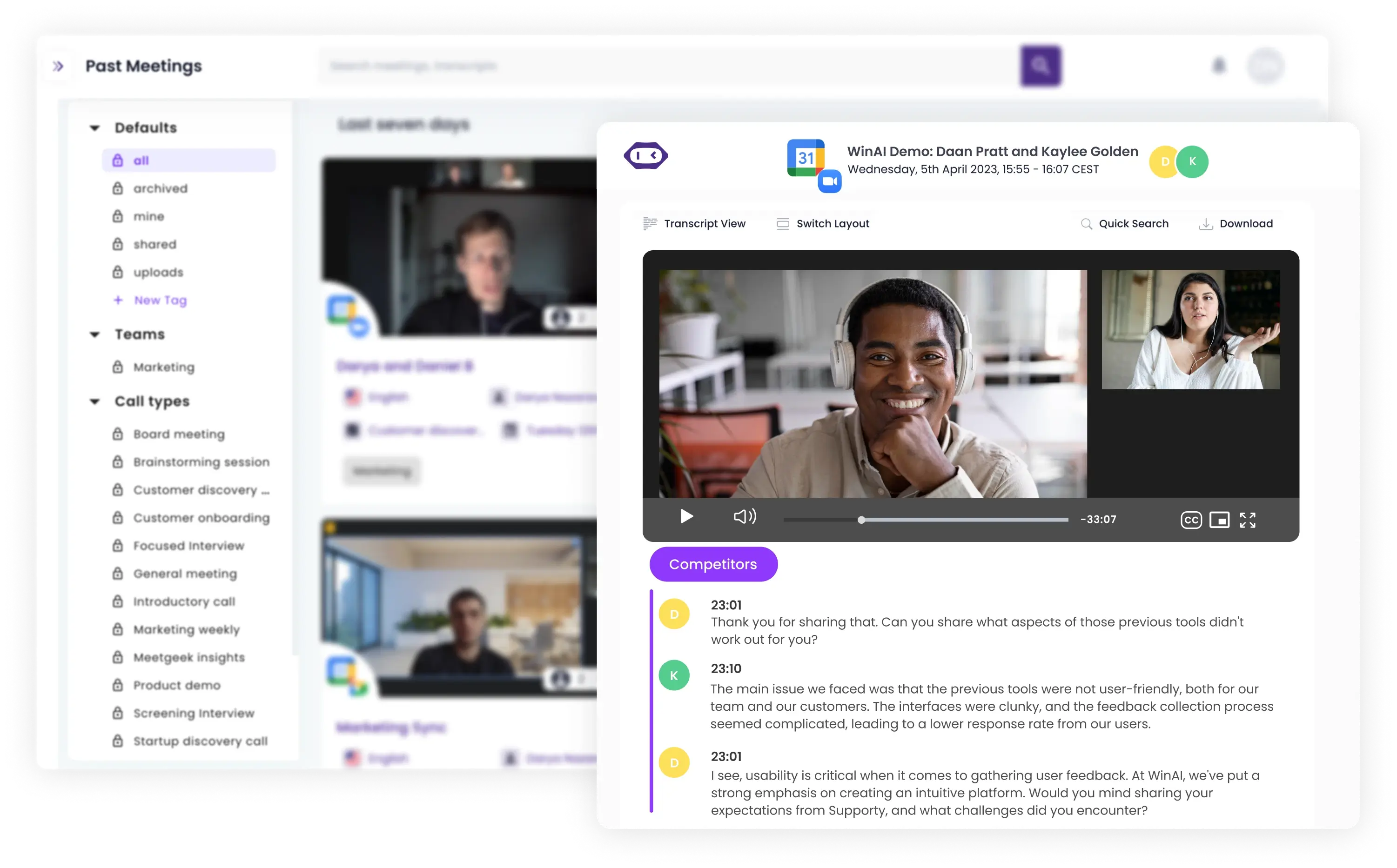
Em vez de gravar secretamente uma ligação ou reunião, as equipes podem contar com o MeetGeek para:
- gravar reuniões automaticamente
- gerar transcrições pesquisáveis
- capture itens de ação e decisões-chave
- armazene gravações em um espaço de trabalho centralizado
O MeetGeek também foi projetado com privacidade e segurança em mente, o que é especialmente importante quando as gravações podem conter discussões comerciais confidenciais. A plataforma inclui proteções de nível corporativo, como:
- Conformidade com SOC 2, HIPAA e GDPR
- Criptografia em trânsito e em repouso
- Opções regionais de hospedagem de dados (EUA e UE)
- Política de dados de treinamento zero, o que significa que os dados da sua reunião nunca são usados para treinar modelos de IA
Essa abordagem reduz os riscos legais e, ao mesmo tempo, facilita a documentação de conversas importantes.
Práticas recomendadas antes de gravar conversas
Como as leis de gravação variam de acordo com o estado, é inteligente seguir algumas regras simples antes de gravar qualquer pessoa.
- Verifique primeiro as leis estaduais de consentimento. Antes de gravar uma conversa, consulte as leis de consentimento em que a gravação ocorre. Alguns estados seguem as regras de consentimento de uma parte, enquanto outros exigem o consentimento de todas as partes envolvidas.
- Peça consentimento explícito quando possível. Mesmo em estados de consentimento unipartidário, obter permissão clara das outras partes envolvidas ajuda a evitar mal-entendidos e possíveis problemas legais.
- Tenha cuidado ao gravar em configurações privadas. Gravar em áreas acessíveis ao público geralmente é mais seguro do que gravar em espaços privados, onde as pessoas podem ter uma expectativa razoável de privacidade.
- Notifique as pessoas em reuniões profissionais. Em ambientes de trabalho ou de negócios, é uma prática recomendada informar os participantes quando uma reunião está sendo gravada. Muitas organizações incluem esse aviso no início das reuniões.
- Use a confirmação por escrito quando necessário. Algumas empresas confiam em acordos por escrito, avisos de reuniões ou notificações automáticas de gravação para confirmar que os participantes estão cientes da gravação.
- Priorize a transparência. Se você não tiver certeza se a gravação é permitida, a abordagem mais segura é ser transparente e informar todos os envolvidos antes de pressionar a gravação.
Conclusão
Então, é ilegal gravar alguém sem sua permissão? A resposta depende muito de onde a gravação acontece.
Como as leis variam muito entre países e estados, a abordagem mais segura é sempre informar as pessoas antes de gravar e obter seu consentimento. Para equipes que gravam reuniões regularmente, usar uma ferramenta transparente como o MeetGeek ajuda a garantir que todos saibam quando a gravação está acontecendo.
O MeetGeek grava reuniões automaticamente em plataformas como Zoom, Google Meet e Microsoft Teams enquanto notifica os participantes. Em seguida, ele gera resumos, transcrições e itens de ação de reuniões de IA, facilitando a captura de conversas importantes sem correr o risco de problemas de conformidade.
Se você quiser uma forma simples e transparente de documentar reuniões, experimente o MeetGeek gratuitamente e transforme suas conversas em conhecimento organizado.
Perguntas frequentes
1. Você pode gravar legalmente uma ligação sem avisar a outra pessoa?
Em muitos estados de consentimento unipartidário, você pode gravar legalmente uma ligação se for uma das pessoas que participam da conversa. Em outras palavras, seu próprio consentimento é suficiente para legalizar a gravação.
No entanto, nos estados de consentimento de todas as partes, cada participante deve concordar com a gravação antes de começar. Gravar uma chamada sem informar as outras partes nesses estados pode violar as leis estaduais de escutas telefônicas. Como as leis de gravação variam de acordo com a localização, geralmente é mais seguro informar a todos que a chamada está sendo gravada com antecedência.
2. Gravar uma conversa em público é ilegal?
Normalmente não. A gravação em um espaço ou ambiente público geralmente é legal porque as pessoas não têm uma expectativa razoável de privacidade nesses ambientes. Por exemplo, normalmente é permitido gravar vídeo ou áudio em parques, ruas ou reuniões públicas.
No entanto, gravar secretamente conversas privadas em locais públicos ou usar dispositivos de gravação ocultos para capturar conversas das quais você não faz parte ainda pode violar as leis de privacidade ou as regras ilegais de espionagem.
3. Posso gravar uma conversa se me sentir ameaçado?
Depende das leis estaduais de gravação e se você faz parte da conversa. Em muitos estados de consentimento unipartidário, a gravação é legal desde que uma pessoa envolvida na conversa concorde, o que significa que muitas vezes você pode gravar uma discussão da qual está participando se se sentir ameaçado. No entanto, as regras podem mudar em estados de consentimento de duas partes ou de todas as partes, onde a permissão de todos os envolvidos pode ser necessária.
No entanto, em estados de consentimento bipartidário ou em estados de consentimento de todas as partes, gravar sem a permissão das outras partes ainda pode violar as leis de escutas telefônicas e causar problemas legais. Se você se sentir inseguro, geralmente é melhor entrar em contato com as autoridades ou buscar orientação legal em vez de confiar em uma gravação secreta.
Como Agendar uma Reunião no Google Meet: Guia Passo a Passo 2026
Três métodos para desktop, dois fluxos para celular e uma dica para tornar cada chamada agendada mais produtiva.

Planos de Fundo de Zoom Engraçados Para Cada Tipo de Reunião
Descubra os melhores planos de fundo engraçados do Zoom para chamadas de trabalho e reuniões virtuais, incluindo memes, cenas de TV, escritórios falsos e ideias geradas por IA.
O Modelo de Reunião Retrospectiva Agile: 5 Formatos Que Funcionam
Cinco formatos retrô (Start/Stop/Continue, 4Ls, Mad/Sad/Glad, Sailboat, DAKI), quando usar cada um e a etapa de compromisso que transforma a conversa em mudança.
Ferramentas de Transcrição de Reuniões Compatíveis com a HIPAA: Um Guia de Verificação
O que a HIPAA realmente exige das ferramentas de transcrição, por que a maioria dos anotadores de IA não se qualifica e uma lista de verificação de 10 itens para equipes de operações clínicas.

Reunião de Teste no Zoom: Guia passo a passo para testar sua configuração antes de qualquer chamada
Saiba como realizar uma reunião de teste do Zoom, corrigir problemas de microfone e câmera e garantir que sua configuração esteja pronta antes de qualquer chamada importante.
Manual da reunião inicial do projeto (+ modelo)
A agenda de 7 partes, o modelo e a lista de verificação de acompanhamento de 24 horas que transformam o início do projeto nos 60 minutos mais valiosos de todo o projeto.

O que é uma Assembleia Geral Anual (AGM)? Um guia completo
Entenda as reuniões gerais anuais, o que incluir em uma agenda de AGM e como realizar reuniões estruturadas e compatíveis que orientam as decisões.
É ilegal gravar alguém sem sua permissão?
Gravar uma conversa pode ser legal em algumas situações e ilegal em outras. Este guia explica quando é permitido gravar alguém sem permissão nos EUA e na UE, como as leis de consentimento funcionam e como evitar problemas legais.

Jogos para jogar no Zoom: 20 ideias para formação de equipes (e risadas reais)
Uma lista prática de jogos Zoom que ajudam equipes remotas a se conectarem, aumentarem a energia e tornarem as reuniões virtuais mais envolventes e interativas.
Como automatizar reuniões com segurança em ambientes regulamentados e de alto risco
Saiba como automatizar reuniões em ambientes regulamentados sem comprometer a segurança, a privacidade ou a conformidade.
As melhores alternativas ao tl;dv para agilizar suas reuniões
Descubra as principais alternativas ao tl; dv e explore e compare seus recursos para escolher a ferramenta de reunião de IA certa para sua organização.
Agentes de reuniões de IA: como a IA autônoma está transformando o futuro do trabalho
Descubra como os agentes de reuniões com inteligência artificial estão redefinindo o futuro do trabalho, gerenciando agendamentos, acompanhamentos e até mesmo falando em seu nome para economizar tempo e transformar cada reunião em ação real.
Alternativas do Granola AI Notes: as melhores opções para experimentar em 2026
Explore as melhores alternativas do Granola AI Notes para 2026 com ferramentas mais inteligentes que vão além da transcrição, oferecendo automação, insights e colaboração.
E-mail de follow-up após a entrevista: como escrevê-lo, quando enviá-lo e o que dizer
Descubra como escrever um e-mail de acompanhamento eficaz após uma entrevista. Do tempo e dos modelos ao tom e à estrutura, este guia aborda tudo o que você precisa para se destacar e se manter memorável.

Análise de preços da Tactiq 2026: planos, limites e a melhor alternativa
Explore os planos de preços mais recentes da Tactiq e descubra como eles se comparam ao assistente de reuniões tudo-em-um do MeetGeek.

Significado da reunião ad hoc e como organizá-la
Descubra o verdadeiro significado de uma reunião ad hoc e aprenda como tornar as discussões espontâneas mais focadas e eficazes. Descubra quando mantê-los e gerenciá-los.
Etiqueta de reunião virtual: 15 regras essenciais para videochamadas profissionais
Descubra 15 regras e dicas essenciais de etiqueta para reuniões virtuais que mantêm as conversas focadas, profissionais e envolventes.
Como ver seu histórico do Google Meet e encontrar gravações (4 métodos fáceis)
Este artigo explora várias maneiras de ver seu histórico do Google Meet, recuperar e compartilhar gravações e descreve os requisitos para acessar esses dados.

Preços do Fireflies | Análise e coisas que eu gostaria de saber antes de comprar (2026)
Explore os preços e os recursos do Fireflies 2026. Saiba por que os usuários mudam dessa plataforma e escolhem alternativas para resumos e insights de reuniões de IA.
Como escolher os modelos de atas de reunião certos para diferentes tipos de reuniões
Entender os diferentes tipos de reuniões e suas necessidades de documentação é o primeiro passo para escolher o modelo certo. Neste artigo, aprenderemos como fazer isso.

Como acessar e revisar seu histórico de reuniões do Zoom: um guia completo
Neste artigo, explicaremos como acessar e revisar seu histórico de reuniões do Zoom: usando as ferramentas integradas do Zoom e com a ajuda de um assistente de reuniões com IA.
Anotadores de IA para reuniões presenciais: 5 melhores aplicativos móveis para Android e iOS em 2026
Os melhores aplicativos móveis agora gravam suas reuniões presenciais, transcrevem discursos e estruturam notas. Testamos as principais opções para iPhone e Android neste artigo.

Como gravar uma chamada do Discord: um guia passo a passo (2026)
Este guia passo a passo mostrará como gravar uma chamada do Discord usando recursos simples e integrados do dispositivo e ferramentas poderosas de terceiros.

Como usar a extensão Zoom Chrome e as 9 melhores extensões para reuniões
Este guia mostrará exatamente como usar a extensão Zoom Chrome e algumas outras ferramentas para simplificar seu processo de reunião.

Como gravar reuniões Webex: um guia passo a passo [2 métodos]
Grave no Webex usando o recurso de gravação integrado ou aprimore a gravação com ferramentas de terceiros, como a extensão MeetGeek AI Chrome.

A sobrecarga de reuniões não é o problema real - é um design ruim de reuniões
Quando a sobrecarga de reuniões se torna óbvia, há algumas pequenas mudanças que podem transformar toda a sua cultura de reuniões.

Como gravar videoconferências: um guia para recursos integrados e ferramentas de IA
Grave videoconferências usando ferramentas de plataforma integradas ou serviços de transcrição de IA para criar ativos duradouros. Use ferramentas como o MeetGeek para automatizar a colaboração e melhorar a produtividade.

Notas de reunião de IA: seu guia para documentação automatizada de reuniões em 2026
Vamos examinar mais de perto tudo o que você precisa saber sobre as opções gratuitas de anotações de reuniões de IA.

4 melhores softwares de transcrição gratuitos para 2026 | Testado pessoalmente
Neste artigo, compartilhamos os 4 melhores softwares de transcrição que encontramos com base em testes pessoais para 2026.

Análise do Read AI: Por que tantas pessoas estão abandonando Read AI? (2026)
Orientaremos você sobre os principais recursos, preços, prós e contras e daremos algumas dicas sobre por que os usuários estão migrando desse assistente de reuniões de IA.

Preços do Otter AI | 4 coisas que eu gostaria de saber antes de comprar (2026)
“A IA do Otter vale a pena?” É uma boa pergunta, e muitos de vocês fizeram. Saiba o que descobrimos sobre os preços e recursos do Otter AI e quais outras opções você tem.

Preços do Gong em 2026 | Isso economizará +$30.000
Se você considerou o Gong, provavelmente fez a pergunta: “Quanto custa o Gong?”. Descubra quanto os clientes da Gong pagam e quais outras opções você tem.

Como entrar no Zoom com alternativas de ID de reunião +
Descubra como participar de uma reunião do Zoom usando um ID de reunião e explore métodos alternativos para se conectar perfeitamente.
6 melhores aplicativos de notas de reuniões em 2026 | #1 é um divisor de águas
Não reunimos apenas os principais assistentes de reunião de IA neste artigo, mas também os melhores aplicativos para anotações manuais quando se trata de anotações de reuniões.

Testamos e encontramos as 5 melhores alternativas de Fathom para 2026
Depois de mergulhar profundamente na experiência dos usuários com esse assistente de reuniões de IA, descobrimos quais são as melhores alternativas do Fathom para você.

6 melhores alternativas de Gong após mais de 2 anos de testes (2026)
Investimos mais de 300 horas neste projeto para descobrir as melhores alternativas de Gong. Vamos nos aprofundar nos melhores.

Quando e como organizar uma reunião presencial em 2026
Planeje reuniões presenciais mais inteligentes! Saiba quando se reunir, como se organizar de forma eficaz e tornar cada reunião produtiva e envolvente.
Os 6 melhores anotadores de IA em 2026 | Mais de 15 ferramentas testadas
Eu tentei +15 anotadores de IA para encontrar os melhores. Este artigo revela o melhor tomador de notas de IA com base em recursos e preços.

Como ter uma reunião eficaz de pontos de contato: estratégias para gerentes
Quer conduzir reuniões de ponto de contato bem-sucedidas? Aprenda dicas e estratégias práticas para promover a colaboração, acompanhar o progresso e inspirar sua equipe a fazer mais.

Como Planejar e Realizar Reuniões de Vendas Produtivas [+Agenda de Reuniões de Vendas Gratuita]
Aprenda estratégias eficazes para tornar suas reuniões de vendas mais impactantes e produtivas. Descubra dicas para impulsionar o engajamento e os resultados!

Como Realizar uma Reunião de Descoberta Eficaz
Saiba como realizar uma reunião de descoberta eficaz com dicas e estratégias práticas que garantem o sucesso.

Como Dominar Reuniões Scrum: Melhores Práticas e Modelos
Aprenda a realizar reuniões Scrum eficazes com dicas e modelos práticos. Simplifique seu fluxo de trabalho, aumente a colaboração em equipe e aproveite ao máximo cada reunião!

O Que é Reunião Virtual e o que Esperar em 2026: Uma Visão do Futuro
Descubra o futuro das reuniões virtuais em 2026 e algumas dicas fora do tempo com este artigo esclarecedor.
.webp)
As 10 melhores alternativas do Vowel.ai para suas reuniões
Clique aqui para ver 7 das principais alternativas ao Vowel para sua próxima reunião.

Como Transcrever Reuniões do Zoom para o Google Docs Sem Permissões Adicionais
Aprenda a transcrever com eficiência suas reuniões do Zoom para o Google Docs com essas etapas simples. Aumente a produtividade e consulte facilmente discussões anteriores.

As 8 principais plataformas de reuniões virtuais on-line para organizações em crescimento
Com cada vez mais plataformas de reuniões virtuais disponíveis no mercado, escolher a certa para sua empresa pode ser bastante confuso e desafiador.

6 dicas para escrever uma agenda de reunião bem-sucedida com exemplos
Quer escrever a agenda definitiva de reuniões e alcançar a produtividade de todos os tempos nas reuniões de sua equipe? Siga estas 6 dicas profissionais para saber como e confira nossos modelos gratuitos para começar.
Como “compartilhar tela” no Zoom [PC/celular] + Dicas profissionais
Aprenda a compartilhar sua tela durante as reuniões do Zoom no PC e em dispositivos móveis com nossas dicas de especialistas!
.jpeg)
Como configurar uma reunião no Zoom e dicas incríveis para aumentar o engajamento
Domine a configuração do Zoom com nosso guia passo a passo fácil. Do agendamento à hospedagem, saiba como se conectar e se envolver no mundo digital.
Como organizar uma reunião de equipes: um guia passo a passo para iniciantes
Aprenda a organizar uma reunião de equipes sem esforço com nosso guia para iniciantes. Do agendamento ao convite, cobrimos todas as etapas!

Como gravar sessões do Google Meet sem permissões especiais em 2026
Descubra como gravar facilmente um Google Meet em nosso guia abrangente. Leia este artigo para nunca mais se preocupar em perder informações importantes!
Como organizar a melhor reunião individual
Descubra como organizar reuniões individuais que melhorem a comunicação, promovam o engajamento e construam relacionamentos mais fortes em sua equipe lendo este artigo!

Encontre seu modelo de notas de reunião perfeito
As reuniões fazem parte da sua vida profissional, mas você não tem ideia do que elas devem conter ou mesmo parecer? Leia este artigo para obter seu modelo de notas de reunião!

Os 10 Segredos para uma Gestão Eficaz de Reuniões
Descubra os segredos para uma gestão eficaz de reuniões! Descubra 10 estratégias revolucionárias para reuniões produtivas.

Como escolher a cadência certa de reunião: o manual do gerente
Descubra os segredos para definir a cadência perfeita de reuniões para otimizar a produtividade da equipe com este guia para gerentes.
.jpeg)
Como participar de uma reunião do Zoom usando qualquer dispositivo em 2026
Entre em 2026 com facilidade: aprenda a participar de reuniões do Zoom de qualquer dispositivo com este guia simples e fácil de usar para conexões virtuais perfeitas.

20 Ideias Inovadoras para Reuniões de Equipe
Energize e envolva sua equipe com uma dessas 20 ideias inovadoras para reuniões de equipe.

O poder de um blog: como as reuniões podem ser transformadas em conteúdo envolvente
Neste artigo, revelaremos seis estratégias criativas para aproveitar as transcrições de reuniões para aprimorar seus esforços de marketing.

Como Escrever um Email de Convite de Reunião Eficaz
Já se perguntou qual é a receita para um e-mail de convite de reunião bem-sucedido? Leia este artigo para saber todas as nossas dicas e ideias!

Por que você precisa definir metas de reunião e como fazer isso
O primeiro passo para uma reunião bem-sucedida é definir as metas da reunião. Leia este artigo para saber como equipes de alto desempenho fazem isso!

Como Gravar uma Reunião do Zoom se Você Não for Um Anfitrião
Descubra como gravar reuniões do Zoom sem privilégios de hospedagem em qualquer dispositivo para uma experiência de reunião simplificada!
.jpg)
Como facilitar reuniões inclusivas e colaborativas
Um bom planejamento e facilitação de reuniões são o que torna as reuniões de equipe inclusivas, colaborativas e eficazes, levando à resolução de problemas e à geração de novas ideias.

Google Meet x Zoom: Qual Escolher em 2026
Descubra o confronto definitivo entre o Google Meet e o Zoom em 2026! Descubra qual ferramenta de videoconferência ganha em recursos e valor.
.webp)
A revisão definitiva de fim de ano: um guia para gerentes
Domine a arte das avaliações de fim de ano com nosso guia abrangente para gerentes. Aprenda estratégias comprovadas para avaliar o desempenho e definir metas para o sucesso no próximo ano.

Visualização de dados eficaz para insights de reuniões
A visualização torna a transmissão de dados complexos mais compreensível. Vamos descobrir como melhorar sua próxima reunião com recursos visuais.

Como Alterar o Zoom Host + Como Adicionar um Host Alternativo no Zoom
Aprenda as etapas rápidas e fáceis para mudar de anfitrião nas reuniões do Zoom com este guia abrangente e para iniciantes.

Como ter uma reunião de negócios bem-sucedida em 2024
Domine a arte de reuniões de negócios bem-sucedidas este ano com nossas principais dicas para planejar, engajar e alcançar resultados no ambiente de trabalho moderno.
.jpeg)
Como realizar uma sessão de brainstorming eficaz
Prepare-se para liberar a criatividade da sua equipe. Não perca este guia para realizar uma sessão de brainstorming eficaz que dará vida a ideias inovadoras.

Os 10 melhores softwares de agendamento de reuniões para 2026
As melhores ferramentas de agendamento de reuniões oferecem uma experiência sem atritos para todos os participantes. Aqui estão 10 opções que economizarão horas do seu tempo!

Formatos de reunião inovadores: explorando alternativas às reuniões de negócios tradicionais para aumentar a criatividade
Explore alguns formatos alternativos de reunião que podem revolucionar a forma como sua equipe colabora e gera ideias.

10 maneiras pelas quais um assistente de reuniões com IA pode ajudar em suas reuniões e entrevistas
Sem as ferramentas certas, as reuniões podem ser um processo doloroso. Leia este artigo para explorar os 10 melhores casos de uso de ter um assistente de reuniões com IA!

10 Dicas para Escrever uma Recapitulação Eficaz da Reunião
Descubra 10 dicas práticas para escrever resumos de reuniões claros e eficazes que mantenham sua equipe informada e no caminho certo. Melhore a comunicação e a produtividade com essas etapas fáceis.

Os 5 melhores tipos de perguntas de check-in para reuniões
Você é gerente e está tentando encontrar as melhores perguntas de check-in para reuniões? Leia isso antes de sua próxima reunião!

15 exemplos gratuitos de agenda de reuniões
Você ainda está tentando encontrar os exemplos perfeitos de pauta de reuniões para usar como inspiração antes da próxima reunião? Confira nossos 15 modelos gratuitos!

15 tipos de reuniões: o que as torna diferentes e dicas
Você é um gerente que quer dominar a arte de organizar reuniões? Aprenda a abordar esses 15 tipos de reuniões de forma eficaz com nossas dicas exclusivas!

10 Tipos de Perguntas de Triagem de RH a Serem Feitas se Você for um Gerente de Contratação
Você está tentando encontrar o melhor candidato para um anúncio de emprego na sua empresa? Leia este artigo para descobrir os melhores tipos de perguntas de triagem de RH!