


TL;DR
- Best ATS with built-in automation: Greenhouse for structured hiring and configurable recruitment workflows.
- Best for scaling recruiting: Ashby combines an ATS, scheduling automation, sourcing to ensure candidate quality, and analytics in one platform.
- Best for candidate communication: Paradox uses AI to automate candidate engagement, scheduling interviews, and follow-ups.
- Best interview transcription software: MeetGeek automatically records interviews, creates AI transcripts, generates candidate summaries, and shares structured feedback with hiring managers.
- Best all-around recruiting platform: Lever combines applicant tracking, candidate relationship management, and recruiting automation.
- Best for small and growing teams: Workable offers AI recruiting tools, resume screening, and job posting without enterprise complexity.
- The best recruitment automation tools automate repetitive tasks, so your team can spend more time building relationships with qualified candidates and making better hiring decisions.
Recruiters didn't get into recruiting to spend their days scheduling interviews, screening resumes, updating candidate profiles, or copying interview notes into an applicant tracking system. Yet for many recruiting teams, that's exactly where most of the week goes.
Recruitment automation tools help eliminate that manual work. From candidate sourcing and resume screening to interview scheduling and follow-ups, today's AI-powered recruiting automation software can streamline the recruitment process without removing the human element that great hiring depends on.
In this guide, we'll look at the best recruitment automation tools for different hiring needs, explain which parts of the hiring process are worth automating, and show where interview automation can save your team the most time.
The Best Recruitment Automation Tools
No single platform automates the entire talent acquisition process. Most companies combine multiple recruiting tools depending on where they spend the most time.
Here's our shortlist.
| Tool | Best for |
|---|---|
| Greenhouse | Structured hiring and enterprise recruiting |
| Ashby | High-growth companies that want an all-in-one recruiting platform |
| Paradox | AI-powered candidate communication and interview scheduling |
| MeetGeek | Automatic transcription, candidate summaries, and hiring collaboration |
| Lever | Recruiting CRM and candidate relationship management |
| Workable | Small and mid-sized hiring teams |
| Gem | Candidate sourcing and recruitment campaigns |
Table last updated: July 16, 2026.
We'll cover each tool in detail later in this guide.
What Are Recruitment Automation Tools?
Recruitment automation tools are software that automates repetitive recruiting work throughout the hiring process. Instead of manually completing every administrative task, recruiters use automation to move candidates through the recruitment workflow faster while keeping hiring decisions firmly in human hands.
Depending on the platform, recruitment workflow automation can help with:
- Posting job openings to multiple job boards
- Candidate sourcing
- Resume screening
- Automated candidate screening
- Interview scheduling and transcription service
- Candidate communication
- Follow-ups
- Candidate relationship management
- Candidate summaries
- Analytics and reporting
Many companies already have an applicant tracking system to organize candidate data. Recruitment automation software goes a step further by reducing manual effort before, during, and after interviews.
Which Recruiting Tasks Should You Automate First?
Not every part of recruiting benefits equally from automation. Some activities require human judgment, while others are almost entirely administrative.
"Every hour recruiters spend on admin is time lost on strategic work, and risks putting off good quality candidates who won't wait,” says Nicola Weatherhead, Vice President of People at Totaljobs (part of The Stepstone Group).
If you're implementing recruitment process automation for the first time, these are the workflows that usually deliver the biggest return.
1. Candidate Sourcing
Finding enough qualified candidates and top talent is one of the biggest recruiting challenges, especially for technical and specialized roles.
AI recruiting tools can search talent pools, identify passive candidates, surface promising candidates based on job requirements, and help recruiters prioritize outreach. They won't replace talent sourcing, but they can dramatically reduce the time recruiters spend searching for potential candidates.
2. Resume Screening
Screening resumes manually becomes difficult when a single job posting attracts hundreds of applications.
AI-powered resume screening can compare applications against job descriptions, identify relevant experience, rank candidates, and highlight the best matches for review. Recruiters still make the final decision, but they spend less time sorting through applications that clearly don't fit the role.
3. Interview Scheduling
Scheduling interviews is one of the easiest recruiting workflows to automate.
Instead of coordinating calendars through long email threads, automated scheduling tools let candidates choose available interview slots while syncing with recruiter and hiring manager calendars. That reduces back-and-forth communication and shortens the time to hire without changing the interview process itself.
4. Candidate Communication
Candidates expect regular updates throughout the hiring process. In fact, 28% of job applicants have given up on a hiring process because of delays, poor communication, or too many interview rounds.
Recruitment automation software can automatically confirm applications, remind candidates about upcoming interviews, send follow-ups, and notify applicants when they move to a new hiring stage. That helps maintain candidate engagement while ensuring every candidate receives a consistent experience.
5. Interview Documentation
One recruiting workflow is still surprisingly manual for many teams: documenting interviews.
Recruiters who handle remote interviews often juggle the conversation, evaluate candidate responses, and take a verbatim transcript at the same time. After the interview, they still need to write summaries, compare feedback, and share notes with hiring managers, all based on human transcription, which is prone to errors.
Automating this step with transcription tools and interview recording saves far more time than many teams expect.
Automate Interview Documentation with MeetGeek
Most recruitment automation platforms focus on getting candidates into your hiring funnel. MeetGeek helps automate what happens once interviews begin.
MeetGeek automatically joins interviews on Google Meet, Zoom, and Microsoft Teams, records the conversation, and creates an accurate transcription of the interview with speaker identification. Instead of manually writing interview notes, recruiters receive AI-generated candidate summaries, action items, and searchable interview transcripts within minutes.
%20(1).webp)
That means hiring managers can review the same interview, compare candidate responses using consistent documentation, and revisit important moments without relying on incomplete notes.
Because MeetGeek integrates with tools like Slack, Notion, HubSpot, Google Drive, and thousands of other apps through Zapier, it fits naturally into an existing recruitment automation platform instead of replacing it.
If interview notes are currently one of the biggest bottlenecks in your recruiting process, this is one of the fastest automation wins you can make.
The 7 Best Recruitment Automation Tools
The right recruitment automation software depends on where your hiring process slows down. Some platforms focus on applicant tracking and structured hiring, while others specialize in candidate sourcing, candidate communication, or interview automation.
Here's our take on the best recruiting automation tools for different use cases.
1. Greenhouse
Best for: Structured hiring

Greenhouse is one of the most established applicant tracking systems on the market. It helps recruitment teams manage job openings, candidate pipelines, structured interviews, scorecards, and recruiting workflows from a single platform.
Its automation features reduce manual effort by handling interview scheduling, approvals, candidate communication, and reporting while giving hiring managers visibility into every stage of the hiring process.
Pros
- Excellent structured hiring framework
- Powerful applicant tracking system
- Strong analytics and reporting
- Extensive integrations
Cons
- Higher learning curve
- Better suited to medium and large organizations
2. Ashby
Best for: High-growth companies

Ashby combines applicant tracking, scheduling automation, candidate relationship management, recruiting analytics, and reporting in a single platform.
Instead of relying on multiple tools, growing companies can manage sourcing candidates, interview scheduling, candidate evaluation, and hiring analytics without switching systems.
Ashby is particularly strong for organizations hiring quickly and looking to standardize their recruitment process.
Pros
- Combines ATS, CRM, scheduling, and analytics
- Strong automation across the recruiting process
- Excellent reporting capabilities so you can spot quality candidates
Cons
- More expensive than lightweight recruiting software
- May include more functionality than smaller teams need
3. Paradox
Best for: Candidate communication

Paradox is built around conversational AI.
Its AI assistant helps automate candidate communication by answering common interview questions, scheduling interviews, collecting candidate responses, and keeping applicants informed throughout the hiring process.
For organizations handling high-volume hiring, this significantly reduces repetitive communication while improving candidate engagement.
Pros
- Excellent scheduling automation
- Strong candidate communication workflows
- AI assistant available around the clock
Cons
- Less focused on sourcing and applicant tracking
- Best suited to larger recruiting operations
4. MeetGeek
Best for: Specialized transcription software, candidate summaries, and hiring collaboration
.webp)
Most recruitment automation tools stop once an interview is scheduled. MeetGeek picks up where they leave off by automating interview documentation.
Instead of taking notes during every interview, recruiters and hiring managers receive an AI-generated verbatim transcription, candidate summary, action items, and searchable audio and video recordings automatically after the meeting. This makes candidate evaluation more consistent and allows everyone involved in the hiring process to review the same information.
MeetGeek also integrates with Google Meet, Zoom, Microsoft Teams, Slack, Notion, HubSpot, Google Drive, Zapier, and thousands of other applications, making it easy to fit into an existing recruitment workflow.
Pros
- Automatically records and transcribes interviews
- AI-generated candidate summaries and interview notes alongside the transcription process
- Searchable interview library for hiring teams
- Works with Google Meet, Zoom, and Microsoft Teams
- Its automation tools integrate with existing recruiting tools
Cons
- Focuses on AI transcription and interview automation rather than applicant tracking
- Works alongside an ATS instead of replacing one
5. Lever
Best for: Candidate relationship management

Lever combines an applicant tracking system with recruiting CRM functionality, making it a good option for companies that want to build long-term relationships with potential candidates instead of only managing active applicants.
Recruiters can nurture passive candidates, manage outreach automation, and keep candidate profiles organized while automating many administrative recruiting tasks.
Pros
- Strong candidate relationship management
- Good sourcing and outreach capabilities
- Built-in recruiting automation
Cons
- CRM functionality may be unnecessary for smaller teams
- Reporting can require customization
6. Workable
Best for: Small and growing businesses

Workable makes recruitment automation accessible without requiring an enterprise budget.
It includes AI-powered job description writing, resume screening, candidate sourcing, interview scheduling, and job posting across multiple job boards.
For businesses building their first structured hiring process, it provides a strong balance between ease of use and automation.
Pros
- Easy to implement for recruiting agencies and businesses
- AI tools and recruiting features included
- Supports posting job openings across multiple job boards
Cons
- Fewer customization options than enterprise platforms
- Advanced reporting is more limited
7. Gem
Best for: Candidate sourcing
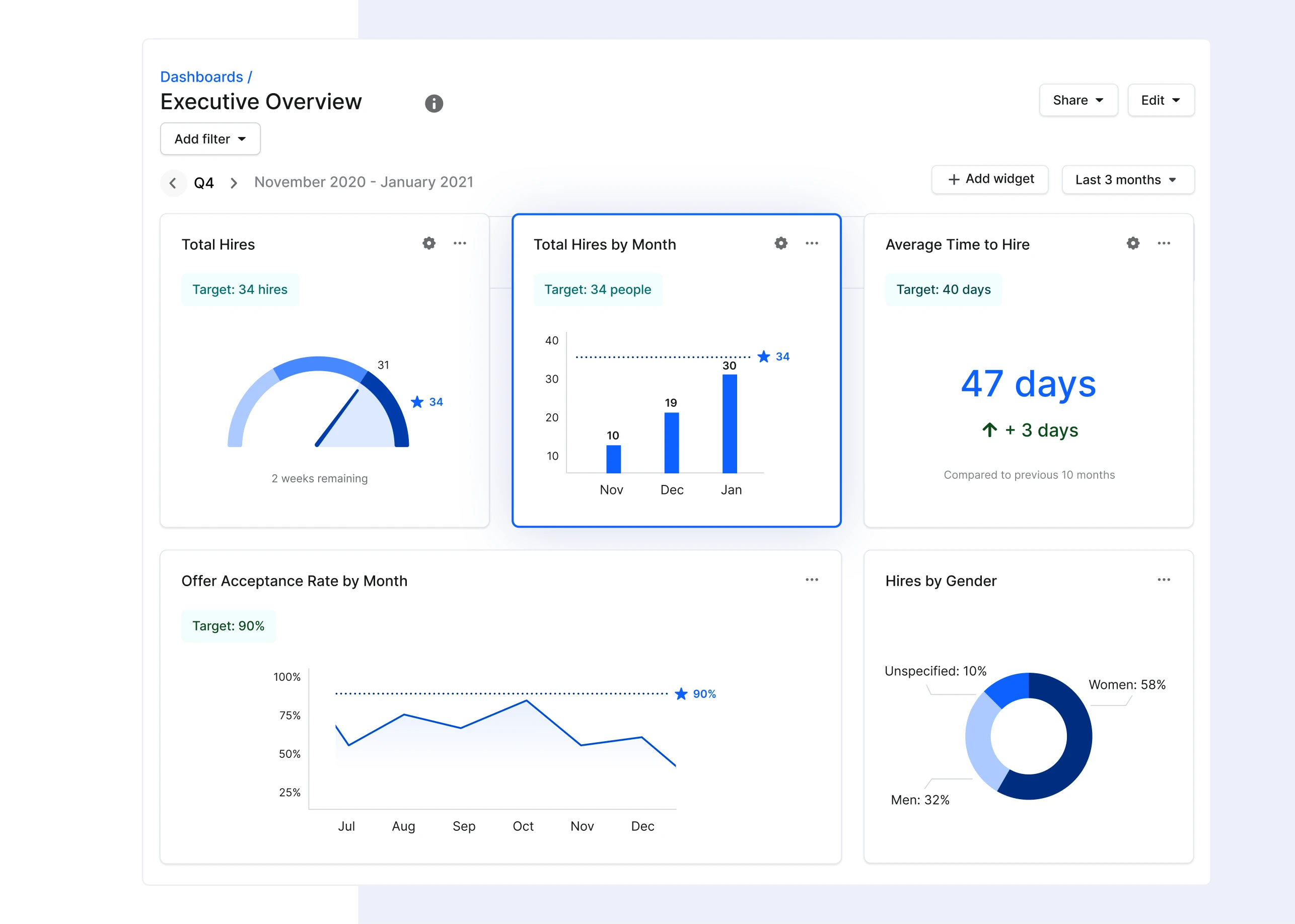
Gem focuses on helping recruiters build stronger talent pipelines before candidates ever apply.
The platform supports outreach automation, recruitment campaigns, candidate discovery, and talent sourcing across multiple channels. It's particularly useful for recruiting teams that proactively engage passive candidates instead of relying solely on inbound applications.
Pros
- Excellent sourcing capabilities
- Strong outreach automation
- Helps build long-term talent pipelines
Cons
- Requires an ATS for full hiring management
- Less useful once candidates enter the interview process
How to Choose the Right Recruitment Automation Software
Every recruiting team has different bottlenecks, so the best recruitment automation software depends on where you're losing the most time.
- If recruiters spend hours screening resumes, look for strong AI-powered candidate screening.
- If candidate communication slows hiring, prioritize automated workflows that keep applicants informed.
- If interview scheduling creates delays, scheduling automation will provide immediate value.
Many organizations already have an applicant tracking system that handles job postings, candidate management, and recruitment workflows. Before buying another platform, identify what's still manual.
In our experience, interview documentation is one of the biggest gaps. According to a study done in the UK, recruiters spend 3.6 hours per vacancy reviewing applications, 2.5 hours per vacancy scheduling interviews, and 3 hours per vacancy processing post-interview notes for every role they fill. Automating that process can save hours every week while creating more consistent candidate evaluations.
Key Takeaways
- Recruitment automation works best when it automates repetitive administrative work, not hiring decisions.
- Most companies need multiple recruiting tools rather than one platform that does everything.
- Applicant tracking systems organize hiring, while automation tools reduce manual effort throughout the recruitment process.
- Interview documentation is one of the easiest recruiting workflows to automate with AI.
- Choosing software that integrates with your existing recruiting stack is usually more valuable than replacing every tool.
Spend Less Time on Admin and More Time Hiring
Hiring automation gives recruiters more time to do the work that actually improves hiring outcomes.
The best recruitment automation tools reduce manual effort by automating candidate sourcing, interview scheduling, candidate communication, resume screening, and interview documentation.
When those repetitive tasks disappear, recruiting teams can focus on evaluating candidates, collaborating with hiring managers, and improving the overall candidate experience.
MeetGeek helps automate one of the most time-consuming parts of hiring by recording interviews, generating AI transcripts, creating structured candidate summaries, and organizing every interview in a searchable knowledge base. Instead of spending hours writing notes after each conversation, your team can spend that time making better hiring decisions.
Try MeetGeek for free and see how much time your recruitment team can save by automating interview documentation.
Frequently Asked Questions
Does Recruitment Automation Replace Recruiters?
No, recruitment automation handles repetitive administrative tasks, while recruiters remain responsible for evaluating candidates, conducting interviews, and making hiring decisions. The best results come from combining AI with human expertise.
What's the Difference Between an Applicant Tracking System and Recruitment Automation Software?
An applicant tracking system primarily stores candidate data and manages hiring workflows. Recruitment automation software focuses on reducing manual work by automating tasks like sourcing, scheduling interviews, follow-ups, candidate communication, and interview documentation.
Can AI Automatically Screen Candidates?
Yes, many AI recruiting tools can compare resumes against job requirements, rank candidates, identify promising applicants, and recommend the best matches. However, recruiters should always review AI recommendations before making hiring decisions.



.avif)