.avif)

Um guia completo da metodologia de vendas do MEDDIC
Descubra as vendas da MEDDIC, como elas ajudam a qualificar leads, entender os processos de decisão e melhorar as taxas de vitória em ciclos complexos de vendas B2B.

✅ Free meeting recording & transcription
💬 Automated sharing of insights to other tools.
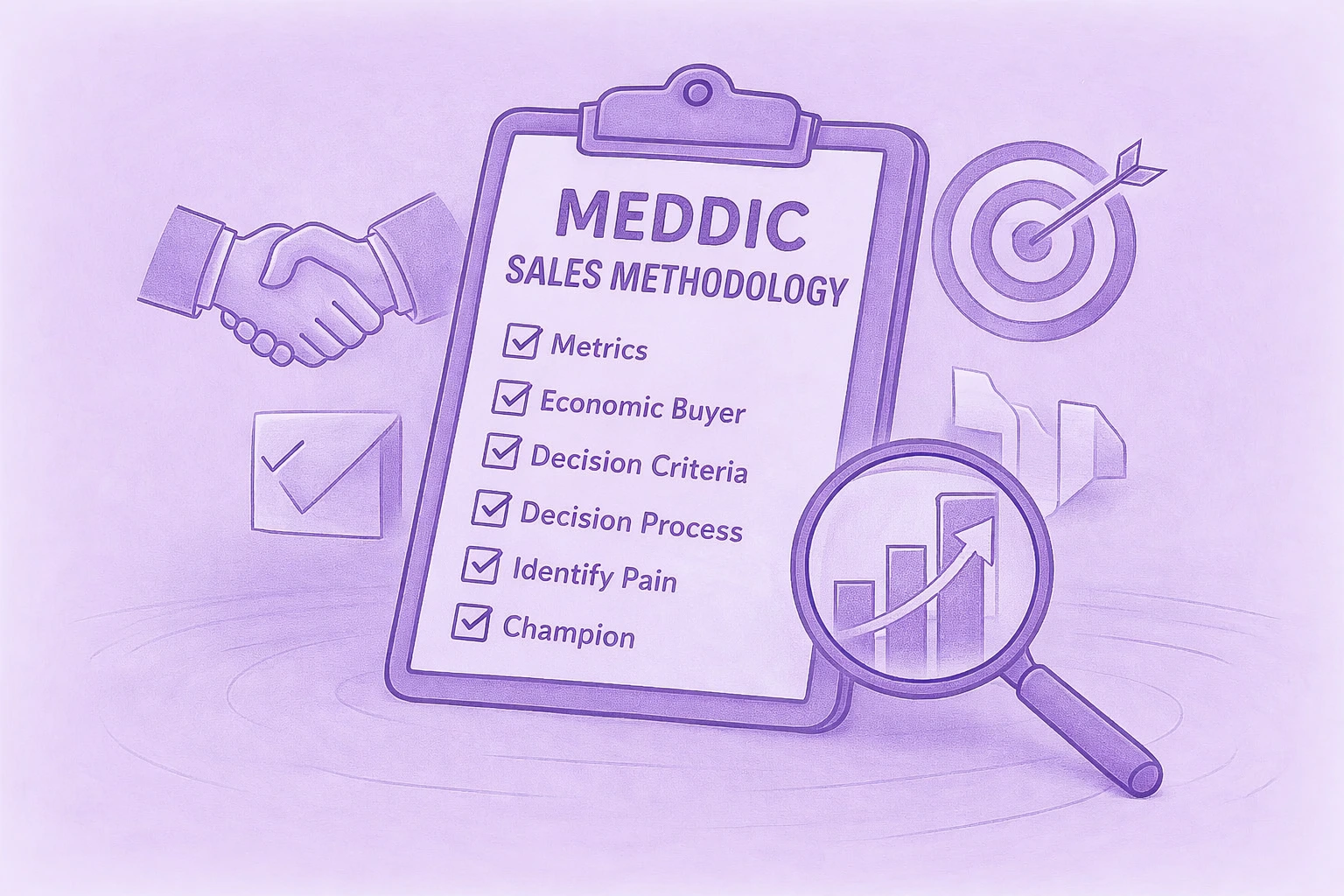
O MEDDIC é uma metodologia de qualificação de vendas B2B construída em torno de seis elementos: métricas, comprador econômico, critérios de decisão, processo de decisão, identificação da dor e campeão. Ele foi desenvolvido na Parametric Technology Corporation na década de 1990 e agora é usado por equipes de vendas corporativas como Salesforce, Google Cloud e PTC para qualificar negócios complexos e de alto valor.
Ao contrário de estruturas mais leves como o BANT, o MEDDIC foi projetado para longos ciclos de vendas com várias partes interessadas, cadeias de aprovação internas e compradores estratégicos. Este guia explica como cada componente do MEDDIC funciona, como implementá-lo em sua equipe de vendas, como ele se compara ao MEDDPICC, MEDDICC, SPIN e Challenger e como usar os dados da reunião para aplicá-los de forma consistente.
MEDDIC em um piscar de olhos
- MEDDIC significa Metrics, Economic Buyer, Decision Criteria, Decision Process, Identify Pain, Champion.
- É uma metodologia de qualificação de vendas B2B para negócios longos, complexos e com várias partes interessadas.
- Desenvolvido na PTC na década de 1990; agora usado em consultoria e SaaS corporativos.
- Variações: MEDDPICC adiciona Processo em Papel e Competição; MEDDICC adiciona somente Competição.
- Ideal para: negócios corporativos, comitês de compras, alto ACV. Menos útil para vendas transacionais curtas.
Qual é a metodologia de vendas do MEDDIC?
O metodologia MEDDIC é um estrutura de qualificação de vendas projetado para ajudar as equipes a se concentrarem em oportunidades de alta qualidade e melhorar os resultados dos negócios.
Foi desenvolvido em 1996 por Dick Dunkel em Corporação de Tecnologia Paramétrica, uma empresa de software em rápido crescimento que precisava de uma forma mais confiável de gerenciar ciclos de vendas complexos e atingir metas ambiciosas de receita. Ao introduzir uma abordagem estruturada para qualificação de negócios, a empresa melhorou sua capacidade de prever receitas e escalar seus esforços de vendas, eventualmente crescendo em torno de $300 milhões a $1 bilhão em receita.
Desde então, a estrutura de qualificação de vendas do MEDDIC foi amplamente adotada pelas organizações de vendas, especialmente aquelas que vendem soluções de alto valor em ambientes corporativos.
Em essência, o MEDDIC ajuda a responder a uma pergunta simples, mas importante:
Esse negócio é realmente qualificado ou estamos gastando tempo na oportunidade errada?
Ao contrário das metodologias mais simples de qualificação de vendas, o MEDDIC foi criado para:
- ciclos de vendas longos
- várias partes interessadas e comitês de compras
- processo complexo de aprovação interna
- negócios estratégicos ou de alto valor
Isso o torna especialmente útil para empresas de SaaS, fornecedores corporativos e empresas de consultoria.
O que significa MEDDIC?
A estrutura de vendas do MEDDIC é construída em torno de seis componentes principais:
- Métricas
- Comprador econômico
- Critérios de decisão
- Processo de decisão
- Identifique a dor
- Campeão
Esses são componentes importantes que você precisa entender em cada negócio.
Quando aplicadas de forma consistente, elas proporcionam à sua equipe de vendas uma compreensão mais profunda de:
- O negócio do cliente
- Como as decisões são tomadas
- O que impulsiona a decisão final de compra
- Se vale a pena aproveitar a oportunidade
Como funciona o processo de vendas da MEDDIC?

Métricas
As métricas definem o impacto comercial mensurável que sua solução oferece. Mais especificamente, eles quantificam o benefício econômico que um cliente pode esperar, com base na situação atual e nos resultados que estão tentando alcançar.
Representantes de vendas fortes não confiam em reivindicações gerais. Eles conectam sua proposta de valor aos resultados que são importantes para o cliente, como aumentar a receita, reduzir custos, melhorar a eficiência ou minimizar riscos.
Por exemplo, em vez de dizer que sua solução melhora a produtividade, você a quantifica em termos concretos. Isso pode significar reduzir o trabalho manual em 25%, economizar várias horas por semana por funcionário ou aumentar as taxas de conversão em todo o funil de vendas.
Para fazer isso de forma eficaz, as equipes de vendas geralmente confiam em perguntas e ferramentas estruturadas. Isso pode incluir o uso de dados do cliente em calculadoras de ROI ou modelos de projeção para estimar o impacto financeiro da solução. Esses insights ajudam a transformar benefícios abstratos em resultados claros e orientados pelos negócios.
As métricas são uma das partes mais importantes da estrutura MEDDIC porque elas traduzem sua solução em valor tangível. Isso é o que mais ressoa entre os compradores econômicos e as partes interessadas seniores, que são os principais responsáveis por justificar o investimento. É também uma das razões pelas quais as organizações que aplicam o MEDDIC de forma eficaz geralmente apresentam taxas de fechamento mais altas em comparação com as abordagens de vendas mais tradicionais.
Comprador econômico
O comprador econômico é a pessoa que tem autoridade sobre o orçamento e pode aprovar a compra. Na maioria dos casos, esse é um executivo sênior focado em resultados financeiros e metas comerciais mais amplas, não alguém envolvido no uso diário do produto.
Um dos erros mais comuns no processo de vendas é investir muito tempo em contatos que não podem influenciar na decisão final de compra. A estrutura de vendas do MEDDIC aborda isso pressionando os representantes de vendas a identificar desde o início quem controla o orçamento, quem assina o negócio e quem tem o poder de aprová-lo ou bloqueá-lo.
Identifique o comprador econômico o mais cedo possível. Eles se preocupam com os resultados de alto nível e com os objetivos mais amplos da empresa. Essa pessoa está menos interessada em recursos e mais focada no impacto estratégico, como crescimento da receita, economia de custos ou eficiência a longo prazo. Sem acesso a essa perspectiva, fica difícil posicionar sua solução de uma forma que apoie os objetivos mais amplos da empresa.
Uma vez identificado, adapte sua comunicação em conformidade. Em vez dos detalhes do produto, as conversas devem se concentrar nos resultados, no ROI e em como sua solução se encaixa nas prioridades de negócios do cliente. Em negócios envolvendo várias partes interessadas, entender como o comprador econômico interage com outros tomadores de decisão é fundamental para impulsionar a oportunidade.
Critérios de decisão
Os critérios de decisão definem como um cliente em potencial avalia as soluções.
Esses critérios variam entre as organizações, mas geralmente incluem:
- preços e ROI
- compatibilidade com a pilha de tecnologia atual
- integração com sistemas existentes
- facilidade de uso e integração
- segurança, conformidade e suporte
Um dos erros mais comuns nas conversas de vendas é apresentar todos os recursos em vez de se concentrar no que é mais importante.
Uma forte abordagem MEDDIC significa alinhar seu discurso de vendas diretamente às prioridades do cliente. Ao entender seus critérios de decisão, você pode posicionar sua solução como a mais adequada para suas necessidades específicas.
Processo de decisão
O processo de decisão descreve como o cliente passa da avaliação para a compra. Inclui as etapas formais e informais, os marcos e os indivíduos envolvidos no processo de aquisição do comprador.
Isso normalmente inclui as etapas envolvidas na avaliação, o cronograma das decisões, as principais partes interessadas envolvidas, o processo de aprovação interna e quaisquer requisitos legais ou de aquisição que precisem ser concluídos antes da assinatura do contrato.
Mapear o processo de decisão significa entender toda a jornada, desde a avaliação inicial até a assinatura final do contrato. Isso pode envolver vários estágios, incluindo reconhecimento de problemas, busca de informações, avaliação de alternativas, decisão de compra e avaliação pós-compra.
Em muitos negócios, os atrasos acontecem porque esse processo não é claro ou é subestimado. Sem visibilidade de como as decisões são tomadas internamente, equipes de vendas lutam para antecipar obstáculos ou levar o negócio adiante com eficiência.
Compreender o processo de decisão desde o início permite que sua equipe oriente as próximas etapas com mais eficiência, alinhe-se ao cronograma do cliente e reduza o atrito durante todo o ciclo de vendas.
Identifique a dor
Se não houver nenhum problema real, não há motivo para comprar.
O objetivo dessa etapa é identificar claramente a dor e entender o impacto que ela tem nos negócios do cliente. No MEDDIC, isso se concentra em descobrir os principais problemas urgentes que criam uma necessidade real de uma solução, incluindo o custo de não fazer nada.
Profissionais de vendas fortes analisam desafios como ineficiências operacionais, perda de oportunidades de receita, tempo perdido em processos manuais ou riscos e lacunas de conformidade. Identificar a dor exige entender como esses problemas afetam os negócios e por que eles são importantes agora.
Para fazer isso de forma eficaz, os representantes de vendas precisam fazer perguntas específicas e conectar as respostas diretamente à sua proposta de valor. Isso significa explorar não apenas o problema em si, mas também suas consequências. Por exemplo, quanta receita está sendo perdida, como produtividade é afetado ou a quais riscos a empresa está exposta se o problema continuar sem solução.
Quanto mais clara e urgente for a dor, mais fácil será posicionar sua solução como necessária em vez de opcional. Quando os pontos problemáticos do cliente estão vinculados a um impacto mensurável, fica muito mais fácil justificar o investimento e levar o negócio adiante.
Campeão
Um campeão é alguém dentro da organização do cliente potencial que apoia sua solução e ajuda a impulsionar o negócio internamente. Eles nem sempre são os compradores econômicos, mas desempenham um papel fundamental na influência dos resultados.
Um defensor forte investe genuinamente na solução do problema que seu produto aborda. Eles entendem o valor de sua solução e têm credibilidade suficiente dentro da organização para influenciar outras partes interessadas importantes, compartilhar ideias sobre a dinâmica interna e ajudá-lo a navegar no processo de tomada de decisão de negócios.
Identificar um campeão exige uma observação cuidadosa e as perguntas certas durante suas interações. Normalmente, é alguém diretamente afetado pelo problema, ativamente envolvido em discussões e disposto a ajudá-lo a se conectar com outras pessoas envolvidas na decisão.
Uma vez identificado, o relacionamento precisa ser desenvolvido ao longo do tempo. Isso significa equipá-los com as informações certas, compartilhar dados e pontos de discussão relevantes e apoiá-los para que possam defender sua solução internamente com confiança.
Por que o MEDDIC funciona melhor do que a qualificação de vendas tradicional?
A força da metodologia de vendas da MEDDIC vem de sua abordagem estruturada de qualificação.
Em vez de tratar todos os leads da mesma forma, ajuda as equipes de vendas a se concentrarem em clientes potenciais qualificados, desenvolver uma compreensão mais profunda do processo de compra, alinhar sua abordagem de vendas às necessidades reais dos clientes e obter melhor visibilidade em todo o funil de vendas.
Para os líderes de vendas, isso resulta em previsões mais precisas e resultados mais previsíveis. Para os representantes de vendas, isso significa gastar menos tempo em negócios que provavelmente não serão fechados e mais tempo em oportunidades que podem realmente gerar receita.
Como você implementa o MEDDIC em uma equipe de vendas?
Para obter valor real do processo de vendas da MEDDIC, ele precisa ser incorporado à forma como sua equipe realmente trabalha, não tratado como uma estrutura única ou programa de treinamento de vendas.
1. Comece com seu processo atual de qualificação de vendas
Antes de lançar o MEDDIC, veja de perto como sua equipe atualmente lida com a qualificação de leads.
Onde os negócios normalmente param? Os representantes estão sentindo falta do comprador econômico? O processo de decisão não está claro? Você está promovendo negócios sem entender totalmente os negócios do cliente?
Responder a essas perguntas ajuda a identificar lacunas e mostra onde a estrutura do MEDDIC pode trazer mais estrutura e clareza.
2. Alinhe as equipes de vendas e marketing
O MEDDIC funciona melhor quando as equipes de vendas e de marketing operam com a mesma definição de lead qualificado.
O marketing deve se concentrar na geração de leads de alta qualidade, enquanto as vendas garantem que esses leads sejam devidamente qualificados usando os critérios do MEDDIC. Quando as duas equipes compartilham a mesma linguagem sobre pontos problemáticos, partes interessadas e o processo de compra, isso cria consistência em todo o funil de vendas.
Esse alinhamento é especialmente importante para melhorar as transferências e evitar o desperdício de esforços de vendas.
3. Inclua o MEDDIC em seu CRM e fluxo de trabalho
Para que o MEDDIC seja escalável, ele precisa fazer parte de seus sistemas existentes.
Isso significa adicionar campos relacionados ao Meddic em seu CRM, rastrear dados relevantes do cliente e garantir que cada oportunidade inclua os principais detalhes de qualificação antes de avançar no funil de vendas.
Quando feito corretamente, isso dá aos gerentes de vendas uma melhor visibilidade da qualidade do negócio e ajuda as equipes a identificar riscos mais cedo no processo.
4. Concentre-se no treinamento prático, não apenas na teoria
Compreender o MEDDIC é uma coisa. Aplicá-lo em conversas reais é outra.
As equipes mais eficazes vão além do treinamento básico de vendas do MEDDIC e usam métodos práticos, como workshops, análises de negócios, dramatizações e simulações do mundo real. Isso ajuda os representantes de vendas a praticar como descobrir critérios de decisão, validar suposições e navegar pela dinâmica das partes interessadas.
Durante a descoberta, os representantes também devem aprender a definir métricas claras de ROI. Em vez de falar em termos gerais, eles precisam quantificar o impacto usando números reais vinculados às metas do cliente. Isso torna a proposta de valor muito mais forte e relevante.
5. Reforce o processo com treinamento contínuo
O treinamento único não é suficiente. Os líderes de vendas precisam realizar análises regulares de negócios usando a estrutura MEDDIC, treinam representantes de vendas com base em oportunidades reais e reforce as melhores práticas de forma consistente ao longo do tempo. É isso que garante que a adoção continue e, em última análise, melhore os esforços gerais de vendas.
Com o tempo, isso também ajuda as equipes a identificar padrões, melhorar sua abordagem de vendas e refinar a forma como qualificam e priorizam negócios.
6. Use ferramentas para capturar e aplicar insights de forma consistente
O MEDDIC se baseia em informações detalhadas das interações com os clientes, incluindo pontos problemáticos, funções das partes interessadas, objeções e o processo interno de aprovação.
Capturar tudo isso manualmente é difícil e muitas vezes inconsistente, especialmente à medida que as equipes crescem. Sem um sistema confiável, detalhes importantes são perdidos e a qualificação do negócio se torna desigual em toda a equipe.
Usando o direito ferramentas de capacitação de vendas ajuda a garantir que os insights sejam capturados, compartilhados e aplicados de forma consistente, facilitando a realização de negócios com confiança.
Usando o MeetGeek para apoiar o processo de vendas do MEDDIC
A aplicação consistente do MEDDIC depende de quão bem sua equipe captura e usa as informações das reuniões. Na prática, é aqui que a maioria das equipes tem dificuldades. Espera-se que os representantes de vendas ouçam, façam as perguntas certas e façam anotações ao mesmo tempo. Detalhes importantes sobre os pontos problemáticos do cliente, o processo de decisão ou o comprador econômico geralmente se perdem ou nunca entram no CRM.
MeetGeek remove esse atrito ao lidar com todo o processo de captura automaticamente.
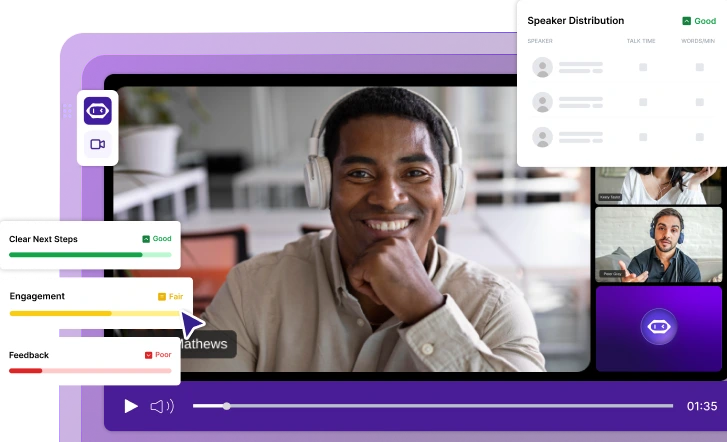
Uma vez conectado a ferramentas como Zoom, Google Meet ou Microsoft Teams, o MeetGeek une chamadas, as grava e gera transcrições completas e resumos baseados em IA. Em vez de confiar na memória, sua equipe obtém um registro completo e pesquisável de cada conversa.
%20(1).webp)
O que torna isso especialmente útil para o processo de vendas da MEDDIC é como essas conversas são transformadas em insights estruturados. Você pode identificar rapidamente o que importa em cada negócio, entender as funções das partes interessadas, analisar as objeções de vendas e identificar as próximas etapas, sem precisar vasculhar notas ou gravações manualmente.
Por exemplo, depois de uma ligação, sua equipe pode facilmente:
- Analise exatamente como um cliente potencial descreveu seu pontos problemáticos
- Identifique as menções do comprador econômico ou outras partes interessadas importantes
- Entenda como o processo de tomada de decisão trabalha dentro da organização
- Acompanhe compromissos, preocupações e mudanças em várias reuniões
- Extraia itens de ação e acompanhamentos claros que mantenham as coisas em andamento e levem ao fechamento de negócios
Como tudo é pesquisável e compartilhável, os gerentes de vendas também podem analisar chamadas, treinar representantes usando exemplos reais e identificar lacunas na qualificação do negócio com muito mais rapidez.
.webp)
Em vez de adicionar outra ferramenta para gerenciar, o MeetGeek se encaixa em seu fluxo de trabalho existente e o fortalece. Ele transforma as interações diárias com os clientes em dados confiáveis que apoiam seu funil de vendas, melhoram a consistência e ajudam sua equipe a aplicar o MEDDIC da maneira que ele deve ser usado.
Além disso, o MeetGeek foi desenvolvido pensando na segurança. Ele oferece suporte à conformidade com SOC 2, HIPAA e GDPR, usa criptografia em trânsito e em repouso, oferece hospedagem regional de dados e segue uma política de dados de treinamento zero, tornando-o adequado para equipes que lidam com conversas comerciais confidenciais.
Qual é a aparência de uma qualificação MEDDIC na prática? Exemplos de qualificação de vendas do MEDDIC
Compreender conceitualmente o processo de vendas do MEDDIC é útil, mas fica muito mais claro quando você vê como ele se aplica a um negócio real.
Exemplo 1: empresa de SaaS vendendo uma plataforma de CRM
Imagine uma empresa de software vendendo uma solução de CRM para uma empresa de médio porte.
- Métricas: O cliente potencial quer aumentar as taxas de conversão do funil em 20% e reduzir o tempo de geração de relatórios manuais
- Comprador econômico: O diretor de receita é responsável pela aprovação do orçamento
- Critérios de decisão: Integração com a pilha tecnológica atual, facilidade de integração e recursos de geração de relatórios
- Processo de decisão: Inclui uma demonstração do produto, avaliação interna, análise de TI e aprovação final do executivo
- Identifique a dor: A equipe de vendas está enfrentando dificuldades com ferramentas fragmentadas e previsões imprecisas
- Campeão: Um gerente de operações de vendas que é diretamente afetado por essas ineficiências e quer um sistema melhor
Ao mapear tudo isso, a equipe de vendas obtém uma visão clara de como levar o negócio adiante. Eles podem personalizar seu discurso de vendas, envolver as partes interessadas certas e antecipar os bloqueadores antes que eles aconteçam.
Exemplo 2: empresa de consultoria vendendo um projeto de transformação
Agora considere um empresa de consultoria oferecendo um grande projeto de transformação digital.
- Métricas: Reduza os custos operacionais e melhore a eficiência em vários departamentos
- Comprador econômico: Um executivo sênior, como um diretor de transformação
- Critérios de decisão: Histórico comprovado, alinhamento estratégico e impacto comercial de longo prazo
- Processo de decisão: inclui várias avaliações executivas, aprovações orçamentárias e um ciclo formal de compras
- Identifique a dor: Processos desatualizados e falta de alinhamento entre as equipes
- Campeão: Um líder de departamento responsável por promover mudanças internamente
Nesse caso, o negócio envolve várias partes interessadas, um longo processo de aprovação e um investimento significativo. Sem uma estrutura estruturada como o MEDDIC, seria difícil de gerenciar.
Qual é a diferença entre MEDDIC, MEDDPICC e MEDDICC?
Em muitos casos, especialmente em ambientes corporativos, fechar um negócio envolve mais do que apenas entender as necessidades do comprador. Isso exige aprovações internas, fluxos de trabalho de compras, análises jurídicas e pressão competitiva. É por isso que variações como MEDDPICC e MEDDICC se tornaram cada vez mais comuns.
MEDDPICC: versão estendida do MEDDIC
A estrutura MEDDPICC se baseia na metodologia original do MEDDIC, adicionando dois componentes adicionais: o processo de papel e a concorrência.
O processo de papel refere-se a tudo o que acontece depois que um acordo é acordado em princípio, mas antes de ser assinado oficialmente. Isso inclui procedimentos de aquisição, negociações de contratos, requisitos de conformidade e o processo de revisão legal. Em muitos ambientes de vendas, esse estágio pode atrasar os negócios por semanas ou até meses se não for compreendido precocemente.
Por exemplo, um negócio pode parecer pronto para ser fechado do ponto de vista de vendas, mas se a organização do cliente exigir várias aprovações, análises de segurança ou etapas de integração de fornecedores, o cronograma poderá se estender rapidamente. Ao incluir o processo em papel no processo de vendas da MEDDIC, as equipes podem antecipar esses atrasos e gerenciar as expectativas com mais eficiência.
A segunda adição, a concorrência, reflete a realidade de que a maioria dos clientes em potencial está avaliando vários fornecedores ao mesmo tempo. Entender quem mais está envolvido, como eles estão posicionados e o que diferencia sua solução é essencial para manter uma forte proposta de valor durante todo o ciclo de vendas.
Na prática, o MEDDPICC é particularmente útil em:
- vendas corporativas com várias partes interessadas e estruturas de aprovação em camadas
- indústrias com requisitos rigorosos de conformidade ou aquisição
- negócios em que a concorrência é forte e a diferenciação é essencial
MEDDICC: uma variação mais leve focada na competição
Outra variação, o MEDDICC, dá mais ênfase à concorrência sem sempre tratar o processo de papel como uma categoria separada.
Essa abordagem é frequentemente usada por equipes de vendas que operam em mercados altamente competitivos, nos quais vários fornecedores oferecem soluções semelhantes. Nesses casos, entender como sua oferta se compara às alternativas pode ter um impacto direto na continuidade do negócio.
Embora o MEDDICC não altere fundamentalmente a estrutura da estrutura do MEDDIC, ele reforça a importância do posicionamento e da diferenciação em todo o processo de vendas.
Quando usar MEDDIC versus MEDDPICC
A escolha entre o MEDDIC e suas variações depende da complexidade do seu processo de vendas e do tipo de negócios em que sua equipe de vendas está trabalhando.
O MEDDIC normalmente é suficiente para cenários B2B padrão em que o negócio envolve alguma complexidade, mas não exige uma extensa aquisição ou coordenação jurídica.
O MEDDPICC se torna mais relevante quando os negócios envolvem:
- processos de aprovação longos e formais
- requisitos detalhados de aquisição e contrato
- várias camadas de autoridade de tomada de decisão
- forte concorrência entre fornecedores
Nessas situações, adicionar visibilidade ao processo de papel e ao cenário competitivo pode melhorar significativamente sua capacidade de avançar com os negócios.
MEDDIC vs BANT, SPIN, Challenger e NEAT: qual a diferença?
O MEDDIC é especialmente eficaz em ambientes de vendas complexos B2B com várias partes interessadas, pois oferece uma maneira estruturada de entender as necessidades do cliente e como as decisões são tomadas, algo que muitas outras metodologias não abordam totalmente.
Veja como outras metodologias de vendas populares se comparam ao processo MEDDIC:
| Methodology | What it is | Best for | Key difference vs MEDDIC |
|---|---|---|---|
| BANT (Budget, Authority, Need, Timing) | A simple framework to quickly qualify leads based on basic criteria | Transactional sales and short sales cycles | Faster but more surface-level; does not fully capture complex buying processes |
| SPIN Selling | A questioning-based approach focused on Situation, Problem, Implication, and Need-payoff | Discovery calls and uncovering customer needs | Strong for conversations, but does not structure deal qualification like MEDDIC |
| Challenger Sales | A methodology that focuses on teaching, tailoring, and taking control of the sales conversation | Complex sales where influencing the buyer is key | Focuses on influencing decisions, while MEDDIC focuses on qualifying and managing them |
| NEAT (Needs, Economic impact, Access to authority, Timeline) | A modern qualification framework that builds on BANT with more focus on impact | Mid-level complexity sales | More flexible than BANT, but still less detailed than MEDDIC |
Quais são os desafios mais comuns com a adoção do MEDDIC?
Um problema comum é complexidade. Para representantes de vendas mais novos, a estrutura pode parecer opressora no início.
Outro desafio é o nível de detalhe necessário. A coleta de informações sobre a organização, as partes interessadas e os processos do cliente leva tempo, o que pode atrasar os negócios em estágio inicial.
Adoção inconsistente também é comum. Se alguns representantes seguirem o MEDDIC e outros não, o funil de vendas se tornará difícil de gerenciar.
Finalmente, algumas equipes se enquadram em análise excessiva. Em vez de usar o MEDDIC para orientar as decisões, eles o tratam como uma lista de verificação e atrasam o avanço dos negócios.
A chave é usar o MEDDIC como guia, não como um sistema rígido.
Quais são os prós e os contras do MEDDIC?
A metodologia de vendas da MEDDIC foi projetada para melhorar a forma como as equipes qualificam e gerenciam negócios, mas funciona melhor no contexto certo. Aqui está uma rápida olhada em onde isso ajuda e onde pode falhar.
Prós do MEDDIC:
- Melhore a qualificação de leads: Ajuda as equipes de vendas a se concentrarem em clientes potenciais qualificados e a evitar perder tempo com oportunidades inadequadas
- Melhor previsão: Uma visão mais clara do comprador econômico e do processo de decisão leva a previsões de pipeline mais precisas.
- Compreensão mais profunda do cliente: A ênfase na identificação de pontos problemáticos melhora o alinhamento com as necessidades reais do cliente
- Resultados mais previsíveis: Uma abordagem estruturada facilita o acompanhamento do progresso do negócio e a detecção precoce de riscos
Contras do MEDDIC:
- Não é ideal para vendas simples: Pode parecer muito pesado para vendas transacionais ou ciclos de vendas curtos
- Requer treinamento e consistência: Os representantes de vendas precisam de tempo e treinamento para aplicá-lo de forma eficaz
- Pode desacelerar as coisas se usado em excesso: Tratá-la como uma lista de verificação rígida pode atrasar os negócios em vez de levá-los adiante.
Lista de verificação de descoberta do MEDDIC: principais perguntas a serem feitas
Use esta lista de verificação do MEDDIC durante as chamadas de descoberta para garantir que você esteja capturando as informações necessárias para qualificar adequadamente um negócio e levá-lo adiante.
| MEDDIC element | Questions to ask in discovery |
|---|---|
| Metrics | What specific outcome are you trying to achieve? How are you measuring success today? What would improvement look like in numbers? |
| Economic Buyer | Who is responsible for approving the budget? Have we involved them in the conversation? What do they care about most? |
| Decision Criteria | What are the top criteria you’re using to evaluate solutions? How important are factors like ROI, integration, or security? |
| Decision Process | What are the steps from where you are today to a signed agreement? Who needs to be involved at each stage? |
| Identify Pain | What problem are you trying to solve? What happens if this isn’t addressed in the next 3 to 6 months? |
| Champion | Who internally is driving this initiative? Do they have influence with other stakeholders? Can they advocate for this solution? |
Considerações finais
O MEDDIC oferece uma visão mais clara do que realmente está acontecendo em um negócio. Depois de saber quem está envolvido, o que é importante para eles e como as decisões são tomadas, fica muito mais fácil priorizar as oportunidades certas e levá-las adiante com confiança.
O impacto aparece na forma como sua equipe trabalha no dia a dia. Menos tempo gasto em negócios incertos, mais foco em oportunidades que têm potencial real e melhor visibilidade em todo o funil de vendas.
Para que isso funcione na prática, sua equipe precisa de uma maneira confiável de capturar insights de cada conversa. Se você quiser aplicar o MEDDIC de forma mais consistente e transformar reuniões em dados acionáveis, experimente o MeetGeek gratuitamente e veja como isso aumenta a produtividade e os resultados da sua equipe.
Perguntas frequentes
Quais tipos de equipes de vendas se beneficiam mais com o MEDDIC?
A metodologia de vendas MEDDIC é mais eficaz para equipes que lidam com negócios corporativos, ciclos de vendas mais longos e oportunidades envolvendo várias partes interessadas. Funciona particularmente bem em ambientes B2B, onde entender a organização do cliente e a estrutura de tomada de decisões é fundamental para fechar negócios.
Como o MEDDIC melhora a precisão da previsão de vendas?
O MEDDIC melhora a previsão confiando em dados concretos e não na intuição. Ao definir claramente elementos como o comprador econômico, o processo de decisão e os critérios de decisão, os líderes de vendas podem avaliar melhor quais negócios provavelmente serão fechados e quando, levando a previsões de receita mais precisas.
O MEDDIC pode ajudar a desqualificar leads ruins mais rapidamente?
Sim. Um dos principais pontos fortes da estrutura MEDDIC é que ela ajuda as equipes de vendas a identificar rapidamente negócios que provavelmente não avançarão. Ao descobrir lacunas em áreas como acesso de partes interessadas ou pontos problemáticos pouco claros, as equipes podem evitar perder tempo e concentrar seus esforços de vendas em oportunidades de alta qualidade.
Por que mapear o processo de decisão é tão importante no MEDDIC?
Compreender o processo de tomada de decisão do cliente permite que as equipes de vendas identifiquem as etapas exatas necessárias para fechar um negócio e antecipar possíveis atrasos. Um mapa claro do processo ajuda os representantes a saber quando agir, quais partes interessadas envolver e como lidar com os obstáculos antes que eles afetem o resultado.
O MEDDIC realmente aumenta as taxas de vitória?
Muitas empresas relatam taxas de ganho significativamente maiores após a adoção do MEDDIC, com algumas vendo melhorias de dois dígitos. Essa melhoria vem do foco em oportunidades bem qualificadas, do alinhamento às necessidades reais dos clientes e do gerenciamento de negócios de forma mais estratégica durante todo o ciclo de vendas.
Notas de Reunião no Claude: O Que Você Pode Criar e Como Conectar
Conecte suas notas de reunião ao Claude e transforme chamadas passadas em respostas, documentos finalizados e trabalho em várias etapas.
As 6 Melhores Alternativas ao Airgram em 2026
Compare as melhores alternativas ao Airgram para 2026, incluindo MeetGeek, Fireflies, Otter, tl;dv, Fellow e Sembly AI.
Ata de Reunião no ChatGPT: Benefícios, Usos e Configuração
Conecte as suas notas de reunião ao ChatGPT e transforme chamadas passadas em atas, respostas e automações instantâneas, em linguagem simples.

Como Digitar Mais Rápido: 15 Truques Que Funcionam
Quer digitar mais rápido e cometer menos erros? Descubra truques práticos de digitação, atalhos de teclado e ferramentas que o ajudam a trabalhar de forma mais inteligente.
As 10 Melhores Alternativas ao ChatGPT Para o Trabalho em 2026
Procurando uma alternativa ao ChatGPT? Compare as principais ferramentas de IA para pesquisa, reuniões, escrita, codificação, busca e produtividade em 2026.
9 Melhores Alternativas ao Calendly em 2026 (Testadas + Comparadas)
Cal.com, Acuity, Chili Piper e mais — as melhores alternativas ao Calendly em 2026, testadas e classificadas por caso de uso.
8 Melhores Extensões do Google Meet em 2026 (Testadas para Produtividade)
De notas de IA a cancelamento de ruído, aqui estão 8 extensões do Chrome que corrigem o que o Google Meet não faz nativamente.
Ferramentas de Produtividade de IA Que Realmente Usamos em Vendas e Marketing
Uma visão prática das ferramentas de produtividade de IA que usamos diariamente para reuniões, conteúdo, automação, fluxos de trabalho de vendas e trabalho em equipe.
Gemini vs. Google Assistant: Guia Completo de Comparação
Confuso sobre Gemini vs Google Assistant? Descubra as principais diferenças, o que o Google está mudando e qual assistente se adapta melhor a você.
Gerenciando Equipes Híbridas em 2026: Desafios Comuns e Como Superá-los
Lacunas na comunicação, atrito de fuso horário, deriva cultural — os quatro desafios que todo gestor híbrido enfrenta, e como resolvê-los.

MeetGeek vs tl;dv: Qual ferramenta de reunião de IA é ideal para sua equipe em 2026?
Características, preços, precisão e integrações em uma comparação lado a lado com um veredicto claro para as equipes de vendas, CS e operações.

Como Converter MP4 em Transcrição (Rápido & Preciso)
Aprenda a converter arquivos MP4 em transcrições, legendas e legendas precisas com ferramentas de IA para reuniões, webinars e entrevistas.

Serviço de Transcrição do Google em 2026: Análise Honesta e Melhor Alternativa
Google Meet, Cloud Speech-to-Text, Docs, Recorder — o que cada um faz, onde cada um falha e a melhor alternativa.

Coaching de Vendas com IA: Como as Equipes de Vendas Modernas Usam a IA para Fechar Mais Negócios
How AI sales coaching analyzes every call (not just the 3% a manager samples) and surfaces coachable moments by rep, stage, and objection type.
O ChatGPT consegue transcrever áudio? O que ele pode e o que não pode fazer
O ChatGPT pode transcrever áudio? Descubra como funciona, suas limitações e quando usar o MeetGeek para obter melhores resultados.
IA para o sucesso do cliente: O manual de 2026
Onde a IA se conecta ao dia do CSM (renovações, riscos, referências, avaliações), além de um modelo de maturidade e uma lista de verificação de 10 itens para escolher ferramentas.
Um guia completo da metodologia de vendas do MEDDIC
Descubra as vendas da MEDDIC, como elas ajudam a qualificar leads, entender os processos de decisão e melhorar as taxas de vitória em ciclos complexos de vendas B2B.

Como escrever uma mensagem de ausência temporária
Aprenda a escrever uma mensagem clara de ausência temporária, o que incluir e a usar exemplos prontos para copiar em qualquer situação.
.webp)
Como cancelar sua assinatura do Zoom em 2026
Precisa cancelar sua assinatura do Zoom? Este guia explica exatamente como fazer isso no site da Zoom, na Apple App Store ou no Google Play, o que acontece após o cancelamento e como evitar cobranças extras.
MeetGeek vs Fellow: Comparação de notas de reuniões, agendas e automação
Comparando MeetGeek com Fellow? Veja como suas notas de reuniões, agendas, gravações e recursos de automação de IA diferem para encontrar a melhor opção para sua equipe.

Como gravar tela no Mac (com áudio, som do sistema e dicas profissionais)
Aprenda a gravar a tela no Mac usando ferramentas integradas, capturar áudio corretamente e ver quando o MeetGeek é a opção mais inteligente.
MeetGeek vs Krisp: Qual assistente de reunião de IA é ideal para sua equipe?
Comparação entre MeetGeek e Krisp: notas de IA, cancelamento de ruído, preços, integrações e recursos de gravação explicados com clareza.

Dicas de videoconferência para realizar reuniões virtuais bem-sucedidas
Aprenda dicas práticas de videoconferência que melhoram a qualidade, o engajamento e o acompanhamento do áudio e ajudam as equipes a se manterem alinhadas após as reuniões virtuais.
Webex vs Zoom: Qual plataforma de videoconferência se adapta melhor às suas reuniões?
Uma comparação clara entre Webex e Zoom, desde recursos e preços até segurança e integrações.

Como levantar a mão no Zoom e realmente ser ouvido
Saiba como levantar a mão no Zoom em qualquer dispositivo, evitar interrupções e manter as reuniões organizadas do início ao fim.
Boas perguntas para fazer em uma entrevista que ajudam você a fazer a escolha certa
Saiba quais perguntas fazer, quando fazê-las e como usar entrevistas para decidir se uma função, uma equipe e uma empresa são realmente adequadas para você.

O que é o Modo Companion no Google Meet? Tudo o que você precisa saber
Continue lendo para obter um guia prático sobre como usar o Modo Companion no Google Meet para reuniões híbridas mais claras e equilibradas.
O que é uma reunião skip level? Como os líderes usam o pular de nível para melhorar a comunicação
Uma análise aprofundada das reuniões presenciais e de como elas ajudam os líderes a se conectarem com as equipes e obterem uma visão real.

O Que é um Agente de Voz de IA? Um Guia Prático de Como a IA de Voz Funciona
Este guia explica o que é um agente de voz de IA, como ele funciona, os benefícios que ele oferece e onde ele se encaixa melhor com equipes humanas.

Guia de reuniões stand-up: o que são e como administrá-las
Descubra o que torna uma reunião presencial realmente útil. Este guia explica como fazer stand-ups diários que permaneçam curtos, bloqueiem a superfície e mantenham as equipes alinhadas.
Tudo sobre o Microsoft Teams AI Interpreter + Como ir além da tradução
Descubra como o Microsoft Teams AI Interpreter funciona, onde ele é insuficiente e como ir além da tradução.

Melhor aplicativo de gravação de palestras em 2026:5 ferramentas que os alunos realmente usam
Vamos analisar em profundidade o que os alunos estão usando hoje em dia para gravar e organizar suas palestras, tanto online quanto offline.

Explicação do preço da Read AI para 2026: Valerá a pena para anotação de reuniões
Explore os preços de 2026 da Read AI, seus principais recursos e como ela lida com notas de reuniões, transcrições e insights para apoiar equipes modernas.

O que é uma base de conhecimento pesquisável e como ela funciona?
Explore como as bases de conhecimento pesquisáveis melhoram o acesso às informações e veja como o MeetGeek transforma suas reuniões em um centro de conhecimento rápido e confiável.

Como desfocar o fundo no Google Meet (guia simples para todos os dispositivos)
Descubra como desfocar seu plano de fundo no Google Meet em computadores e dispositivos móveis, usar efeitos visuais e obter uma aparência mais limpa e focada em cada chamada.
Como participar de reuniões do Teams com código: um guia passo a passo completo
Descubra como participar de reuniões do Microsoft Teams usando um código de reunião, além de outras opções, como um link ou convite. Este guia explica cada método de forma clara e passo a passo.

5 melhores alternativas do NoteGPT em 2026
Explore as 5 principais alternativas do NoteGPT que ajudam você a capturar insights importantes, transcrever conteúdo e aumentar a produtividade em fluxos de trabalho profissionais e de aprendizado.
O que é Perplexity AI? Um guia para o mecanismo de pesquisa baseado em IA que transforma a forma como encontramos informações
Neste artigo, examinaremos de perto o Perplexity AI, o que ele pode fazer por você em comparação com os mecanismos de pesquisa tradicionais e alguns de seus prós e contras.
As melhores alternativas ao tl;dv para agilizar suas reuniões
Descubra as principais alternativas ao tl; dv e explore e compare seus recursos para escolher a ferramenta de reunião de IA certa para sua organização.
Modo de gravação ChatGPT vs MeetGeek: aqui está tudo o que você precisa saber
Quer saber como o gravador ChatGPT se compara ao MeetGeek? Analisamos os recursos, a integração e a segurança de dados para gravar reuniões.

Preços da Fathom AI 2026: ainda vale a pena para equipes modernas?
Explore os preços da Fathom AI para 2026, incluindo recursos, limites e comparações de planos, além de como o MeetGeek oferece mais flexibilidade para equipes.
Agentes de reuniões de IA: como a IA autônoma está transformando o futuro do trabalho
Descubra como os agentes de reuniões com inteligência artificial estão redefinindo o futuro do trabalho, gerenciando agendamentos, acompanhamentos e até mesmo falando em seu nome para economizar tempo e transformar cada reunião em ação real.
Análise do Notta AI: Essa ferramenta de transcrição de IA vale a pena em 2026?
Leia esta análise aprofundada do Notta AI para ver se ele transcreve bem reuniões, lida com vários idiomas e fornece resumos de IA, além de onde é insuficiente em comparação com assistentes de reunião mais inteligentes.
Essas 4 ferramentas de IA para organizações sem fins lucrativos farão com que cada hora conte
Torne sua organização sem fins lucrativos mais eficiente com ferramentas de IA que reduzem o tempo administrativo, melhoram a colaboração e maximizam cada hora de impacto.
Alternativas do Granola AI Notes: as melhores opções para experimentar em 2026
Explore as melhores alternativas do Granola AI Notes para 2026 com ferramentas mais inteligentes que vão além da transcrição, oferecendo automação, insights e colaboração.
E-mail de follow-up após a entrevista: como escrevê-lo, quando enviá-lo e o que dizer
Descubra como escrever um e-mail de acompanhamento eficaz após uma entrevista. Do tempo e dos modelos ao tom e à estrutura, este guia aborda tudo o que você precisa para se destacar e se manter memorável.
Análise de preços da Tactiq 2026: planos, limites e a melhor alternativa
Explore os planos de preços mais recentes da Tactiq e descubra como eles se comparam ao assistente de reuniões tudo-em-um do MeetGeek.

Significado da reunião ad hoc e como organizá-la
Descubra o verdadeiro significado de uma reunião ad hoc e aprenda como tornar as discussões espontâneas mais focadas e eficazes. Descubra quando mantê-los e gerenciá-los.

Etiqueta de reunião virtual: 15 regras essenciais para videochamadas profissionais
Descubra 15 regras e dicas essenciais de etiqueta para reuniões virtuais que mantêm as conversas focadas, profissionais e envolventes.

Como desfocar o fundo no Zoom: guia passo a passo
Descubra como usar o recurso de desfoque de fundo do Zoom para privacidade e foco, além de dicas, correções e quando mudar para planos de fundo virtuais.
Como compartilhar a tela no Google Meet: um guia passo a passo simples
Saiba como compartilhar sua tela no Google Meet com etapas claras para computador, iPhone, iPad e Android.
Explicação do servidor MCP da MeetGeek: Como ele permite que assistentes de IA transformem reuniões
Veja como o servidor MCP da MeetGeek ajuda os assistentes de IA a transformar suas reuniões em insights inteligentes e acionáveis, tudo a partir de sua máquina local.

Como alterar o nome no Zoom (antes e depois de entrar em uma reunião)
Saiba como alterar o nome do Zoom passo a passo em qualquer dispositivo, além de dicas para anfitriões, salas de espera e solução de problemas.

IA para tomar notas para estudantes: as melhores ferramentas para estudar de forma mais inteligente em 2026
Um guia das melhores ferramentas de IA para fazer anotações para estudantes em 2026, com recursos, prós e contras para ajudar você a escolher o aplicativo certo para aprender.
Análise de preço do Descript em 2026: o que ela oferece, onde fica aquém e uma alternativa melhor
Uma análise mais detalhada dos níveis de preços do Descript, suas vantagens e desvantagens e por que o MeetGeek se destaca como uma escolha mais inteligente para criadores.

Limite de tempo do Google Meet: tudo o que você precisa saber
Neste artigo, você aprenderá tudo o que precisa saber sobre os limites de tempo do Google Meet e como ultrapassá-los.

Como transcrever memorandos de voz para texto (3 maneiras diferentes)
Neste artigo, você aprenderá a transcrever mensagens de voz de três maneiras diferentes, pesando os prós e os contras de cada opção.
Melhores alternativas de ClickUp para anotações com IA
Conheça as 5 melhores alternativas do ClickUp se quiser ir além da simples tomada de notas com IA e encontrar um assistente de reuniões abrangente.
O que é um resumo objetivo? Definição, exemplos e dicas
Resumos objetivos são essenciais quando você precisa de informações importantes de reuniões longas. Vamos discutir tudo sobre eles neste artigo!

Como gravar um Google Meet: todas as opções explicadas
Neste artigo, detalhamos como gravar um Google Meet de forma nativa e com a ajuda de ferramentas de terceiros, como o MeetGeek.

Os 7 melhores aplicativos de anotações de reuniões em 2026
Procurando o melhor aplicativo de anotações de reuniões para a sua equipe? Analisamos os recursos, prós e contras dos 7 melhores no momento.

Como gravar um webinar do Zoom como anfitrião ou participante (2 métodos)
Neste artigo, analisaremos como gravar um webinar do Zoom como anfitrião ou participante usando a ferramenta integrada de gravação e de terceiros da Zoom com transcrição de IA.

7 melhores extensões do Chrome para vendedores
Neste artigo, exploraremos as melhores extensões do Chrome para representantes de vendas, com foco em ferramentas que melhoram a inteligência de reuniões, se integram aos CRMs e otimizam a produtividade.

As melhores extensões e ferramentas de captura de áudio do Chrome em 2026 [Comparação]
Vamos nos aprofundar em uma variedade de opções, desde gravadores básicos até plataformas avançadas que oferecem transcrição, resumos e integrações perfeitas.

7 melhores extensões de fala para texto do Chrome: comparação e recursos
Este guia detalha as 8 principais extensões de fala para texto do Chrome para 2025, analisando seus principais recursos, preços e casos de uso ideais para ajudar você a tomar uma decisão informada.

A sobrecarga de reuniões não é o problema real - é um design ruim de reuniões
Quando a sobrecarga de reuniões se torna óbvia, há algumas pequenas mudanças que podem transformar toda a sua cultura de reuniões.

Melhor software de inteligência conversacional em 2026
Ao aproveitar a IA, essas plataformas de inteligência conversacional fornecem a análise necessária para refinar as propostas de vendas ou de investidores, melhorar o treinamento e influenciar a receita.

Como adicionar notas de reunião ao Google Docs [3 maneiras fáceis]
Vamos explorar três maneiras de adicionar suas notas de reunião ao Google Docs, manual ou automaticamente.

Encontre a melhor alternativa ao Zoom em 2026
Procurando uma alternativa ao Zoom? Confira as melhores opções para 2026 e encontre a opção perfeita para suas reuniões!

Como estender o limite de tempo de Zoom: soluções pagas e gratuitas
Precisa de mais tempo para sua reunião do Zoom? Aprenda a estender facilmente sua sessão com este guia simples.

Como instalar o Microsoft Teams para Mac (guia para iniciantes)
Configurar o Microsoft Teams no Mac é fácil! Siga nosso guia rápido para começar a colaborar sem problemas.
Como Gravar Chamadas do WhatsApp: 5 Métodos para Qualquer Dispositivo (2026)
Descubra a maneira mais fácil de gravar chamadas do WhatsApp com nossas instruções claras e passo a passo.

As 5 principais integrações para assistentes de reuniões de IA em 2026
Quer aumentar a produtividade de suas reuniões? Explore as principais integrações de IA de assistentes de reuniões de 2026 que se conectam perfeitamente às suas ferramentas e aplicativos favoritos.

7 maneiras pelas quais os assistentes de reunião de IA economizam tempo para as equipes de vendas em 2026
Saiba como os assistentes de reuniões com inteligência artificial transformam a produtividade de vendas em 2026, eliminando tarefas manuais, simplificando fluxos de trabalho e permitindo que os representantes se concentrem nas vendas.

Explicação e alternativas de todos os planos de preços da Zoom
Obtenha uma análise clara de todos os planos de preços da Zoom, além de dicas inteligentes para salvar ou usar recursos gratuitamente.
Posso fazer uma captura de tela no Teams? Suas perguntas, respondidas
Quer saber como fazer uma captura de tela no Teams? Analisamos o que funciona, o que não funciona e o que devemos observar.

Preços e planos do Google Meet, simplificados
Encontre o plano certo do Google Meet para sua equipe com nossas dicas claras e inteligentes de economia de custos.
Onde as gravações do Teams são armazenadas? Todos os locais, explicados
Quer saber onde suas gravações do Microsoft Teams vão parar? Aqui estão todas as opções de armazenamento claramente explicadas.

A Semana de Trabalho de 4 Dias: Como as Empresas estão Vencendo a Guerra de Talentos
Por que trabalhar menos pode ser a decisão mais inteligente para empresas que buscam produtividade, inovação e retenção de talentos.
Encontre o melhor aplicativo de fala para texto para trabalho em 2026 (gratuito e pago)
Procurando um aplicativo de voz para texto em 2026? Reunimos as principais opções para aumentar a produtividade e economizar tempo no trabalho.

Gerenciando riscos de segurança e conformidade relacionados aos tomadores de notas com IA
Mantenha suas reuniões baseadas em IA seguras e compatíveis! Saiba como gerenciar riscos de segurança e conformidade, proteger dados confidenciais e garantir a privacidade em suas reuniões virtuais.

Como escrever um e-mail de acompanhamento para uma reunião de negócios + modelos e instruções do ChatGPT
Aprenda a escrever acompanhamentos claros e profissionais de reuniões de negócios com modelos e instruções do ChatGPT para economizar tempo e impulsionar as respostas.

Como usar o Microsoft Teams AI para reuniões
Saiba como automatizar notas, aprimorar a colaboração e tornar as reuniões do Teams mais produtivas com recursos baseados em IA.

Como reservar minutos para uma reunião como um profissional [+ Modelo personalizável gratuito]
Faça sempre atas de reuniões perfeitas! Aprenda dicas de especialistas para capturar pontos-chave, rastrear itens de ação e impressionar sua equipe com habilidades profissionais de anotações.
Os 5 A's da comunicação eficaz: um guia de startups para uma melhor colaboração em equipe
O sucesso de uma startup não tem a ver apenas com ótimas ideias, mas com o quão bem sua equipe se comunica. Descubra a estrutura dos 5 A para melhorar a colaboração, reduzir o atrito e transformar conversas em ações.
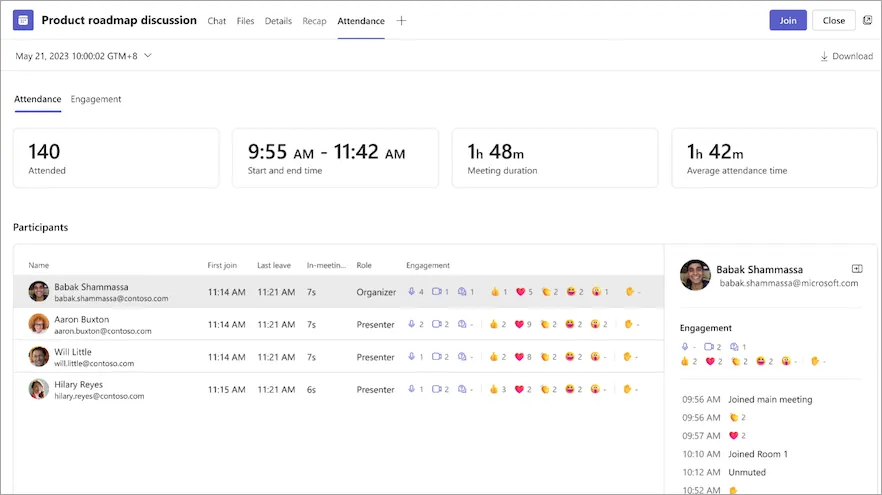
Relatório de participação em reuniões de Teams: O que é e como usá-lo
Desmistifique o relatório de presença em reuniões de Teams! Saiba como acessá-lo, interpretá-lo e aproveitá-lo para monitorar o engajamento e melhorar suas reuniões virtuais sem esforço.

Como criar e usar o Google Meet Breakout Rooms
Domine as salas de descanso do Google Meet! Aprenda a criá-los, gerenciá-los e usá-los para promover a colaboração e o engajamento em suas reuniões virtuais.

Como se gravar no Zoom, passo a passo
Domine a arte de gravar no Zoom com nosso guia simples. Aprenda a capturar suas reuniões ou anotações pessoais sem esforço.

Mais de 30 KPIs de vendas a serem monitorados em 2026
Descubra os segredos do sucesso de vendas em 2026 com este guia de mais de 30 KPIs de vendas essenciais. Saiba o que acompanhar para impulsionar o desempenho e o crescimento da receita da sua equipe.
Como criar uma transcrição do Zoom: 2 maneiras
Descubra como criar transcrições do Zoom sem esforço com nosso guia sobre dois métodos simples, perfeitos para capturar todos os principais pontos de discussão.

Encontre o modelo perfeito de avaliação de desempenho de funcionários
Descubra os melhores modelos de avaliação de desempenho de funcionários para agilizar seu processo de avaliação e aumentar a produtividade no local de trabalho.

As 60 melhores citações motivacionais de vendas para sua equipe de vendas em 2026
Procurando motivação para vendas? Encontre as melhores cotações de vendas para 2026 para capacitar sua equipe, incentivar uma mentalidade positiva e manter todos focados em atingir as metas.

Como lidar profissionalmente com qualquer conflito de horário
Aprenda a lidar com conflitos de agenda profissionalmente. Este guia oferece dicas práticas para gerenciar sobreposições, reagendar reuniões e manter relacionamentos fortes.

Guia Fácil para Instalar o Zoom para Windows
Novo no Zoom? Siga este guia simples para instalar o Zoom em seu computador Windows. Prepare-se rapidamente e comece a participar de reuniões com facilidade. Perfeito para iniciantes.
Como Gerar Notas de Reunião com ChatGPT [+ Prompts Gratuitos para ChatGPT]
Descubra etapas simples para gerar notas de reunião com o ChatGPT. Siga este guia para capturar pontos-chave, itens de ação e muito mais para obter registros de reuniões organizados e eficientes.
7 Melhores Alternativas ao Loom em 2026
Descubra as 7 melhores alternativas de Loom em 2024. Encontre as melhores ferramentas para mensagens de vídeo e colaboração em equipe.
.webp)
Zoom vs Microsoft Teams: Qual Escolher em 2026
Descubra o que é melhor para você em 2024: Zoom ou Microsoft Teams? Compare os recursos e faça a melhor escolha para suas necessidades!
Consiga mais compromissos com os códigos QR de uma reunião
Leia este manual para saber tudo sobre como encontrar códigos QR. Mergulhe em seus casos de uso práticos, benefícios e instruções passo a passo para criá-los de acordo com suas necessidades.

Fireflies vs Otter: Qual é o Melhor
Compare o Fireflies.AI e o Otter.AI para descobrir qual ferramenta de transcrição de reuniões atende melhor às suas necessidades. Explore recursos, preços e muito mais para fazer a escolha certa!
Como Aproveitar ao Máximo o Zoom AI Companion Como seu Assistente de Reuniões de IA
Aprenda a usar os recursos do Zoom AI Companion para aprimorar suas reuniões, economizar tempo e aumentar a produtividade com recursos e dicas úteis para um fluxo de trabalho mais tranquilo.