



Una buena reunión presencial es una de las maneras más fáciles de mantener el trabajo en marcha sin aumentar la fatiga de las reuniones. Se trata de una reunión breve que ayuda a los miembros del equipo a mantenerse en sintonía, detectar los obstáculos desde el principio y ponerse de acuerdo sobre los pasos a seguir, para luego volver al resto del día.
Pero los monólogos no hacen que un equipo sea ágil por arte de magia. Como se señala en las guías de la competencia, no es el único momento en el que se habla de los obstáculos, y no es el lugar donde se resuelven todos los problemas. El verdadero objetivo es alinearse, hacer un seguimiento del progreso y establecer rápidamente las conversaciones de seguimiento adecuadas cuando algo necesite más tiempo.
Este artículo es una guía práctica para organizar reuniones individuales diarias que vayan al grano, funcionen para empleados que trabajan en la oficina y a distancia y que, al mismo tiempo, se sientan humanas (sí, incluso un poco divertidas) cuando las haces de manera constante.
Qué es una reunión de pie (y por qué existe)
Un monólogo (a menudo llamado monólogo diario), stand-up diario, o scrum diario) es una reunión rápida y diaria en la que todo el equipo comparte lo que está avanzando, lo que está estancado y lo que necesita atención en la actualidad.
El nombre proviene de la costumbre original de hacer que las personas estén literalmente de pie durante la reunión, a menudo en una sala de conferencias o cerca de una pizarra física, porque estar de pie facilita que la reunión sea breve. En la práctica, muchos equipos permanecen sentados ahora, especialmente durante las videollamadas, pero el principio es el mismo: mantener la ligereza y la concentración.
Los standups se hicieron populares con la metodología ágil, especialmente entre los equipos de desarrollo, porque el trabajo de software tiene muchas dependencias. Si una persona está bloqueada, con frecuencia otra también lo está. Una sincronización rápida ayuda al grupo a coordinar sus esfuerzos antes de que los pequeños problemas se conviertan en retrasos mayores.
Si solo recuerdas una idea, hazla así: el stand up es un punto de control, no un taller. Es un momento rápido para hablar sobre el progreso, no un lugar para hacer una planificación profunda.
Por qué las reuniones diarias ayudan a los equipos a mantenerse en sintonía

Cuando los monólogos funcionan, crean un ritmo compartido. Todo el mundo sabe lo que pasa sin tener que buscar actualizaciones en los hilos de chat, los tickets o las largas cadenas de correo electrónico.
Este es el beneficio real tanto para los equipos ágiles como para los no técnicos:
- Mejor visibilidad de las prioridades y la propiedad de las tareas
- Desbloqueo más rápido y menos sorpresas
- Mayor alineación en torno al objetivo del sprint (o al objetivo semanal, si no utilizas los sprints)
- Mayor responsabilidad sin microgestión
- Una sensación más tranquila de que «tenemos esto» porque la gente puede escuchar lo que se mueve y lo que está atrapado
En otras palabras, los monólogos son una forma poderosa de mantener el impulso a diario. Es por eso que la mayoría de los monólogos siguen siendo populares incluso cuando los equipos cambian de herramientas, procesos o organigramas.
Scrum diario versus stand-up (qué es diferente y qué es lo mismo)
En Scrum, el stand-up recibe formalmente el nombre de scrum diario, y admite un ciclo de sprint específico. El propósito es inspeccionar el progreso hacia la meta del sprint y adaptar el plan para las próximas 24 horas.
Fuera de Scrum, los equipos siguen utilizando la misma idea: un registro rápido que ayude a las personas a alinear su trabajo para el día.
Entonces, ¿qué cambia?
- En forma formal reuniones diarias de scrum, el lenguaje a menudo se vincula más directamente con los compromisos del sprint y el tablero de scrum.
- En general, es posible que te concentres más en las prioridades, los traspasos y las actualizaciones interfuncionales.
Lo que permanece igual es el propósito de la reunión: alineación rápida, visibilidad temprana de los bloqueadores y propiedad clara de las próximas acciones.
Funcionamientos remotos que realmente funcionan para empleados remotos
Las paradas remotas pueden resultar incómodas cuando hay algunas personas en una habitación y otras están atendiendo una llamada. Los participantes remotos pasan por alto el lenguaje corporal, tienen dificultades para intervenir y, a menudo, terminan menos involucrados.
Una regla simple ayuda: si una persona está a distancia, trate a todos como si estuvieran a distancia.
Eso significa:
- Todos se unen desde su propio dispositivo
- Todos tienen el mismo acceso al audio y al vídeo
- La junta es compartido en pantalla
- El facilitador invita activamente a las actualizaciones y se asegura de que todos puedan hablar
Esto hace que sea más fácil mantener a las personas presentes y comprometidas, y reduce la división entre «la habitación y el control remoto» que causa frustración.
Cómo ayuda MeetGeek a los equipos a gestionar mejor las reuniones diarias
MeetGeek apoya los monólogos de una manera práctica: ayuda a los equipos a capturar lo sucedido y convertirlo en algo útil de inmediato.
Con MeetGeek, puede grabar y transcribir reuniones automáticamente, generar resúmenes y extraer decisiones y elementos de acción, de modo que los resultados iniciales no desaparezcan después de la llamada. Esto es especialmente útil cuando las personas no pueden asistir en directo, cuando los equipos están distribuidos o cuando quieres tener un registro sencillo de lo que ha cambiado desde la última vez que te levantaste.

MeetGeek también ofrece Agentes de voz con IA (en versión beta) a los que puedes invitar como participantes de la IA. Estos agentes pueden hablar, escuchar y seguir las instrucciones durante la llamada, para poder gestionar las conversaciones rutinarias u organizar un registro estructurado cuando sea necesario.
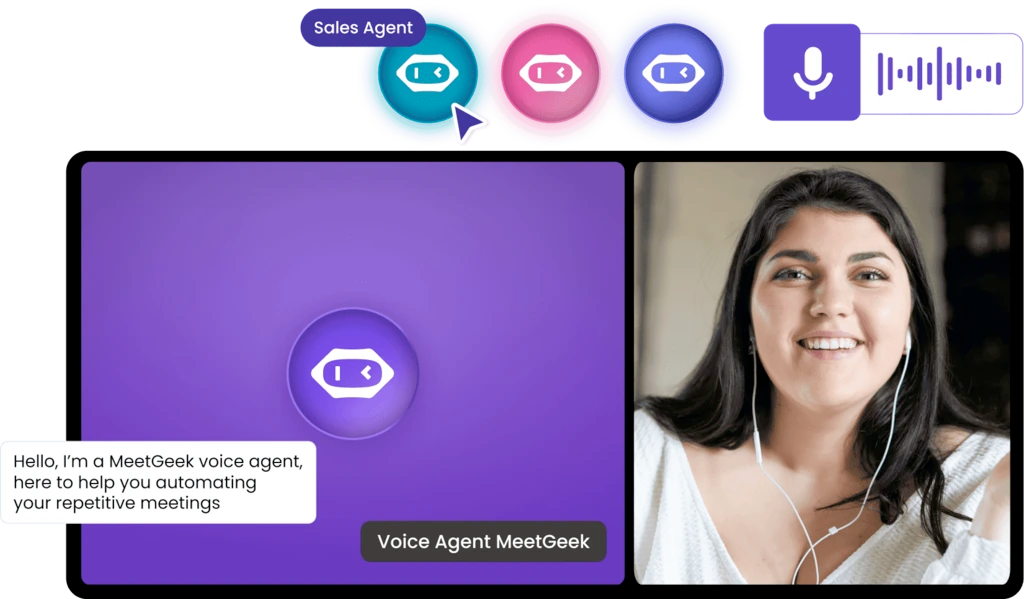
Los agentes de voz de MeetGeek incluyen plantillas listas para usar, como un AI Scrum Master, y están diseñados para participar en reuniones en Zoom, Google Meet y Microsoft Teams.
Si se usa con cuidado, esto puede reducir la carga de un facilitador y ayudar a los equipos a mantener un formato de reunión uniforme, sin convertir la postura en algo pesado.
Las tres preguntas que hacen que una persona vaya al grano
Un monólogo clásico utiliza tres indicaciones porque, de forma natural, centran la conversación:
- ¿En qué trabajé ayer?
- ¿Qué voy a hacer hoy?
- ¿Qué me bloquea?
Estas preguntas funcionan porque mantienen a todos anclados en la realidad. También vinculan el día actual con la última vez que se pusieron de pie, por lo que no tendrás que restablecer la conversación todas las mañanas.
Si tu equipo utiliza un sistema de venta de entradas o cualquier forma de gestión de proyectos, es útil vincular cada actualización a un ticket, una tarjeta o una entrega de la pizarra. De este modo, se mantiene la información concreta y se evita que los monólogos se conviertan en historias vagas sobre «estar ocupado».
Un buen stand-up requiere señales útiles.
Un ejemplo de flujo de stand-up (en una sala de conferencias o en vídeo)
Este es un ejemplo de flujo que parece natural y mantiene a todos alineados:
- Abre el tablero (30 segundos)
- Recuerda al grupo el objetivo de prioridad/sprint de hoy (30 segundos)
- Recorre el grupo (de 8 a 12 minutos en total)
- Cada persona comparte ayer, hoy, bloqueadores
- Manténgalo en el punto
- Captura los seguimientos (1 minuto)
- Termine a tiempo y deje que los seguimientos se realicen de inmediato (o prográmelos)
Esto es suficiente para mantener una estrecha alineación sin alargar la reunión.
Cómo hacer que la reunión sea breve sin perder valor
Los monólogos se ganan una mala reputación cuando se vuelven largos y repetitivos. La solución no es «hablar menos» de una manera vaga. La solución es proteger el enfoque y profundizar los temas en otros lugares.
Estos son algunos consejos prácticos que funcionan:
1. Empiece con la junta, no con las opiniones
Abre tu tablero de scrum o tablero de tareas y muévelo de izquierda a derecha (o de arriba a abajo). Es más fácil mantenerse centrado en los hechos: lo que se movió, lo que quedó atrapado, lo que necesita atención.
2. Usa «señal, luego programa»
Si alguien plantea un tema que necesita ser discutido, el líder debe capturarlo y programarlo. Así es como evitas las conversaciones paralelas en el monólogo.
Una frase simple funciona: «Aparquemos eso y programemos un seguimiento de 10 minutos inmediatamente después».
Así es como proteges el tiempo del grupo y, al mismo tiempo, te ocupas de los problemas reales.
3. Mantenga la actualización útil para los demás
Un monólogo no es un diario personal. Es una sincronización. Si compartes algo que nadie más necesita, puede esperar.
4. Timebox con cuidado
Algunos equipos usan un temporizador. Otros simplemente usan una norma: «60 segundos por persona». De cualquier manera, el objetivo es simple: reunión corta.
(Sí, literalmente: reunión corta).
Dificultades comunes al ponerse de pie (y cómo solucionarlas)
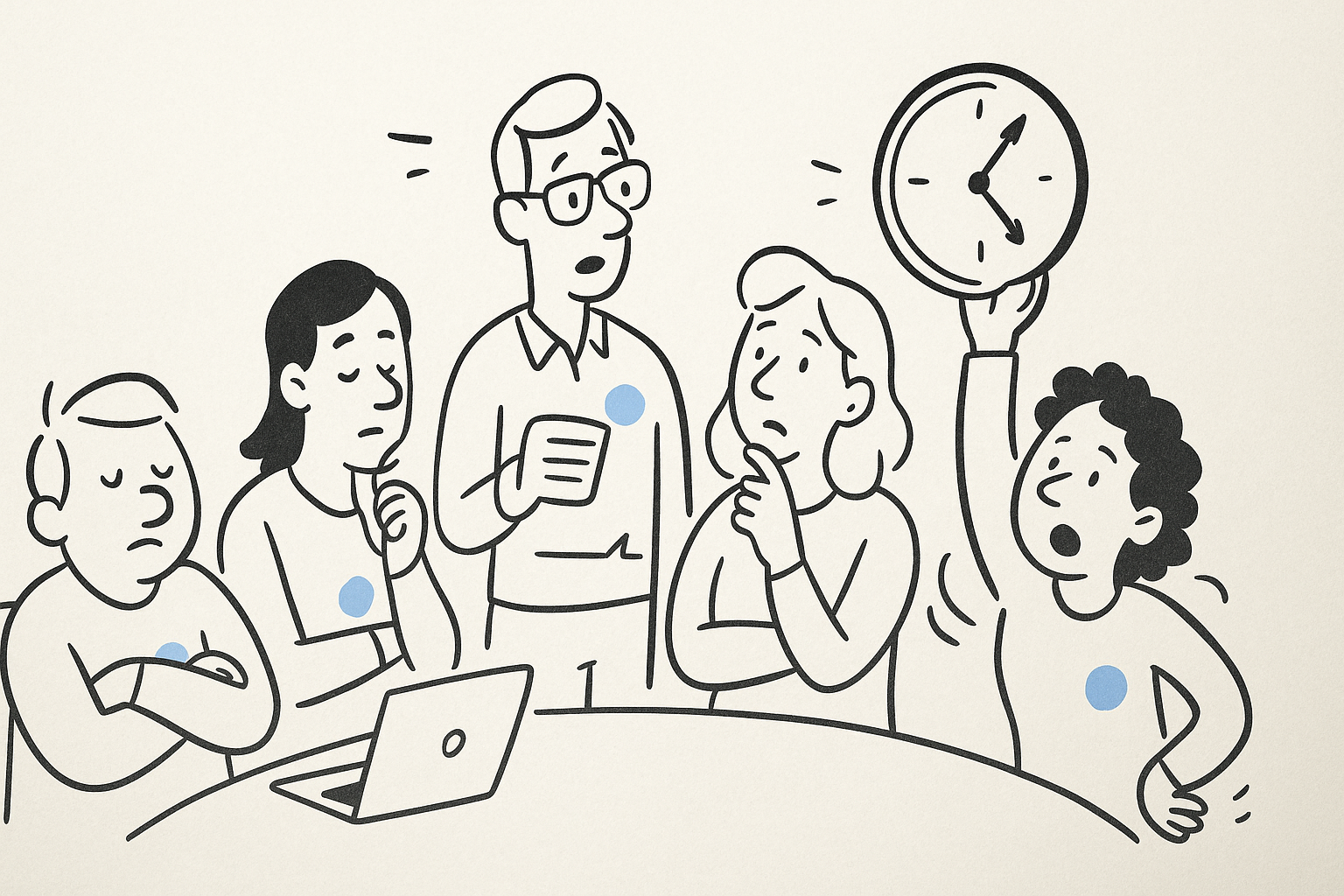
Incluso los equipos más fuertes pueden adoptar hábitos que hacen que una posición de pie parezca una pérdida de tiempo. La buena noticia es que la mayoría de los problemas tienen soluciones sencillas una vez que se detecta el patrón.
1. El stand-up se convierte en una actualización de estado exclusiva para los gerentes
Si todos denuncian que están «levantando la voz» en lugar de hablar «al otro lado», la reunión deja de ayudar al grupo. Las personas comparten la información de una persona, mientras que el resto del equipo se desconecta.
Vuelva a centrarse en la alineación compartida al enmarcar las actualizaciones en torno a lo que otros necesitan saber. Un consejo útil es:
¿Qué debería escuchar el equipo de ti hoy para que puedan desbloquear el trabajo o coordinarse contigo?
Este pequeño cambio cambia la energía de inmediato y mantiene la reunión de pie centrada en colaboración.
2. La reunión dura mucho todos los días
Una sesión de monólogos diaria que normalmente dura más de 15 minutos suele significar una de dos cosas: el grupo es demasiado grande para una sola vez o la sesión de pie se utiliza para resolver problemas.
Para solucionar este problema, haz que las actualizaciones sean breves, conéctalas al tablero y convierte los temas más profundos en conversaciones de seguimiento con las personas pertinentes. Si el equipo es grande, divide las opiniones por tipo de trabajo o, después, realiza una sincronización rápida de los líderes.
3. Las personas dejan de salir a la superficie los bloqueadores
Cuando nadie menciona los obstáculos, no significa que todo sea perfecto. Con más frecuencia, significa que las personas no se sienten seguras al decir que están estancadas, o que piensan que los bloqueadores serán vistos como un fracaso.
Haga que sea normal mencionar los obstáculos desde el principio y trátelos como una parte saludable del proceso. Una regla simple ayuda: «Llama al bloqueador tan pronto como lo veas, no cuando sea urgente». Esta es una de las principales razones por las que existen las reuniones diarias de monólogos.
4. Las conversaciones paralelas se apoderan
Las conversaciones paralelas suelen ocurrir porque un tema es real e importante, pero se está abordando en el lugar equivocado.
En lugar de apagarlo, captúrelo y rediríjalo. Dé un nombre al tema, asigne quién debe quedarse y pase a un seguimiento rápido justo después de la reunión. Esto hace que la reunión sea breve sin dejar de respetar el problema.
5. El equipo olvida lo que se decidió
Si el monólogo termina y la gente se marcha sin saber cuáles son los próximos pasos, la reunión no funcionó del todo. Las reuniones de pie deben generar claridad, no solo una conversación.
Una solución rápida es terminar con un breve resumen: qué cambió, quién es el propietario de qué y qué elementos de acción están ahora en marcha. Aquí también es donde las notas y las herramientas de las reuniones son importantes, especialmente para los equipos remotos o para cualquier persona que no pueda asistir en directo.
Reflexiones finales
Un stand-up funciona cuando hace algo bien: le da al equipo una idea clara de lo que se mueve, lo que está atascado y lo que tiene que suceder a continuación. No se trata de una actuación ni de un informe detallado. Es un registro rápido que ayuda a las personas a mantenerse alineadas y a tomar mejores decisiones durante el día.
Cuando los monólogos son breves y concentrados, es más fácil acudir a ellos, ya sea que todos estén en la misma sala de conferencias o repartidos en diferentes zonas horarias. El verdadero valor proviene de lo que ocurre justo después: las conversaciones de seguimiento, las decisiones sobre las que se toman medidas y los obstáculos que se resuelven antes de que se conviertan en problemas mayores.
Ahí también es donde las herramientas adecuadas marcan la diferencia. Cuando las notas, las acciones y los resúmenes de las reuniones se capturan automáticamente, los equipos no tienen que depender de la memoria ni buscar actualizaciones más adelante. Todos se mantienen informados, incluso si no pueden asistir en directo.
Si quieres que tus reuniones generen un seguimiento más claro en lugar de más trabajo administrativo, MeetGeek te ayuda a grabar, resumir y organizar tus reuniones en un solo lugar. Prueba MeetGeek gratis y compruebe cuánto más fácil es convertir las breves reuniones diarias en un progreso real.
Preguntas frecuentes
¿Cuánto tiempo deben durar las reuniones diarias de monólogos?
La mayoría de los equipos apuntan a una duración de 5 a 15 minutos. Si habitualmente lo superas, ajusta el formato, divide el grupo o cambia la resolución de problemas a sesiones de seguimiento.
¿Quién debería estar en el stand up?
Solo las personas que hacen el trabajo y el facilitador, además de cualquier persona que necesite coordinarse estrechamente. Si alguien no se beneficia, en su lugar puede leer el resumen.
¿Qué pasa si no utilizamos Scrum?
Eso está bien. Los equipos independientes siguen funcionando para cualquier equipo que necesite alineación diaria, visibilidad y un desbloqueo más rápido.
¿Cómo evitamos que se sienta repetitivo?
Vincula las actualizaciones con la junta, céntrate en los resultados y revisa periódicamente el propósito de la reunión. También puedes ajustar la frecuencia (a diario, en lugar de 3 veces por semana) si el día a día no te ayuda.




.avif)