




The best virtual meeting platforms in 2026 are Google Meet, Microsoft Teams and Zoom for most teams, followed by Webex, GoTo Meeting, Zoho Meeting, Slack Huddles and Jitsi Meet for more specific needs. All eight give you video calls with screen sharing and chat. Where they differ is how long a free call can run, how many people can join, and what the paid plans cost.
If your team already works in Google Workspace or uses a Microsoft 365 plan that includes Teams, start there: you may already be paying for the meeting platform you need. If you mostly meet people outside your company, pick the one your clients use, or one that lets guests join from a browser link without an account.
The table below puts all eight side by side. If you're specifically replacing Zoom, our guide to the best Zoom alternatives goes deeper on that switch.
Virtual Meeting Platforms Compared
Every price and plan limit in the table was checked on the vendor's own pricing page or help center.
| Platform | Best for | Free plan: call length | Free plan: people per call | Paid plans from |
|---|---|---|---|---|
| Google Meet | Teams on Gmail and Google Calendar | 1:1 up to 24 hours; 3 or more people up to 60 minutes | 100 | $7/user/month (Business Starter, annual) |
| Microsoft Teams | Companies on Microsoft 365 | 1:1 up to 30 hours; groups up to 60 minutes | 100 | $4/user/month (Teams Essentials, annual) |
| Zoom | A standalone meeting app for any team | 40 minutes, 1:1 calls included | 100 | $14.16/user/month (Pro, annual) |
| Webex | Large organizations that want an enterprise vendor | 40 minutes | 100 | $12/user/month (Webex Meet, annual) |
| GoTo Meeting | Security-focused businesses that need dial-in | No free plan (free trial only) | No free plan | $12/organizer/month (Professional, 150 people, annual) |
| Zoho Meeting | Small budgets and teams on Zoho apps | 60 minutes | 100 | $1/host/month (Standard, 10 people, annual) |
| Slack Huddles | Quick calls with people you already chat with in Slack | 30 minutes | 2 (1:1 only) | $7.25/user/month (Pro, annual) |
| Jitsi Meet | Quick calls where guests have no account | No published limit | Not published | Free (open source) |
Table last updated: September 23, 2026.
Did you know? In MeetGeek's data from the first half of 2026, Google Meet accounted for 43.0% of meetings, Microsoft Teams for 38.6% and Zoom for 18.4%. That's why this list starts with Google Meet and Microsoft Teams: in that dataset, both accounted for a larger share of meetings than Zoom.
The 8 Best Virtual Meeting Platforms, Reviewed
1. Google Meet
Best for: teams that already work in Gmail and Google Calendar.
Google Meet runs in your browser, so neither you nor your guests need to install anything, and it also has apps for iOS and Android.
Google Meet integrates closely with Google Calendar. Calendar events can include a Meet link automatically, which makes scheduled meetings easier to create and find.
The free plan is generous for two people: a 1:1 call can run for up to 24 hours. Calls with three or more people stop at 60 minutes, with up to 100 participants.
Pricing: Free for 1:1 calls up to 24 hours and group calls up to 60 minutes. Google Meet's paid plans come with Google Workspace, starting at $7 per user a month on Business Starter with an annual commitment. Recording starts on Business Standard, at $14 per user a month. If you're on the free plan and still need notes, a meeting assistant like MeetGeek can join the call through its Google Meet integration, transcribe it and send you a summary.
2. Microsoft Teams
Best for: companies that already run on Microsoft 365.
Microsoft Teams combines meetings, chat and file collaboration, and it works closely with Outlook, Word, Excel and SharePoint. You can schedule calls from Outlook and collaborate on Microsoft 365 files from Teams, making it a natural fit for organizations already using Microsoft 365.
The free version includes screen sharing, chat and file sharing. Group calls stop at 60 minutes with up to 100 people (more on the Teams time limit), and 1:1 calls can run for up to 30 hours. Meeting recording and transcripts require an eligible paid license and can also depend on your organization's admin policies. To see where it wins against Zoom, read our Microsoft Teams vs Zoom comparison.
Pricing: Free for group calls up to 60 minutes. Paid plans start at $4 per user a month for Teams Essentials, or $7 per user a month for Microsoft 365 Business Basic with Teams, both billed yearly. Our Microsoft Teams pricing guide covers every plan.
What happened to Skype? Microsoft retired Skype on May 5, 2025. Skype users can sign in to Microsoft Teams Free with their Skype credentials and keep their contacts and chats. All Skype Number subscriptions ended in May 2026, and Microsoft no longer accepts Skype Number port-out requests.
3. Zoom
Best for: teams that want a standalone meeting app that isn't tied to Google or Microsoft.
Zoom is the name many people still think of for video calls. It's free to start, works across desktop and mobile devices, and participants can join from a meeting link. Browser joining is also available when the host allows it.
The free Basic plan hosts up to 100 attendees for 40 minutes, and that limit applies to 1:1 calls too. It includes the whiteboard, chat, file sharing and local recording, which makes it fine for quick meetings. Our guide to the Zoom time limit explains how the 40 minutes work.
For longer meetings, Pro extends the duration to 30 hours and adds cloud recording. Business raises the limit to 300 attendees.
Pricing: Free for meetings up to 40 minutes. Pro costs $14.16 per user a month and Business $18.33, both billed annually. Our Zoom pricing guide breaks down every plan and add-on.
4. Webex
Best for: large organizations that want meetings from an enterprise vendor.
Webex is Cisco's meeting platform, and it gives you more on the free plan than its time limit suggests. Free meetings stop at 40 minutes with up to 100 people, but they include local recording, unlimited whiteboards and advanced noise cancellation.
The paid Webex Meet plan raises the limit to 24 hours and 200 people and adds the Webex AI Assistant. Our Webex vs Zoom comparison goes through the differences in detail.
Pricing: Free for meetings up to 40 minutes with up to 100 people. Webex Meet costs $12 per user a month, billed annually.
5. GoTo Meeting
Best for: businesses that prioritize security and need phone dial-in.
GoTo Meeting is aimed at businesses that need dial-in access and strong security controls. GoTo lists HIPAA compliance, TLS encryption for data in transit, AES-256 encryption at rest for stored content, and encrypted audio and video among its security measures.
It covers the essentials of a conferencing platform, including HD video, screen sharing and in-meeting chat. The Business plan hosts up to 250 people per meeting, which suits growing organizations.
Pricing: No free plan, but you can start with a free trial. Professional costs $12 per organizer a month for up to 150 participants, and Business costs $16 for up to 250, both billed annually.
6. Zoho Meeting
Best for: small budgets and teams that already use Zoho apps.
If you want a web-based meeting tool at a low price, Zoho Meeting is worth a look. It covers meetings, trainings and webinars (the webinar side is sold separately as Zoho Webinar), and it's a natural fit for teams already using Zoho's CRM products.
The free plan hosts up to 100 participants for 60 minutes, with screen sharing, a whiteboard and chat, but no recording. Recording starts on the paid plans, which also allow meetings of up to 24 hours.
Pricing: Free for meetings up to 60 minutes. The Standard plan starts at $1 per host a month for 10 participants, billed annually, and adds meeting recording with 5 GB of cloud storage per host. Professional starts at $3 and adds breakout rooms and recording transcripts. Prices rise with the number of participants, up to 250.
7. Slack Huddles
Best for: quick calls with people you already chat with in Slack.
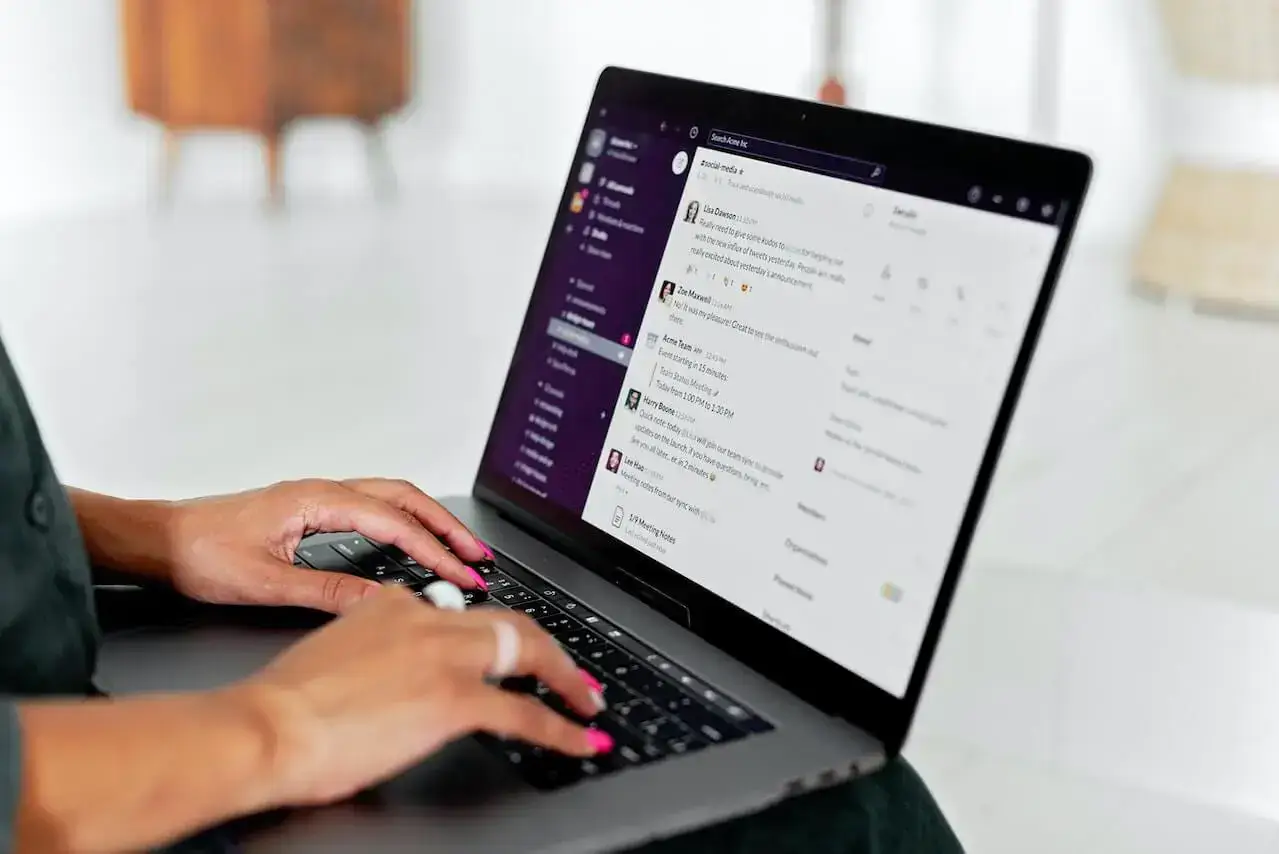
Slack is a messaging app first. Huddles are its built-in audio and video calls, which you start from any channel or direct message without scheduling anything. Its integrations with apps like Google Drive and Office 365 make collaborating with your employees more efficient, because files and notes stay next to the conversation.
On the free plan, huddles are limited to two people and 30 minutes. Paid plans allow up to 50 people in a huddle, with up to 25 on video at the same time, and you can keep notes in a thread or a canvas that stays available after the call. For client meetings or large calls, it's a better idea to use one of the dedicated platforms above.
Pricing: Free for huddles with two people, up to 30 minutes. Pro costs $7.25 per user a month billed annually ($8.75 monthly), and Business+ costs $15 per user a month billed annually.
8. Jitsi Meet
Best for: quick calls where guests shouldn't need an account.
Jitsi Meet is a free, open-source video call tool. You go to meet.jit.si, name your meeting and share the link, and guests join from their browser. The person who creates a room on meet.jit.si must sign in, but subsequent participants can join without creating an account.
There's one limit to know before you move a whole team onto it. The meet.jit.si terms of service cap free use at 25 Active End Points per calendar month across all of your accounts, where an endpoint is any device or browser tab connected to a meeting with at least one other person. That makes the free service a good fit for occasional calls. For daily team meetings, you can run Jitsi on your own server, which the open-source license allows.
Pricing: Free. 8x8, which operates meet.jit.si, sells paid services for business use.
How to Choose a Virtual Meeting Platform
The right choice comes down to what your team already pays for, who you meet with, how long your calls last and how many people join, whether you need recordings, and what kind of meetings you run. Five questions narrow the list:
- What do you already pay for? Google Workspace includes Google Meet. Microsoft sells business plans both with and without Teams, so check whether your current Microsoft 365 subscription includes Teams before you buy anything new;
- Who do you meet with? The easiest platform is the one your colleagues and clients already use, and if you often meet outsiders, make sure guests can join from a link without an account;
- How long and how big are your calls? Free group calls stop at 40 to 60 minutes on most platforms, while paid plans run for 24 to 30 hours and hold 150 to 300 people. In MeetGeek's data from the first half of 2026, 41.6% to 46.6% of calls on Zoom, Microsoft Teams and Google Meet ended in under 30 minutes, but 19.9% to 24.7% ran an hour or longer, long enough to hit the free group limit on every one of those three;
- Do you need recordings? Zoom and Webex include local recording on their free plans, while Google Meet and Microsoft Teams keep recording for paid plans. If your platform's free plan doesn't record, a meeting assistant like MeetGeek can still transcribe and summarize the call;
- What kind of meetings do you run? A daily standup, a client demo and a company all-hands need different things, as our guide to the types of meetings shows, and for webinars and large events a dedicated webinar tool is the better fit.
Keep Your Meeting Notes in One Place, Whatever the Platform
Choosing a platform solves the call, not what happens after it. Recordings stay in each platform's own storage, often behind a paid plan. And when you meet clients on Microsoft Teams and colleagues on Google Meet, the record of what was decided ends up in two different apps.
MeetGeek has dedicated integrations for Google Meet, Microsoft Teams and Zoom Meetings, and it can capture calls on other platforms through its desktop app, without a bot joining. It joins whether you're the host or just a participant, with free or paid accounts on all three.
Every call is then organized the same way, in one place:
- Transcripts in 100+ languages, with the language detected automatically;
- An AI meeting summary with the key points, decisions and action items;
- AI Chat to ask questions about one meeting or across many, such as what the team agreed on pricing last month;
- Meeting insights across all your calls, including cross-meeting search, sentiment and team KPIs.
The biggest time saver comes after the call. MeetGeek can send each summary automatically by email or to a Slack channel, and push notes and action items to tools like Notion, HubSpot or Salesforce through native integrations and 10,000+ connected apps via Zapier, Make and n8n. Nobody has to copy notes by hand, and it works the same way whichever platform the meeting was on.
The free plan includes 3 hours of transcription a month, enough to try it on your next few calls. Paid plans start at $9.99 per user a month billed annually, or $15.99 billed monthly.
Frequently Asked Questions
What Is the Most Used Virtual Meeting Platform?
Google Meet, in MeetGeek's data from the first half of 2026: it accounted for 43.0% of meetings, ahead of Microsoft Teams at 38.6% and Zoom at 18.4%.
What Is the Best Free Online Meeting Platform?
It depends on your calls. Among platforms with a published free 1:1 limit, Google Meet offers up to 24 hours and Microsoft Teams up to 30 hours. For group calls, Google Meet, Microsoft Teams and Zoho Meeting give you 60 minutes, and Jitsi Meet publishes no time limit, although its terms cap free use at 25 Active End Points per calendar month across all of your accounts.
What Can I Use Instead of Zoom?
Google Meet, Microsoft Teams, Webex and Jitsi Meet all offer free video calls with screen sharing and chat. If you're weighing the two most common options, see our Google Meet vs Zoom comparison.
What Are the Best Virtual Conference Platforms?
For large conferences and webinars, a webinar tool fits better than a meeting platform. Zoom Webinars, Webex Webinars, GoTo Webinar and Zoho Webinar are built for one-to-many sessions with registration, Q&A and polls.
Is Skype Still Available?
No. Microsoft retired Skype on May 5, 2025, and Skype users can sign in to Microsoft Teams Free with their Skype credentials to keep their contacts and chats.




.avif)