



The best AI assistant depends on where work slows down. Some are better for research and writing, while others are designed to protect focus time, capture meetings, or turn conversations into clear next steps.
This guide compares general-purpose AI personal assistants, AI productivity tools, and AI agents that can execute tasks across other apps.
TL;DR: What Are the Best AI Assistants?
| Tool | Where it fits | Free plan | Paid plans start (monthly billing)* | Main tradeoff |
|---|---|---|---|---|
| ChatGPT | Varied everyday and professional tasks | Yes | $8/month | Your email, calendar, projects, and meetings still live in other apps |
| Google Gemini | Work centered in Google Workspace | Yes | $4.99/month | Less useful when your work is spread across non-Google tools |
| Microsoft Copilot | Work centered in Microsoft 365 | Yes | $9.99/month (Microsoft 365 Personal, includes Copilot) | Features vary by app, license, and admin settings |
| Claude | Long documents and complex requests | Yes | $20/month | Not a dedicated calendar, email, or task app |
| Perplexity | Current research with sources to verify | Yes | $20/month | Better at finding answers than managing a workday |
| Reclaim | Protecting focus time as schedules change | Yes | $12/seat/month | Primarily focused on scheduling |
| Motion | Turning tasks and deadlines into a daily plan | No ongoing free plan | $38/month | Higher starting price and a steeper learning curve |
| Superhuman Mail | Managing a high-volume inbox | No | $30/member/month | Expensive if email is not a major bottleneck |
| MeetGeek | Turning meetings into searchable notes and next steps | Yes | $15.99/user/month | Specialized around conversations rather than general chat |
| Notion AI | Using workspace knowledge in projects and documentation | Limited trial | $24/member/month | Works best when your information already lives in Notion |
| Zapier | Moving information and tasks between apps | Yes | $29.99/month | Multi-step workflows require setup and monitoring |
*Official US prices on monthly billing, checked in September 2026. Most tools are cheaper with annual billing.
What Is the Best AI Assistant in 2026?
1. ChatGPT
ChatGPT is a general-purpose AI assistant for a wide range of everyday and professional tasks. It is easy to start with, which makes it a practical first AI assistant for busy professionals and non-technical users.
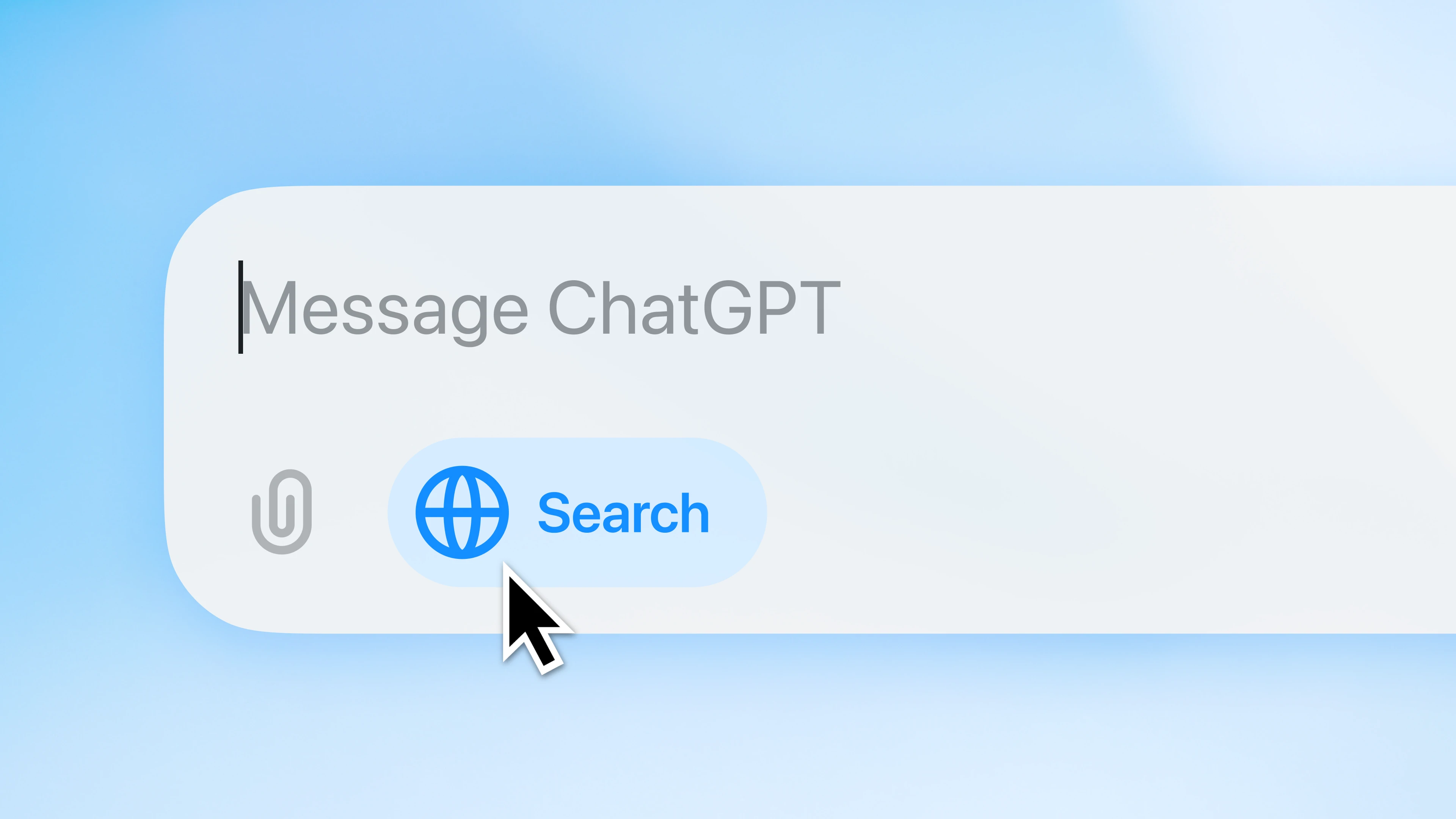
The core experience is an AI chat that responds to natural language requests. Its capabilities vary by model and plan but extend beyond text to research, files, images, and voice. You can also refine responses through conversation, making ChatGPT a useful thinking partner.
Memory and project context make the experience more personal over time. When enabled, ChatGPT can use details from past conversations and saved preferences, so you do not have to repeat important context. However, persistent memory is not a perfect record, so essential instructions and source material should remain in a project or document you control.
ChatGPT is also easy to use. It can turn a rough request into a usable first draft without requiring a complex setup.
Key features:
- General writing, reasoning, analysis, coding, and idea generation
- Search and deep research for current or multi-source questions
- File uploads and data analysis
- Image generation and multimodal input
- Voice on supported devices
- Memory, Projects, and GPTs
- Mobile, web, and desktop access
Pricing: ChatGPT's free plan provides free access with usage limits. The Go paid plan starts at $8/month, while higher tiers provide more capacity and advanced capabilities.
Main tradeoff: ChatGPT can help with almost any stage of a task, but most people still keep their email, calendar, projects, and meeting records in other tools. Unless you connect the right apps, you may need to bring context into ChatGPT and move the result back out yourself.
If ChatGPT offers features you’re interested in but you aren’t sure it’s the right tool for you, check out our list of ChatGPT alternatives for work.
2. Google Gemini
Google Gemini is a strong choice for people whose work already happens in the Google ecosystem. Besides working as a separate chat window, Gemini is built into the Google tools you already use.
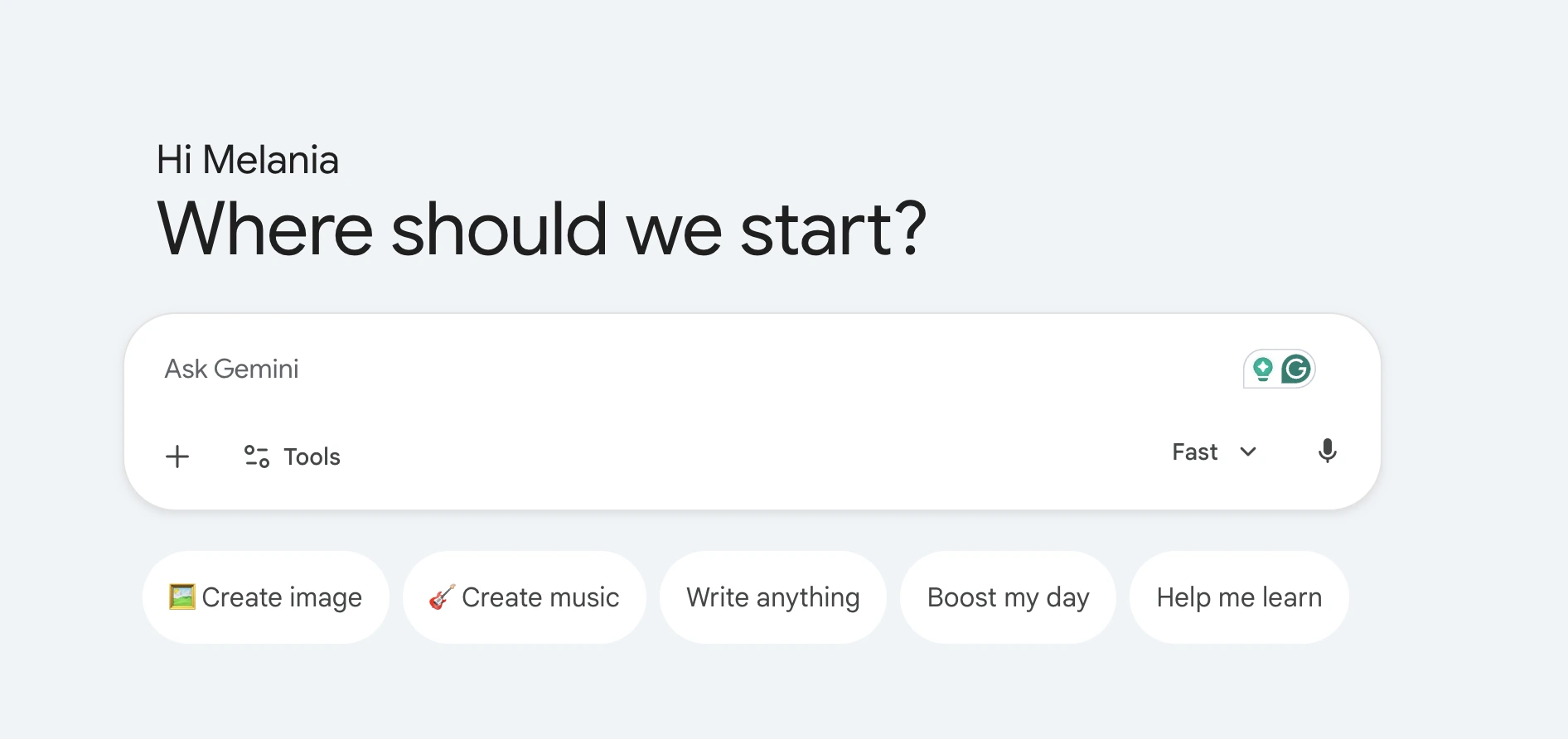
That integration is the main advantage. Gemini can help summarize email threads, draft content in Google Docs, work with files in Drive, and support meeting prep using information already stored in Google apps. This reduces tab switching and makes the assistant more useful for routine tasks.
Gemini supports research and content creation across devices. Its plain-language interface is accessible to non-technical users, although team capabilities depend on the Workspace edition and administrator settings.
Key features:
- Native connections across Gmail, Google Docs, Drive, Sheets, and Calendar
- Web-grounded answers and Deep Research
- Long-context file and document analysis
- Image generation and multimodal assistance
- Mobile access and voice interaction
- Calendar and meeting support within the Google ecosystem
Pricing: Gemini has a free tier. Google AI Plus, the entry-level paid plan, costs $4.99/month in the US, and prices and included features vary by country.
Main tradeoff: Gemini is most useful when your email, files, and calendar are in Google apps. If your work is split across other tools, it has less of that context to work with.
3. Microsoft Copilot
Microsoft Copilot suits people who work mainly in Microsoft 365. It provides AI assistance directly within apps such as Word, Excel, Outlook, and Teams.
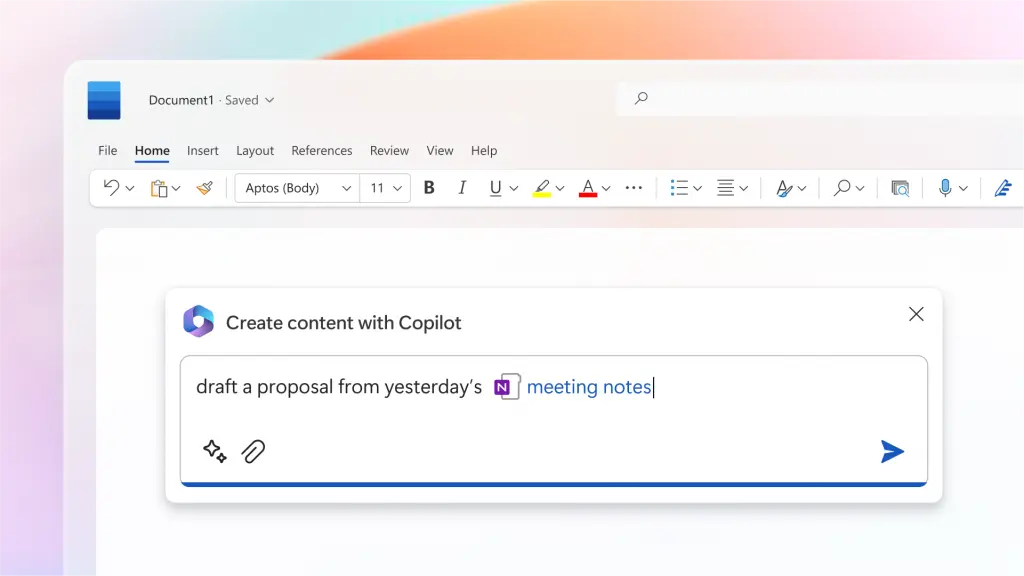
Copilot can help create and summarize content using the context of your work. Enterprise teams can also access organizational data and specialized agents, depending on their licenses and administrator settings.
The standalone Copilot chat provides free access for everyday tasks. Paid Microsoft 365 plans offer higher usage limits and deeper app integration. Readers may recognize it as the successor to Bing Chat.
Key features:
- AI assistance in Word, Excel, PowerPoint, Outlook, and Teams
- Web search, research, writing, and image generation
- Email, document, presentation, and data support
- Mobile and desktop access
- Work-grounded chat and AI agents for eligible organizations
Pricing: Copilot has a free version. Microsoft 365 Personal, which includes Copilot in the Microsoft 365 apps, costs $9.99/month. For businesses, Microsoft 365 Copilot Business is an add-on to a Microsoft 365 business plan and costs $25.20/user/month on monthly billing.
Main tradeoff: Copilot’s features are spread across Microsoft 365 apps, the standalone chat, and agents, and what you can use depends on your license and admin settings. That can make it harder to know what is available than with a single chat app.
Curious how good Microsoft Teams AI is for your meetings? Check out our MeetGeek vs Microsoft Teams AI comparison to learn more.
4. Claude
Claude is well suited to writing and working with long documents. It produces clear, well-structured responses while keeping context across complex requests.
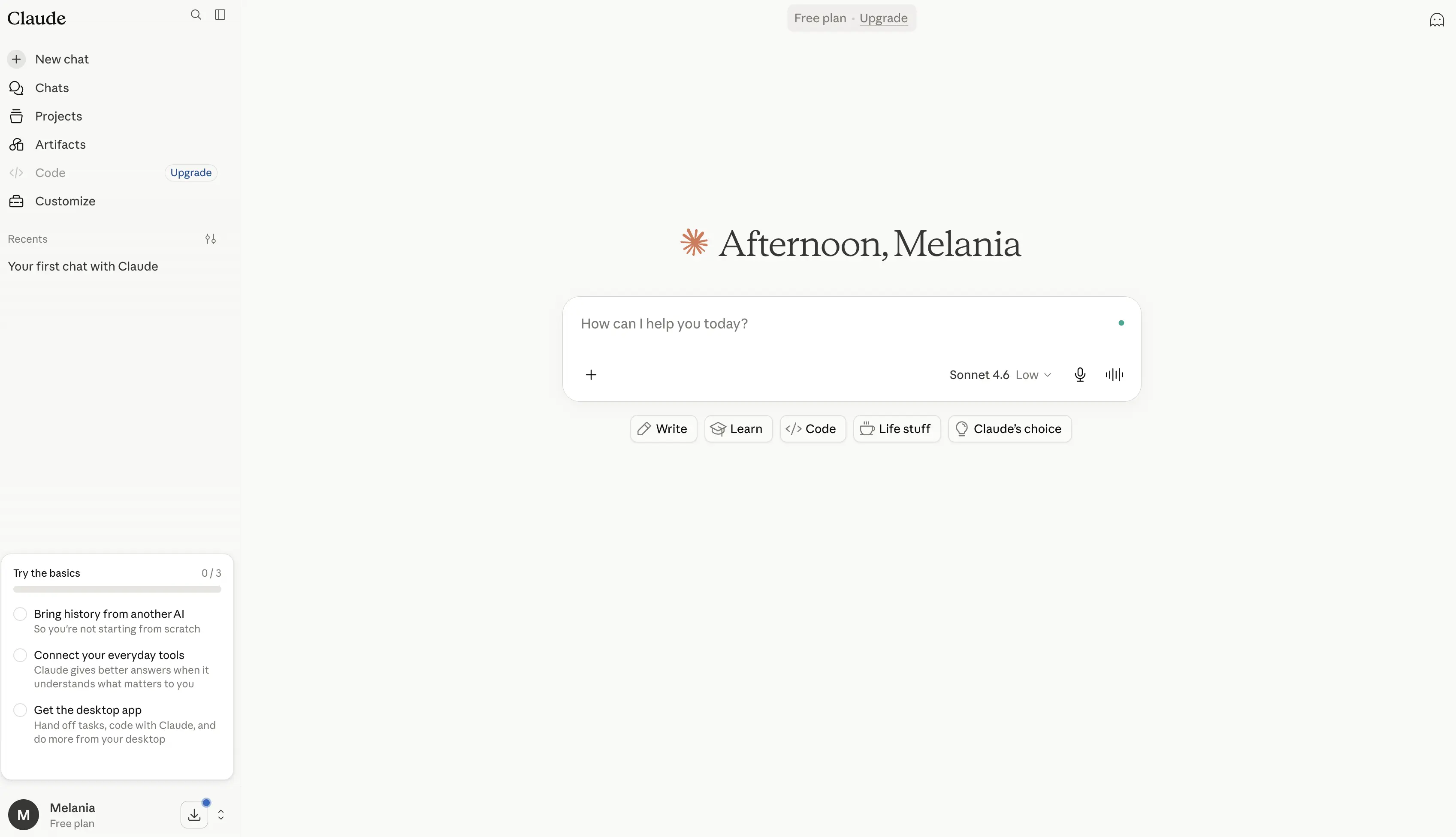
Its file uploads and project features make it useful for reviewing and synthesizing large amounts of information. Claude also supports coding tasks without making the interface inaccessible to non-technical users.
Claude is not a calendar or email app, but its connectors let it work with tools such as Gmail, Google Calendar, and Google Drive, and it asks for your approval before taking actions. Which connectors you can use depends on your plan and, in companies, on admin settings.
Key features:
- Long-context document analysis
- Strong writing, editing, summarization, and reasoning
- File uploads and project context
- Coding assistance and technical analysis
- Web search and connectors for apps such as Gmail, Google Calendar, and Google Drive
Pricing: Claude offers a free plan. The Pro plan starts at $20/month, with higher-capacity Max and team options available.
Main tradeoff: Claude works through chat and connectors rather than as a calendar, inbox, or task app, so people who want a dedicated scheduling or email tool may still need one alongside it.
PRO TIP: If you want to use Claude for your virtual meetings, you can connect it to MeetGeek through MeetGeek’s Claude integration.
5. Perplexity
Perplexity is an AI search assistant for finding current information with visible sources. It makes more sense than a general chat assistant when your main goal is comparing products, checking recent developments, gathering evidence, or starting deep research.
The assistant searches the web, synthesizes results, and links to the pages behind its answer. Deep Research can break a complex request into multiple searches and produce a more complete report. This is useful for market research, meeting prep, travel planning, and finding relevant research papers.
Perplexity is less of a personal assistant for calendar and time management. It can help you plan the work, but it is mainly designed to answer questions rather than manage your inbox, protect focus time, or maintain a project board.
Key features:
- Source-linked AI search and web browsing
- Deep Research for complex questions
- File analysis and follow-up questions
- Multiple model options on paid tiers
- Mobile app and browser access
Pricing: Perplexity has a free plan. Pro costs $20/month.
Main tradeoff: Perplexity is built for research, so it does not handle scheduling, task management, or cross-app automation.
6. Reclaim
Reclaim is an AI calendar assistant for scheduling meetings, tasks, habits, breaks, and focus time. It is a strong fit for people who want their calendar to protect focus time automatically, without rearranging the week by hand every time priorities change.
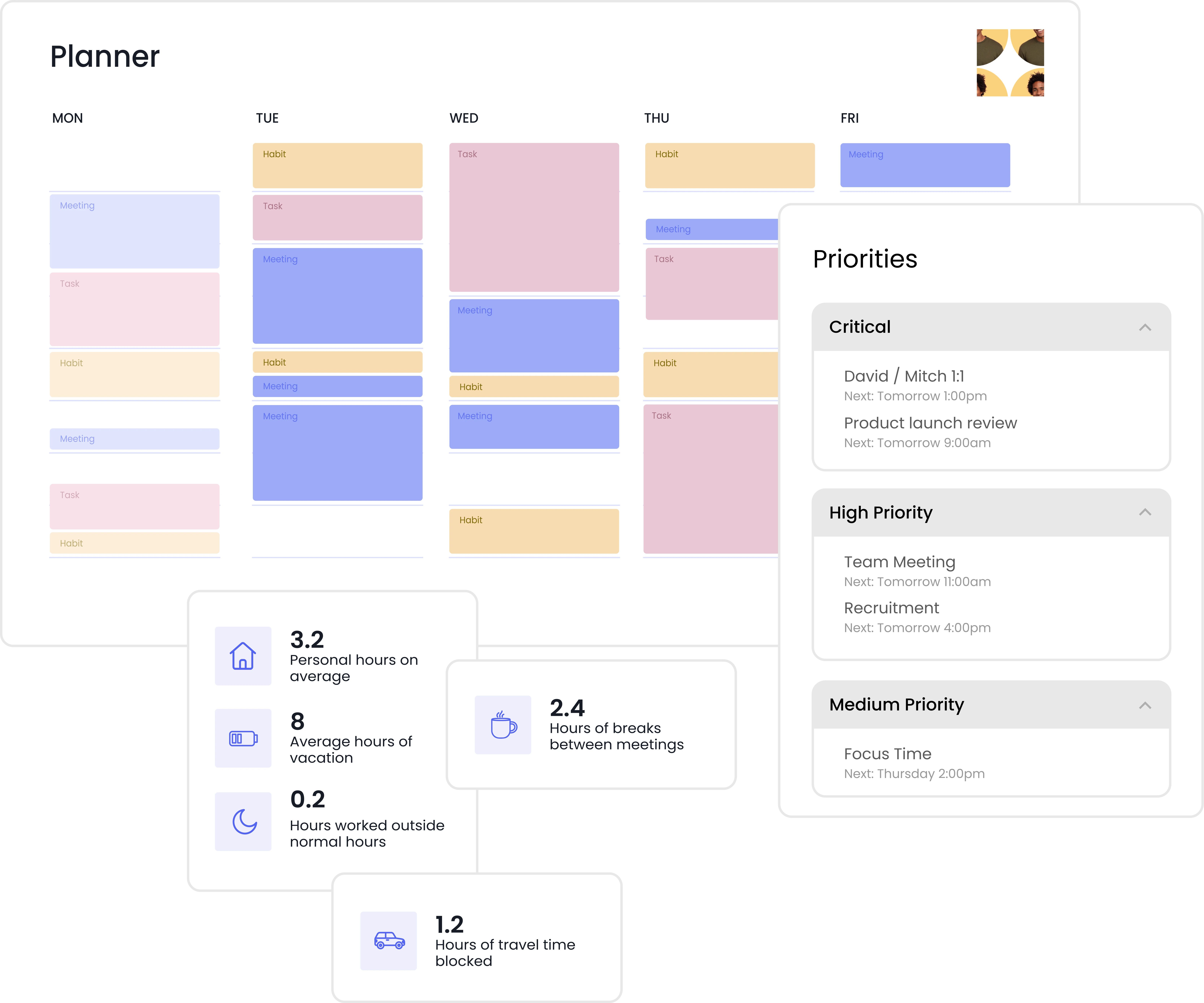
The tool connects with Google Calendar and can place flexible work blocks around fixed events. When a meeting moves or an urgent task appears, Reclaim can reschedule flexible items based on priorities and deadlines. It can also create scheduling links, add buffer time, sync calendars, and help teams find workable meeting times.
This makes Reclaim practical for busy professionals who need help with one specific problem: turning priorities into a realistic calendar. It can reduce repetitive calendar management, but it does not replace a general AI assistant for writing or deep research.
Key features:
- Automatic task and habit scheduling
- Focus time defense and buffer time
- Smart scheduling of meetings and links
- Google Calendar integration and calendar sync
- Planner, time tracking, and team analytics
Pricing: Reclaim has a free plan (Lite). Paid plans start at $12/seat/month on monthly billing.
Main tradeoff: Its strength is calendar and time management, so you will still need other AI tools for writing, research, meeting notes, or inbox triage.
7. Motion
Motion combines a calendar, task manager, and project management system. Its AI scheduling engine places tasks into available time, recalculates the plan when deadlines or priorities change, and helps users see what they can realistically complete.
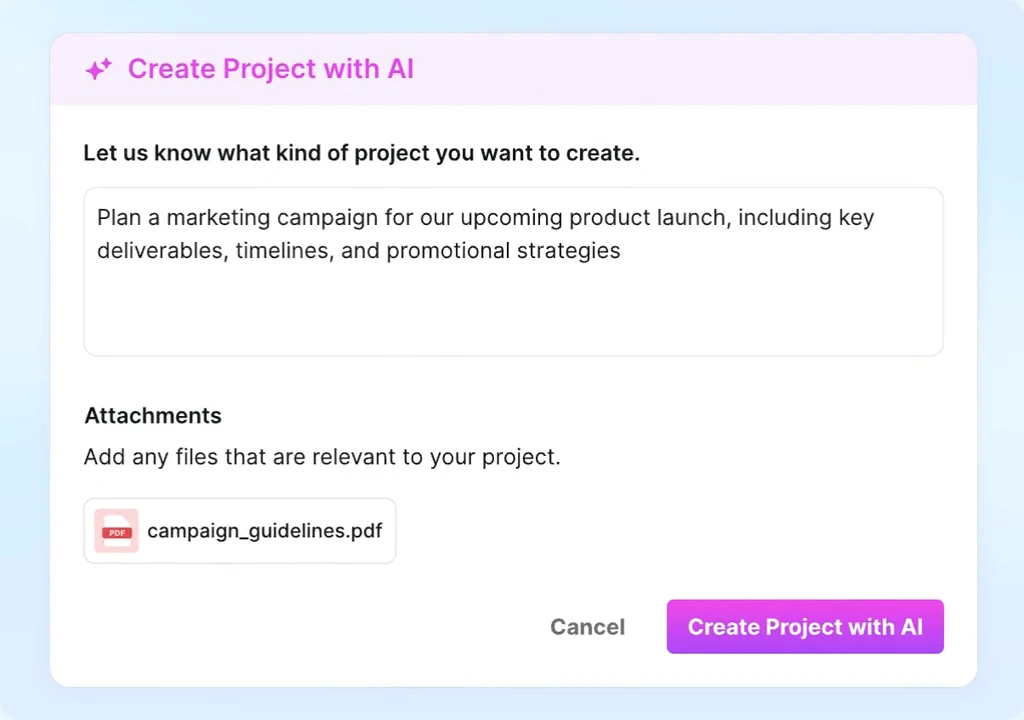
Where Reclaim can sit alongside an existing task tool, Motion aims to become the system where tasks and projects live. That makes it useful for individuals and teams who want task management, workload planning, and calendar management in one product.
The tradeoff is setup. Moving active work into a new project management tool takes time, and there is a learning curve while you configure statuses, projects, deadlines, and team responsibilities. It is a bigger commitment than opening an AI chat, and it costs more than most tools in this list.
Key features:
- AI-generated daily plans
- Automatic task prioritization and rescheduling
- Calendar, project, and workload management
- Team capacity and deadline planning
- Meeting scheduling and workflow templates
Pricing: Motion does not have a free plan, only a free trial. On monthly billing, individual plans start at $38/month and team plans at $26/seat/month.
Main tradeoff: It has a higher starting price and requires more setup than a lightweight personal assistant.
8. Superhuman
Superhuman Mail, part of the Superhuman suite, is an email app with AI features for professionals who spend a large part of the day in Gmail or Outlook. It combines a fast keyboard-driven email client with AI drafting, summaries, search, reminders, and follow-ups.
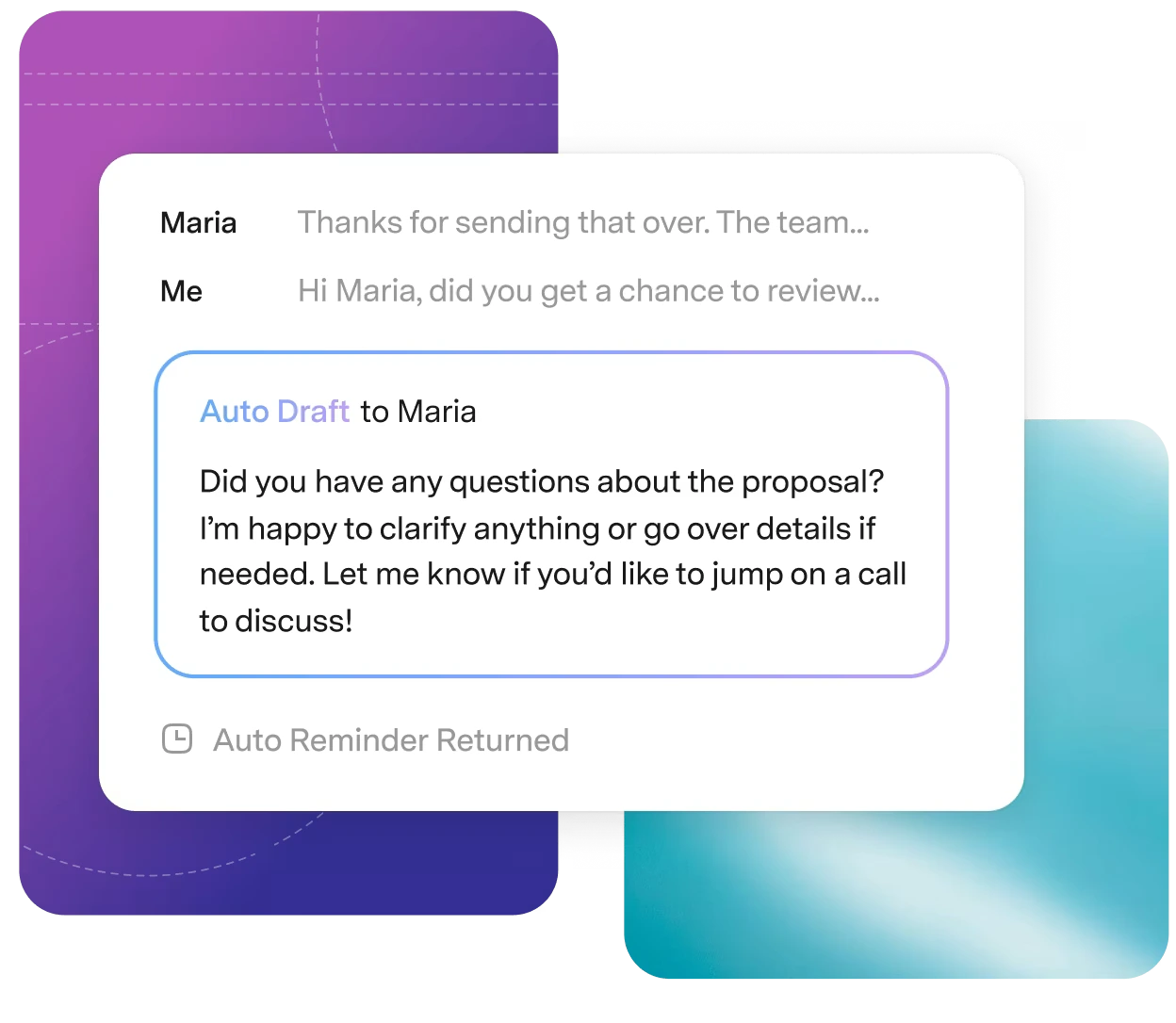
Its strongest use case is inbox triage. Superhuman can help users understand long threads, draft a follow-up email, improve writing quality, and keep important conversations from disappearing. It can also support scheduling and collaboration, which makes it useful for client conversations and relationship-heavy work.
Superhuman is most valuable when email volume is a serious problem. If you only process a modest number of messages, a general assistant or AI embedded in your existing email client may cover the same routine tasks at a lower cost.
Key features:
- Fast email workflow for Gmail and Outlook
- AI drafting, rewriting, and thread summaries
- Follow-up reminders and scheduling support
- Search, split inboxes, and team collaboration
- Mobile and desktop apps
Pricing: Superhuman Mail paid plans start at $30/member/month.
Main tradeoff: Superhuman Mail is an email tool, so it does not cover research, project management, or meetings.
9. MeetGeek
MeetGeek is a specialized AI meeting assistant that records, transcribes, and summarizes online conversations. It also captures in-person meetings through its mobile app and processes uploaded recordings.
%20(2).webp)
MeetGeek automatically creates structured notes with decisions and action items. You can search past meetings or ask questions about them in AI Chat, so the team keeps a shared record of what was discussed.
After each call, MeetGeek can send notes and tasks to connected tools. This helps teams automate recurring meeting preparation and follow-ups.
MeetGeek’s AI Chat can use the meetings captured in your workspace as context. You can ask what a client requested, what was decided, or which action items are still open.
Key features:
- Automatic recording and transcription for online meetings
- Mobile capture for in-person conversations
- AI meeting notes, summaries, decisions, and action items
- AI Chat and search across your meetings
- Automated follow-ups and integrations (paid plans)
- Shared meeting repository, comments, and analytics
- Custom templates and meeting insights
Pricing: MeetGeek has a free plan with 3 hours of transcription per month. On monthly billing, Pro costs $15.99/user/month and Business, which includes unlimited transcription, costs $27/user/month.
Main tradeoff: MeetGeek is designed around meetings and conversation intelligence. Pair it with a broader assistant if you also need general web research, image generation, or unrelated personal task management.
10. Notion AI
Notion AI works across Notion’s workspace to answer questions, create content, and complete multi-step tasks. It draws on existing pages and databases, helping teams use their workspace as an organized source of truth.
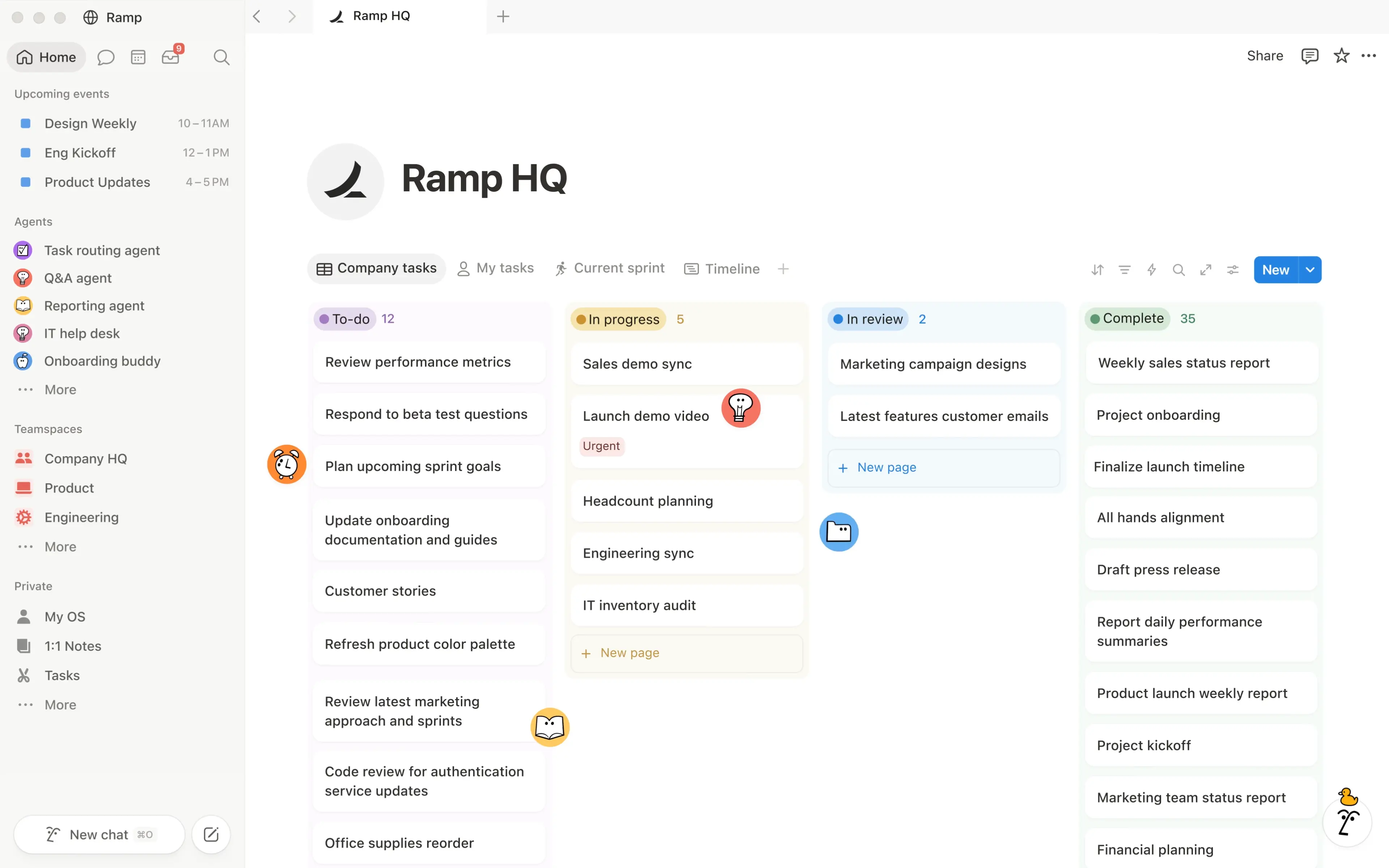
Its research mode can combine internal knowledge with information from connected apps and the web. Custom Agents, available on the Business and Enterprise plans, automate repetitive tasks and are paid for with Notion credits.
This makes Notion AI particularly useful for project management and internal knowledge. However, it provides less value when important information is scattered outside Notion.
Key features:
- AI writing, editing, translation, and database autofill
- Workspace and enterprise search
- Research mode across internal and web sources
- Notion AI meeting notes and follow-ups
- Notion Agent for complex, multi-step tasks
- Custom agents and connected-app context
Pricing: The Free and Plus plans include a limited trial of Notion AI. The Business plan, which includes full Notion AI, costs $24/member/month on monthly billing. Custom Agents need a Business or Enterprise plan and use Notion credits, at $10 per 1,000 credits per month.
Main tradeoff: Notion AI depends on what is in your Notion workspace. If your team keeps its knowledge in other apps, answers may be less complete.
11. Zapier
Zapier is an automation platform rather than a chat assistant. It connects AI tools with thousands of other apps so information and tasks can move across your existing stack.
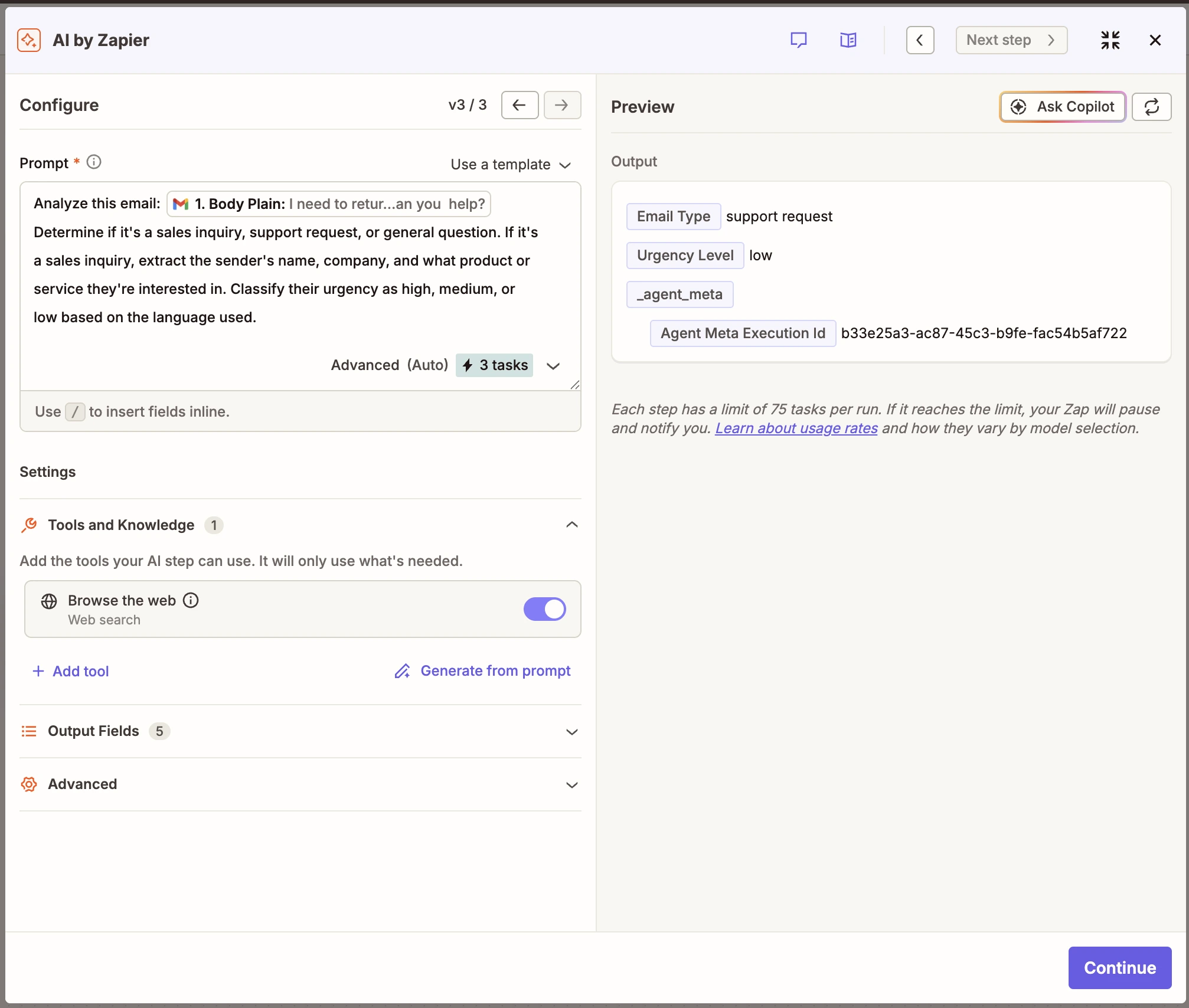
Its AI features help turn natural-language requests into repeatable workflows. This makes Zapier useful for cross-app automation when no single assistant can access every system involved.
Templates make basic workflows accessible to non-technical users. More advanced automations may require webhooks, API keys, approvals, and careful testing.
Key features:
- Automation across thousands of connected apps
- Multi-step workflows with conditions and data formatting
- AI-assisted workflow creation
- Zapier Agents, Chatbots, Tables, and Forms
- Team controls and shared app connections
Pricing: Zapier has a free plan with 100 tasks per month. On monthly billing, Professional starts at $29.99/month and Team at $103.50/month. Annual billing is cheaper.
Main tradeoff: Cross-app automation is powerful, but it takes more configuration than asking a general AI assistant a question. Complex workflows also require testing, monitoring, and sensible approval points.
What Is an AI Personal Assistant?
An AI personal assistant is software that uses artificial intelligence and natural language processing to answer questions, create content, retrieve information, organize work, or complete tasks. You usually interact with it in plain language through a chat window, voice interface, browser, desktop app, or mobile app.
The category now includes three different types of tools:
- General AI assistants such as ChatGPT, Google Gemini, Claude, and Microsoft Copilot act as a thinking partner for writing, research, and other complex requests.
- Specialized assistants such as MeetGeek, Reclaim, Motion, and Superhuman focus on one part of work, including meeting notes, calendar management, task management, or inbox triage.
- AI agents and automation platforms can execute tasks across connected apps. They may pull data, create a calendar event, update a project, or start a multi-step workflow with less manual input.
AI assistants are also different from traditional voice assistants. Siri and the former Google Assistant were built mainly for phone calls, timers, directions, and smart-device commands.
Google is now weaving Gemini more deeply into its products, while Microsoft's former Bing Chat experience has evolved into Copilot. The modern personal AI category is designed to help knowledge workers get more done.
How Did We Choose the Best AI Assistants?
There is no single best AI tool for every person or team. We compared the products using their official product pages, documentation, and pricing, based on criteria that matter in everyday work:
- Quality of assistance: Can it understand natural language, handle complex requests, and return useful answers without excessive prompting?
- Action and automation: Does it only answer questions, or can it complete tasks, trigger workflows, and support multi-step task execution?
- Context and memory: Can it use document uploads, persistent memory, past conversations, meeting history, or information from connected apps?
- Ecosystem fit: Does it offer useful Google Workspace integration, Microsoft 365 support, project management connections, or cross-app automation?
- Usability: Is the chat interface clear for non-technical users? How much of a learning curve is involved during the first week?
- Access and pricing: Is there a useful free tier? What does the first paid plan unlock, and are higher usage limits necessary for routine tasks?
- Control: Can users review outputs and approvals before an AI agent sends messages, modifies records, or takes other consequential actions?
Which AI Assistant Should Handle Each Part of Your Workday?
A better way to choose is to identify where your work gets stuck. The table below shows which assistant to start with for each type of problem, and when to add or switch to another tool.
| When work gets stuck because... | Start with... | What it should take off your plate | Switch or add another tool when... |
|---|---|---|---|
| You have a vague request but no clear starting point | ChatGPT | Turn an incomplete idea into a useful draft, plan, analysis, or line of questioning | The task becomes a recurring workflow that belongs inside a specific business app |
| You have a large amount of material to understand before acting | Claude | Work through long documents, retain context, and turn the findings into a structured output or connected workflow | The job is better handled by a purpose-built calendar, email, or meeting assistant |
| The answer depends on current information you need to verify | Perplexity | Research the topic, compare sources, and produce a report with references you can inspect | The research needs to become an ongoing project or trigger actions in other systems |
| The necessary context is scattered across Gmail, Drive, Docs, and Calendar | Google Gemini | Pull together Google Workspace context and turn it into a document, spreadsheet, presentation, email, or scheduled task | Important information lives outside the Google ecosystem |
| The work already lives in Outlook, Teams, Word, Excel, or company systems connected to Microsoft 365 | Microsoft Copilot | Use organizational context to prepare content, analyze information, and run Microsoft-based workflows | Your team uses a mixed stack and Microsoft is only one part of it |
| Your priorities are clear, but meetings keep pushing important work out of the calendar | Reclaim | Protect focus time and automatically move flexible work when the schedule changes | You also need to manage project ownership, dependencies, and team delivery |
| Your task list is realistic on paper but never fits into the available day | Motion | Turn tasks, deadlines, and availability into a schedule that updates as priorities change | You already have a project system you do not want to replace |
| Email has become the place where work is delayed or forgotten | Superhuman | Help you process the inbox faster, understand long threads, and stay on top of follow-ups | The work needs to continue beyond email through several other apps |
| Decisions disappear after the meeting ends | MeetGeek | Capture the conversation, preserve the meeting history, and turn what was discussed into clear next steps | You need an assistant for work that is unrelated to conversations |
| The answer exists somewhere in your workspace, but nobody knows where | Notion AI | Find and combine internal knowledge, then save the result alongside the projects and documentation it supports | Notion is not where your team maintains its work or source of truth |
| A person still has to copy information from one app into another | Zapier | Automate the handoff between tools and coordinate repeatable, multi-step workflows | The job is a one-off request that does not justify building and maintaining an automation |
The deciding factor is not which assistant can technically perform a task. Several of these tools can summarize a document, search the web, or draft an email. The more useful question is where you want the result to go next.
If the answer only needs to help you think, a general assistant may be enough. If it needs to become a calendar block, meeting record, project update, or cross-app workflow, choose the tool that already owns that part of the process.
How Can You Test an AI Assistant Before Paying?
Product pages can tell you what an AI assistant is capable of, but they cannot show how well it will handle your work. Before choosing a paid plan, test each shortlisted assistant with tasks you already complete regularly.
Use the same three jobs for every tool:
- Give it a real document to summarize. Ask for the main conclusion, supporting points, and any information that remains unclear.
- Ask a current research question. Check whether the response is accurate, up to date, and supported by sources you can inspect.
- Ask it to complete a practical task. Choose something involving an app you use regularly, such as creating a calendar event or preparing a follow-up from a meeting.
After each task, consider:
- Did it understand the request without repeated clarification?
- Could you verify the answer?
- Did it use the right context?
- Did the result require significant editing?
- Did it reduce the work or merely explain what you should do?
- Did it request approval before taking an external action?
Turn Every Meeting into Useful Work with MeetGeek
The best AI assistant should reduce your workload, not add another tool to manage. General assistants support a wide range of tasks, while specialized tools can take over specific recurring work, such as meeting notes and follow-ups.
MeetGeek turns online and in-person conversations into searchable meeting notes and clear next steps. It also sends key outcomes to the tools your team already uses.
Try MeetGeek for free and automate the work that follows every meeting.
Key Takeaways
- ChatGPT, Gemini, Copilot, Claude, Perplexity, Reclaim, MeetGeek, and Zapier offer free plans. Motion and Superhuman Mail do not offer ongoing free tiers.
- Claude is no longer limited to writing and document analysis. Its connectors, including Gmail, Google Calendar, and Google Drive, let it work in business tools and take actions you approve.
- MeetGeek’s free plan includes 3 hours of transcription per month, an AI summary for every meeting, and AI Chat and search across your meetings, with transcripts stored for 3 months. Native integrations and Zapier, Make, and n8n come with the paid plans.
- On monthly billing, the first paid plans range from $4.99/month (Google AI Plus) to $38/month (Motion’s individual plan), so compare each price with the work the tool actually takes off your plate.
Frequently Asked Questions
What Is the Best AI Assistant Overall?
There is no single best AI assistant for every task. The right choice depends on whether you need help researching, writing, managing your time, capturing meetings, or completing work across apps. Evaluate each option based on the job you want it to take off your plate.
What Is the Best AI Personal Assistant for Work?
The best choice is the one that fits the work you want to delegate. A general assistant can help with research and writing, while a specialized tool such as MeetGeek is better suited to managing what happens during and after meetings.
Can an AI Assistant Make Phone Calls?
Some AI voice agents can make or answer phone calls for you. MeetGeek’s Voice Agents work in online meetings rather than phone calls: they can join and run routine meetings such as screening or discovery calls, collect the information, and send the notes to your tools. Consent and availability rules vary by tool and region.
Can AI Assistants Complete Tasks Automatically?
Some can. AI agents may update apps or run workflows independently, but many assistants still require you to carry out the steps they recommend.
Is There a Completely Free AI Personal Assistant?
Many of the assistants in this list have free plans, but all of them limit usage or features, and some are very restricted (Notion AI, for example, only offers a trial). Check what the free plan includes before relying on it.




.avif)