


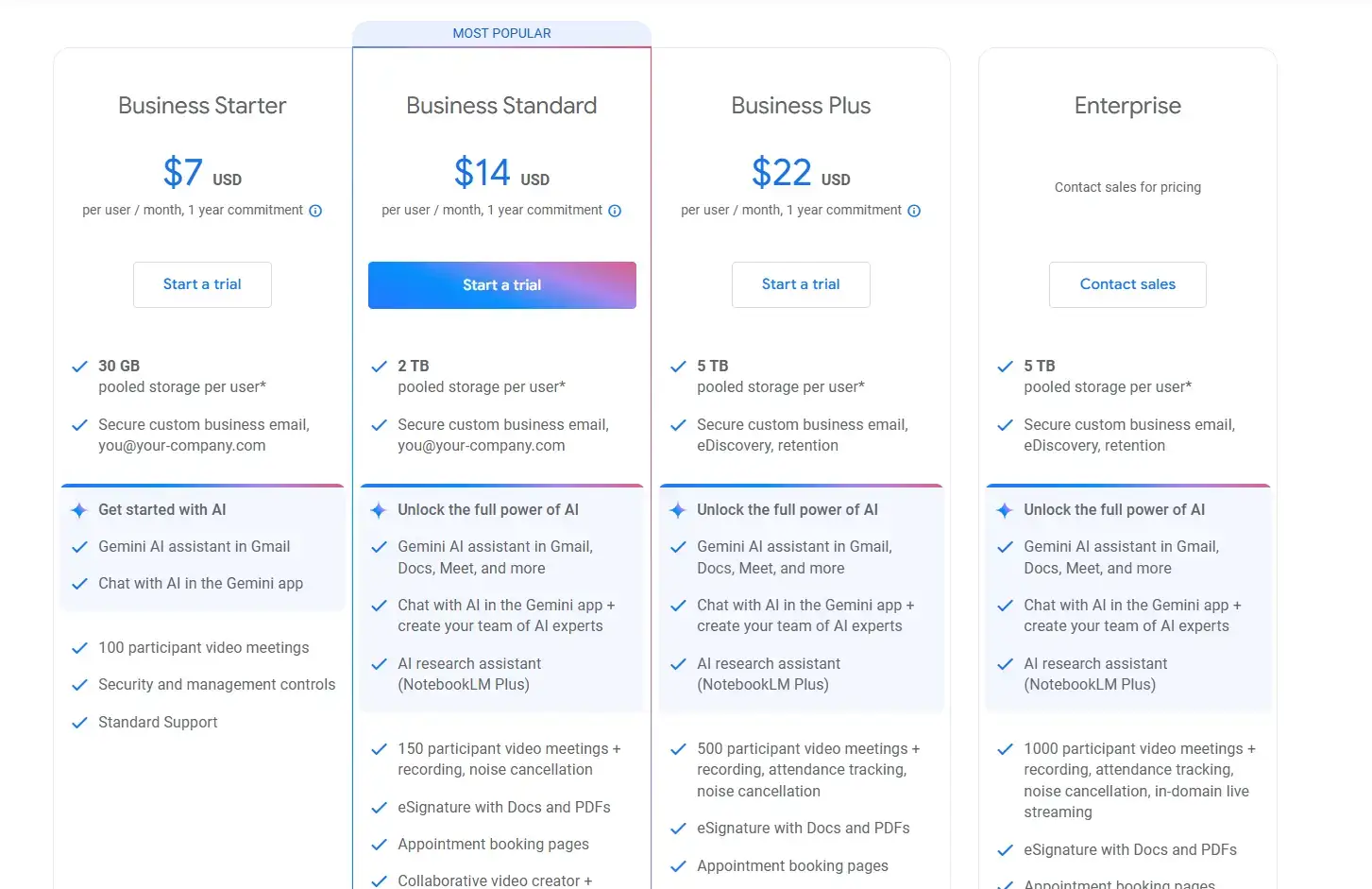
Google Meet pricing ranges from a free plan to paid Google Workspace subscriptions that start at $7 per user per month. The free version covers 1-on-1 calls up to 24 hours and group meetings up to 60 minutes with up to 100 participants, which is plenty for casual or occasional use. Paid plans add longer group calls, more participants, recording, and AI features powered by Gemini.
The right plan really comes down to how large your meetings are, how long they run, and which security and AI features your team actually needs. Below, we break down all five Google Meet plans, what each one costs, and how they compare, so you can match a plan to your workflow without overpaying. And if recording and AI notes are the main reason you would upgrade, you can layer those on top of the free plan with free AI meeting notes from MeetGeek, which joins and summarizes your Google Meet calls automatically.
How Much Does Google Meet Cost?
| Plan | Price/user/mo | Participants | Meeting Length | Recording | AI Features |
|---|---|---|---|---|---|
| Free | $0 | 100 | 60 min (group) | No | Live captions |
| Business Starter | $7 | 100 | 24 hours | No | Gemini AI |
| Business Standard | $14 | 150 | 24 hours | Yes | Gemini AI |
| Business Plus | $22 | 500 | 24 hours | Yes | Gemini AI |
| Enterprise | Custom | 1,000 | 24 hours | Yes | Gemini AI + DLP |
Table last updated: June 30, 2026.
NOTE: When you choose any paid Google Meet plan, you are actually subscribing to Google Workspace. That means you also get tools like Gmail, Google Drive, Google Docs, Sheets, Slides, Google Chat, and Google Calendar.
Free vs. Paid Google Meet
| Feature | Free Google Meet | Paid Google Workspace Plans |
|---|---|---|
| Participants | Up to 100 | Up to 1,000 (plan dependent) |
| Group meeting length | Up to 60 minutes | Up to 24 hours |
| Recording | Not included | Included on select plans |
| AI features | Limited | Gemini on supported plans |
| Storage | Standard Google account storage | Expanded Workspace storage |
| Admin & security controls | Basic | Advanced business controls |
Table last updated: June 30, 2026.
Google Meet Plans Breakdown
A. Google Meet Free Plan Features:
- Meeting length: Up to 60 minutes per group video meeting
- Participants: Up to 100
- Unlimited meetings: Host as many calls as you need
- Screen sharing: Easily present your screen
- Custom layouts: Change how the meeting looks
- Live captions: Instant captions in multiple languages
- Mobile apps: Use Meet on your phone or tablet
- Support: Online guides and community forums
The free plan lets you invite guests who do not have Google accounts, and you can join meetings right from your browser. This makes it great for casual use, though even small businesses can benefit from it.
PRO TIP: If you want extra features like session recordings, AI summaries, or meeting notes without paying for a full Google Workspace subscription, MeetGeek can help. It is a smart meeting assistant that automatically joins your calls on Google Meet, Zoom, or Microsoft Teams, records them, and writes clear summaries that highlight key points and action items.
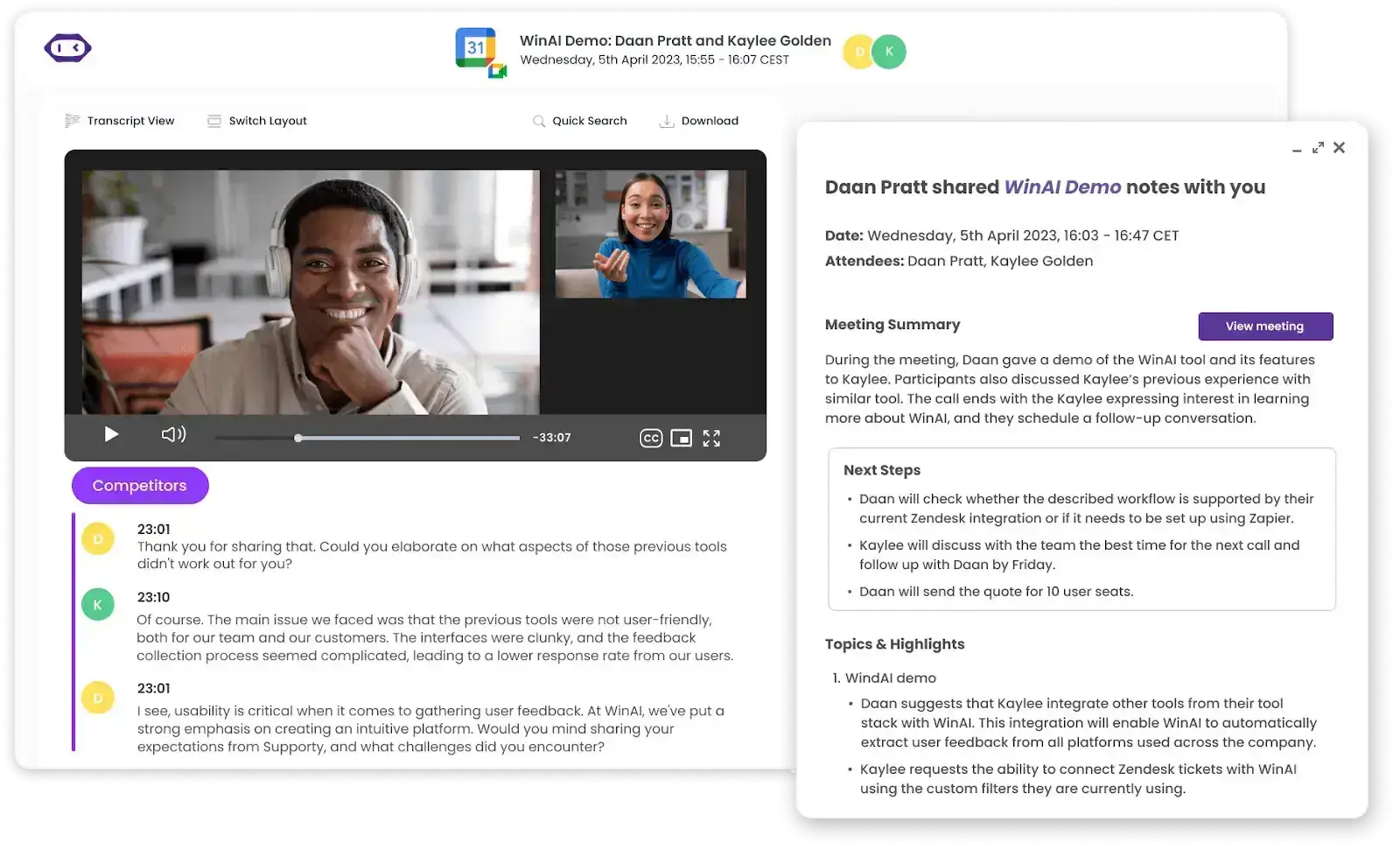
Every recording is stored neatly in one place, so you can find whatever you need in seconds.
B. Google Meet Business Starter Plan Pricing and Features:
- Price: $7 per user per month
- Meeting length: Extended to 24 hours
- Participants: Up to 100 (same as free)
- Unlimited meetings: Host as many calls as you need
- Screen sharing: Easily present your screen
- Live captions: Instant captions in multiple languages
- Mobile apps: Use Meet on your phone or tablet
- Phone dial-in: US and international call-in numbers
- Cloud storage: 30 GB pooled per user
- Gemini AI: The Gemini assistant in Gmail and the Gemini app
- Google Vids: AI-assisted video creation and editing
- Security: Two-step verification, secure connections, and management controls
- Support: 24/7 online assistance
Business Starter also comes with a 99.9% uptime guarantee, so it is a solid entry point for small teams that want longer meetings and built-in AI without a big jump in cost.
C. Google Meet Business Standard Plan Pricing and Features:
- Price: $14 per user per month
- Meeting length: 24 hours per meeting
- Participants: Up to 150
- Recording meetings: Save your meetings directly to Google Drive
- Noise cancellation: Blocks out background noise during meetings
- Interactive tools: Polls, Q&A, hand-raising, breakout rooms, and live annotations
- Appointment booking pages: Let people book time on your calendar
- eSignature: Request and sign in Docs and PDFs
- Cloud storage: 2 TB per user
- AI tools: Gemini across Gmail, Docs, and Meet, plus NotebookLM with expanded access
- Support: 24/7 online help
Standard builds on Starter and suits teams that need advanced collaboration tools. While it sits in the same range as comparable Zoom and Microsoft Teams business plans, it bundles more overall.
D. Google Meet Business Plus Plan Pricing and Features:
- Price: $22 per user per month
- Meeting length: 24 hours per meeting
- Participants: Up to 500
- Attendance tracking: See who attends your meetings
- Recording meetings: Save your meetings directly to Google Drive
- Noise cancellation: Blocks out background noise during meetings
- Interactive tools: Polls, Q&A, hand-raising, breakout rooms, and live annotations
- Vault and eDiscovery: Retain, search, and export company data
- Cloud storage: 5 TB per user
- Enhanced security: Advanced controls for protecting your data
- AI tools: Gemini across Workspace apps
- Support: 24/7 online support
There are not many extra features in Plus compared with Standard, but the higher participant limit and bigger storage space make it ideal for large companies running big meetings or storing extensive recordings.
E. Google Meet Enterprise Plan Pricing and Features:
- Price: Custom
- Participants: Up to 1,000 people per meeting
- Live streaming: In-domain broadcasts to large internal audiences
- Recording meetings: Save your meetings directly to Google Drive
- Noise cancellation: Blocks out background noise during meetings
- Interactive tools: Polls, Q&A, hand-raising, breakout rooms, and live annotations
- Cloud storage: 5 TB per user, with the option to request more
- Advanced security: Data Loss Prevention (DLP), S/MIME encryption, and context-aware access
- AI tools: Gemini across Workspace apps
- Support: Premium, dedicated support
Enterprise pricing is not listed publicly, so you need to contact Google's sales team for a quote. It builds on everything Plus offers, making it the best fit for organizations that need maximum scale and security.
Do You Have to Pay for Google Meet?
Google Meet offers a 14-day free trial for the Starter, Standard, and Plus plans. You can include your whole team, letting everyone test the Google Workspace features without limits. It is a strong choice if your needs are straightforward and do not require advanced meeting management tools.
You may need something more versatile if you regularly run team meetings, juggle multiple projects, or switch between video call platforms. That is where MeetGeek comes in.
MeetGeek is an AI-powered meeting automation platform that automatically joins your video calls on Google Meet, Zoom, or Microsoft Teams, records the conversation, generates clear transcripts, and highlights key discussion points.
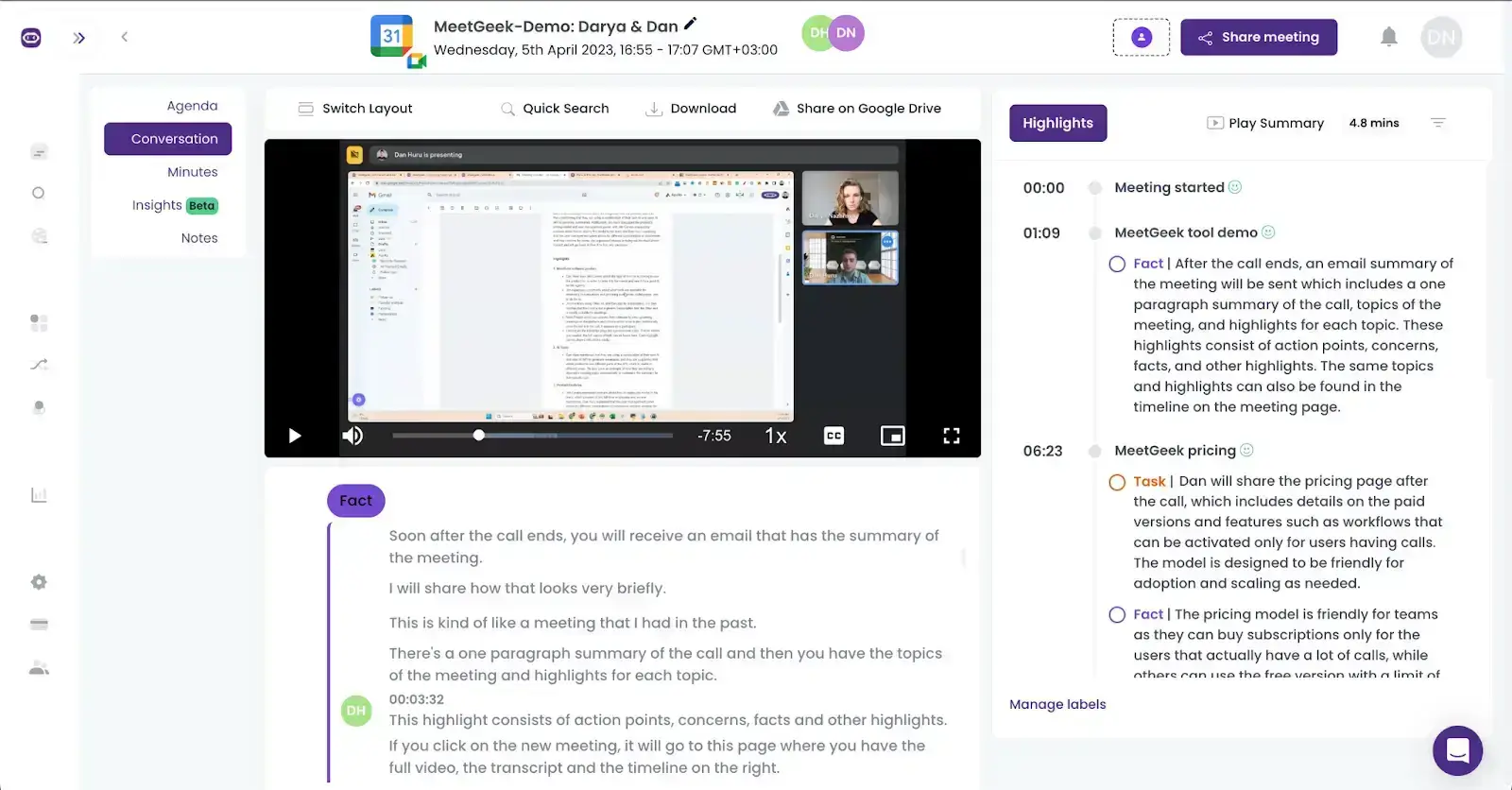
After every meeting, automated follow-up emails summarize important decisions and action items, so your team stays aligned without extra effort.
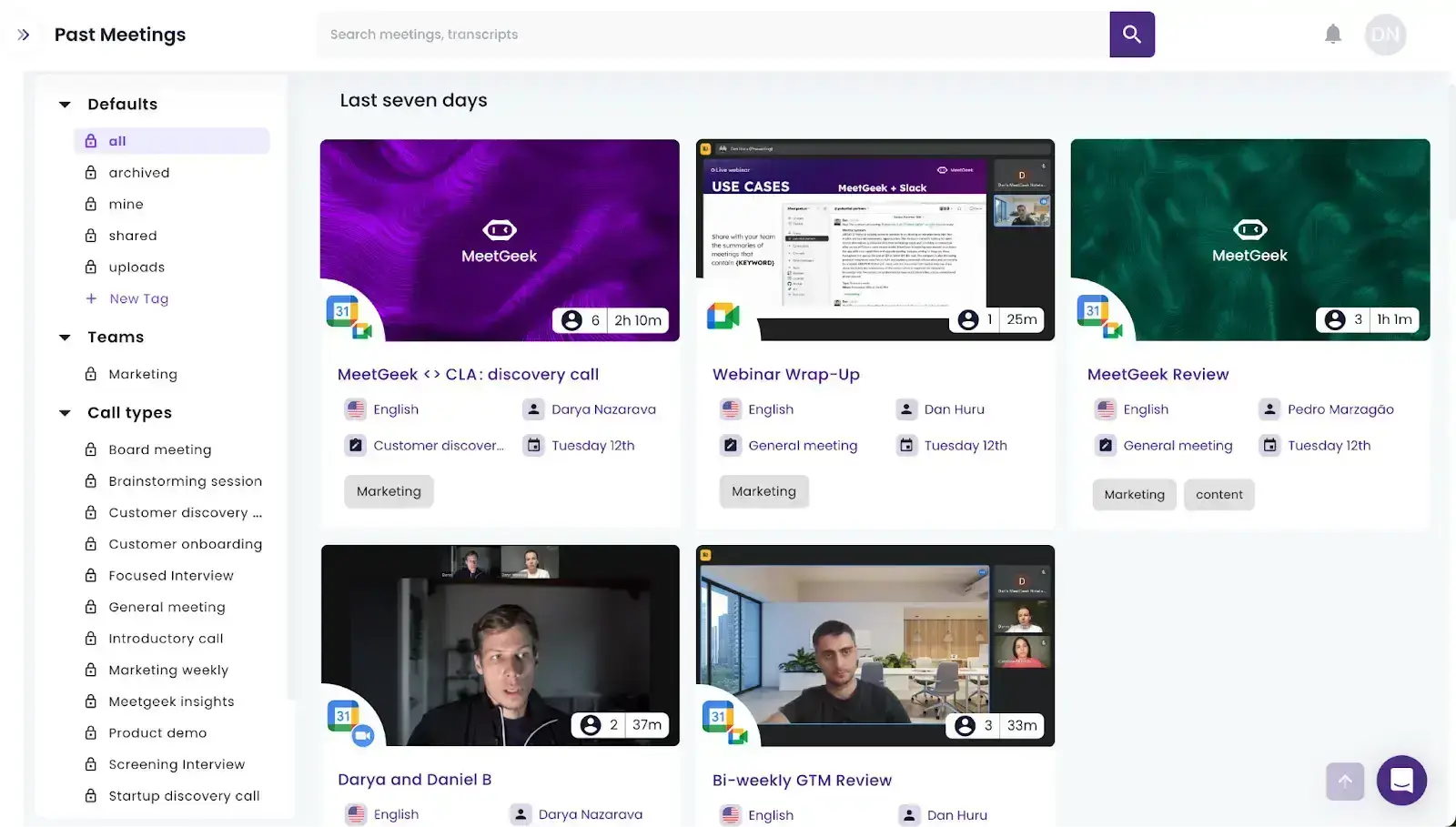
Everything is then stored in a searchable meeting library, making it effortless to find exactly what you need and collaborate on notes with others.
Plus, MeetGeek offers integrations with 10,000+ apps your team already uses, like Notion, Slack, and Google Drive, and a Claude connector so you can analyze conversations and generate summaries directly inside your AI workflows.
The platform is also flexible. If your team switches from Google Meet to Zoom or Microsoft Teams, you keep the same features at no extra cost.
And for in-person meetings, the MeetGeek mobile app brings the same benefits to live conversations.
You can start with MeetGeek's free plan right away. If you need more capacity, paid plans begin at $9.99 per user per month, an affordable option for teams that want consistency across platforms.
What Features Do You Get With Each Google Meet Plan?
If you are using Google Meet as your main video conferencing software, it helps to know exactly what it offers and whether upgrading to a paid plan makes sense.
Here is why you might want to move beyond the free plan.
1. Easy-to-Use Interface and Meeting Features
People like Google Meet because it is simple and intuitive, even if you are not tech-savvy. The clean design uses icons and buttons that make sense right away, and you can join calls instantly from Gmail or through the Google Calendar integration in a single click.
During the call, Meet offers different viewing layouts (like gallery mode) to help you see everyone clearly, plus a picture-in-picture option so you can multitask without losing sight of your meeting.
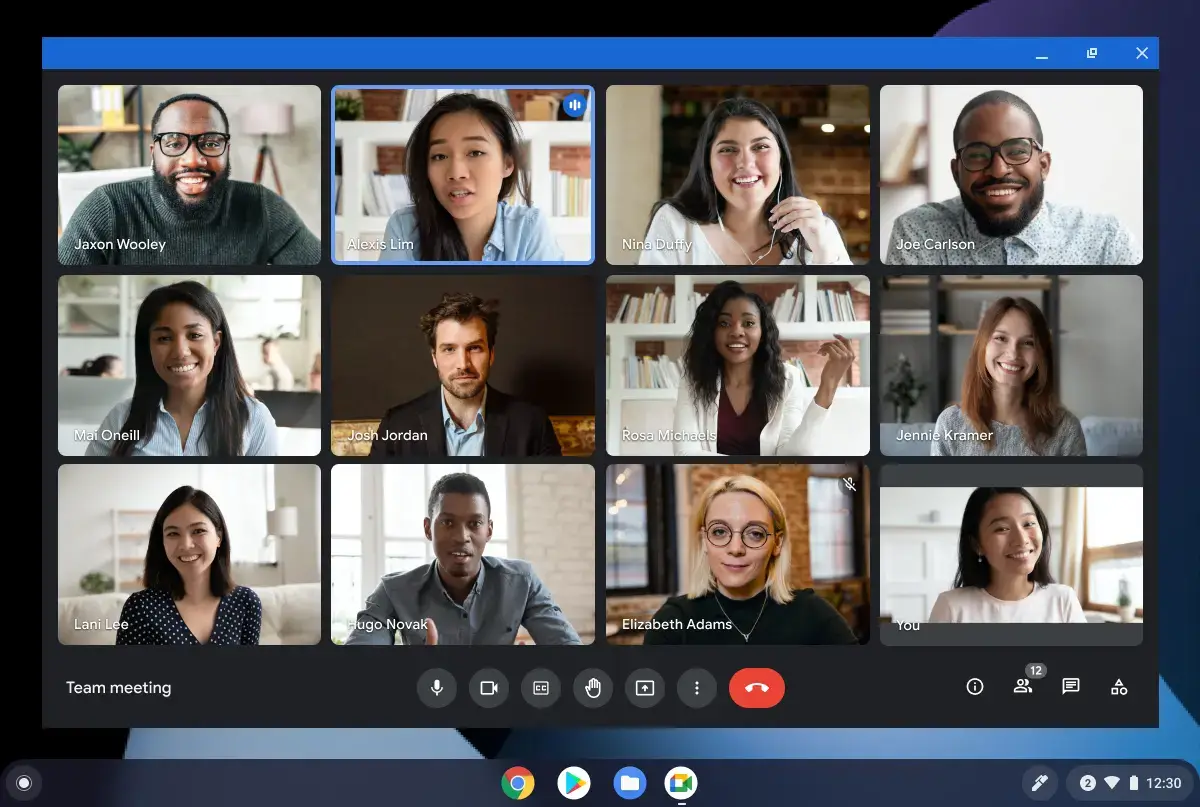
However, audio features like Studio Sound noise cancellation and Adaptive Audio are only available on paid plans. Depending on your work environment, these may or may not come in handy.
2. Collaboration and Engagement Tools
Google Meet's paid plans include tools designed to make meetings interactive and productive:
- Moderator controls: Quickly mute, pin, or remove participants when needed
- Live annotations: Highlight or draw on shared content during presentations
- Breakout rooms: Split larger groups into smaller, focused discussions
- Polls and Q&A: Gather input and questions without interrupting the flow
Learn the needs of your team and decide which of these tools will make work easier for everyone.
3. AI-Powered Productivity Features
Google Meet uses Gemini to make meetings easier, clearer, and more inclusive. For example, it offers real-time captions in over 70 languages, helping everyone follow along.
It also provides live translations, useful for international calls, and built-in noise cancellation that reduces distracting background sounds.
On a paid plan, the AI also creates automatic summaries after meetings, so you can quickly revisit key points or share notes with your team.
Want a closer look? See our guide to the Google Meet AI note-taker.
NOTE: Gemini is now included in every Google Workspace plan at no extra cost. Google retired the separate $20 per user Gemini add-on, so the AI features above come bundled with the price of your plan.
4. Seamless Integration With Google Workspace
If your business already uses Gmail, Google Calendar, Drive, Docs, Sheets, or Slides, a paid plan makes collaboration even smoother, with Gemini AI included across the suite.
5. Enhanced Security and Compliance
Google Meet prioritizes security across all plans, but upgrading adds protections suited to businesses and organizations:
- Data encryption: Meetings and stored recordings are always encrypted
- Advanced endpoint management: Better control over your team's devices (Business Plus and Enterprise)
- Compliance tools: Data Loss Prevention (DLP) and Google Vault to manage sensitive company data
6. Reliable Support Options
Free users get accessible documentation and community forums for quick answers. Paid plans add 24/7 direct support from Google's customer service team, so help is always available.
How to Choose the Best Google Meet Plan for Your Needs
Here is what I would keep in mind when comparing Google Meet plans, especially if you are also weighing alternatives like Zoom, Microsoft Teams, or Cisco Webex:
- Consider team size
- Assess meeting cadence and duration
- Think about security and compliance
- Look into AI and productivity features
1. Consider Team Size
First, think about your team size. For small teams of up to 100 people, Business Starter is an affordable choice that covers the essentials. Medium-sized teams of 100 to 500 should consider Business Standard or Business Plus for extra collaboration and AI features.
Large organizations with over 500 people benefit most from Business Plus or Enterprise, thanks to higher participant limits and advanced management features.
2. Assess Meeting Cadence and Duration
Consider how often your team meets and how long sessions typically last. If your meetings are occasional and short (under an hour), the free plan is usually enough.
However, if your team regularly hosts longer or more frequent sessions, a paid plan avoids interruptions and supports meetings lasting up to 24 hours.
3. Think About Security and Compliance
Evaluate your security and compliance requirements. Business Starter and Standard provide basic security (such as encryption for video and audio streams) suitable for most small to mid-sized teams.
If your business handles sensitive information or must meet strict compliance rules, Business Plus or Enterprise add controls like advanced endpoint management, Vault for data retention, and Data Loss Prevention (DLP), including endpoint DLP to protect confidential assets on user devices.
PRO TIP: If you use a third-party meeting assistant to supercharge your Google Meet sessions, make sure it also follows strict security and compliance standards. For more, see our guide on security and compliance risks of AI note-takers.
4. Look Into AI and Productivity Features
Finally, determine the AI and productivity features your team needs. Basic AI assistance, like email help and summaries, is available from the Starter plan.
If your team requires advanced AI, including intelligent noise cancellation, meeting recording, detailed transcripts, and richer collaboration tools, Business Standard or higher offers significant benefits.
Start Your Google Meet Journey With MeetGeek!
Google Meet gives you plenty of choices, from a free plan perfect for quick calls to paid plans with advanced features for larger teams. Compare the plans carefully so you get the most value for your needs.
If you want powerful features like automatic meeting notes, AI-generated summaries, and easy follow-ups, but you are not ready to pay for Google's subscriptions, consider giving MeetGeek a try. It is easy to use, affordable, and integrates smoothly with Google Meet, Zoom, and Microsoft Teams.
Frequently Asked Questions
1. Does Google Meet Charge a Fee?
Google Meet has both free and paid options. The free plan includes basic features and limited meeting times, while paid Google Workspace plans offer longer meetings, recording, AI features, and advanced collaboration tools for a monthly fee per user.
2. Is Google Meet Free Forever?
Yes. Google Meet offers a permanent free tier for anyone with a Google account. The free version includes meetings with up to 100 participants, 60-minute group meetings, screen sharing, and live captions. You only pay if you want advanced business, AI, or admin features.
3. How Many People Can Join a Free Google Meet?
The free version of Google Meet supports up to 100 participants per meeting. Paid Google Workspace plans increase participant limits up to 1,000 attendees depending on the plan.
4. What Is the Difference Between Google Meet and Google Workspace?
Google Meet is the video conferencing tool itself, while Google Workspace is Google's full productivity suite that includes Gmail, Google Drive, Docs, Calendar, Meet, and other business tools. Paid Google Workspace plans unlock extra Google Meet features like recording, longer meetings, admin controls, and Gemini AI.
5. Is Google Meet Cheaper Than Zoom?
Google Meet is often more affordable than Zoom, especially for teams already using Google Workspace. Google's entry-level business plans typically cost less than comparable Zoom plans, while also including Gmail, Drive, Docs, and other collaboration tools.
6. What Is the Difference Between Free and Paid Google Meet?
The free plan supports up to 100 participants and limits group meetings to 60 minutes. Paid plans offer longer meetings, higher participant limits, recording, advanced security, AI-powered features, and deeper integration with Google Workspace apps.
7. Which Google Meet Plan Is Best for Businesses?
It depends on your company size and workflow. Small businesses often choose Business Starter, while growing teams prefer Business Standard or Business Plus for recording, collaboration, and storage. Large organizations typically choose Enterprise for advanced security, compliance, and higher capacity.
8. How Much Does Google Meet Cost per Month?
On annual billing, Google Meet's paid plans cost $7 per user per month for Business Starter, $14 for Business Standard, and $22 for Business Plus. Monthly billing is slightly higher, and Enterprise pricing is custom. The free plan stays free for up to 100 participants.




.avif)