By clicking “Accept All Cookies”, you agree to the storing of cookies on your device to enhance site navigation, analyze site usage, and assist in our marketing efforts. View our Privacy Policy for more information.
MeetGeekBlogWhat is Companion Mode in Google Meet? Everything You Need to Know
Back to Blog

What is Companion Mode in Google Meet? Everything You Need to Know

Productivity
Productivity

Read on for a practical guide to using Companion Mode in Google Meet for clearer, more balanced hybrid meetings.

Melania Ciocianu
December 29, 2025
/
5 min read
Table of content
Get started with MeetGeek AI Meeting Assistant:
📝 AI-powered Meeting Note taker
✅ Free meeting recording & transcription
💬 Automated sharing of insights to other tools.
Sign Up for Free
Share the knowledge with your circle
Copied

Hybrid meetings are supposed to feel fair. In reality, they often don’t.

People in a meeting room end up sharing one camera, one mic, and one set of controls, while remote participants get their own screens, chat, captions, and all the buttons. Companion mode is Google’s way of fixing that imbalance.

In this article, you’ll learn what is companion mode in Google Meet, how Google Meet companion mode works in real life, how to activate companion mode on different devices, what it can (and can’t) do, and the best ways to use it in hybrid meetings without creating echo, confusion, or duplicate tiles.

Along the way, we’ll cover practical details like room check-in, participant limit, and how Companion Mode behaves across multiple devices. We’ll also show you how it fits into a modern meeting workflow where notes and follow-ups actually get done.

What is Companion Mode in Google Meet?

Google Meet Companion Mode is a way to join a Google Meet call from a personal device (like a laptop, tablet, or phone) while keeping your device’s audio and video muted by default to prevent audio feedback.

It’s built for situations where:

  • You’re in the same room as other people (a conference room or classroom)
  • The room is already connected using meeting room hardware
  • You still want to access meeting tools like meeting chat, reactions, Q&A, or screen sharing

That’s why you’ll often hear it described as joining on a second screen. The room system handles the “big” audio/video experience, while each attendee can still interact individually.

Google also frames this as improving collaboration equity, making sure in-room and remote attendees have comparable access to meeting tools.

When you should use Companion Mode

Companion Mode is most helpful when these three things are true:

1. You’re in a room with shared audio/video

If your meeting is already running through meeting room hardware (for example, Google Meet hardware in a room kit), joining normally from your laptop can create echo and confusion.

Google explicitly uses proximity detection and ultrasound signals in some setups to guide users toward Companion Mode in a room, so they don’t accidentally join with full audio.

2. You still want access to interactive features

In-room attendees often need the same controls remote people have, like:

  • Exchange chat messages in the meeting chat
  • Raise hand or reactions
  • Open polls/Q&A
  • Enable captions for accessibility

Companion Mode is designed to keep those tools available for meeting room participants and other in-person participants.

3. You want your name connected to the room tile

With room check-in, your name can appear on the conference room tile (the room tile) in the call, so other people can tell who’s participating from inside the room.

Where MeetGeek fits in with Companion Mode

Companion Mode makes participation fairer, but it also spreads the meeting experience across multiple devices:

  • The meeting room hardware handles the main camera and microphone
  • In-room attendees use laptops, tablets, or a mobile phone to send chat messages and reactions
  • Someone presents from a second screen using screen sharing
  • Questions, links, and clarifications appear in chat
  • Decisions happen verbally, often without a clear written record

This setup works well during the meeting, but it’s also where clarity often breaks down afterward.

Important context is split between spoken conversation, chat messages, and shared screens. When the call ends, people remember different things, action items aren’t always clear, and follow-ups depend on who took notes, if anyone did.

This is where MeetGeek fits naturally alongside Google Meet Companion Mode.

MeetGeek joins the Google Meet meeting as an AI participant and captures the meeting as a whole, not just one device or one perspective.
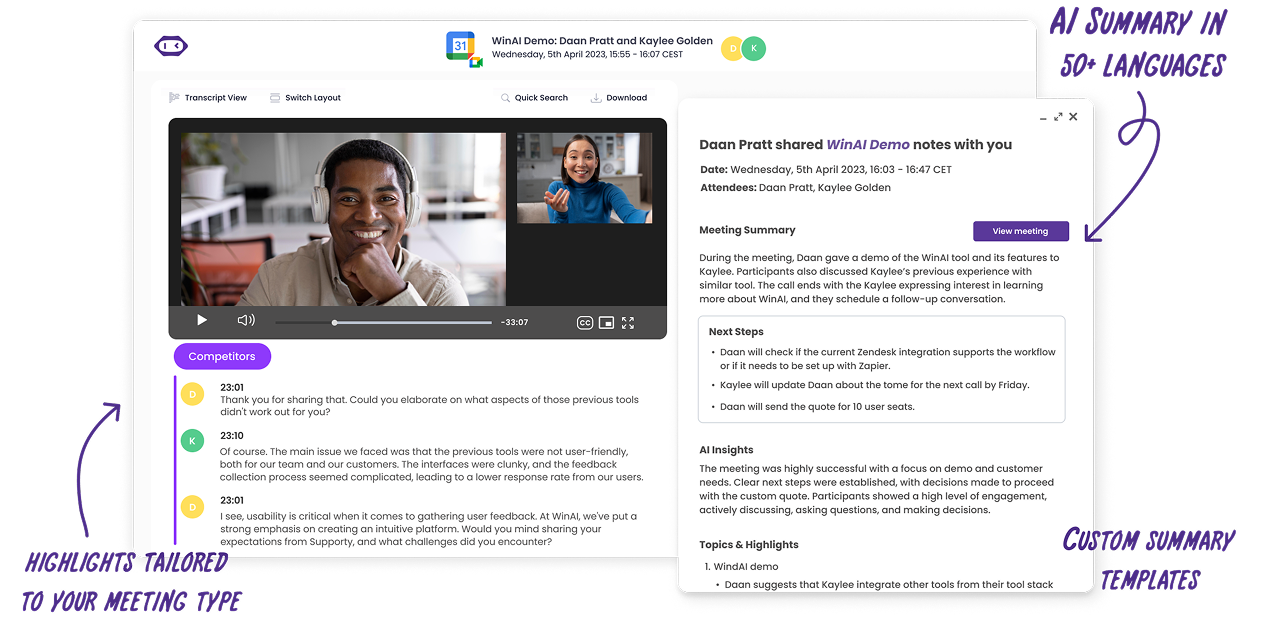
Specifically, MeetGeek helps by:

  • Automatically transcribing the full conversation, including discussions that happen through the room microphone, so spoken decisions aren’t lost just because they weren’t typed in chat
  • Identifying key moments, such as decisions, questions, and action items, even when those moments happen during screen sharing or while multiple people are interacting through Companion Mode
  • Structuring meeting summaries, so outcomes are clear for both remote attendees and meeting room participants, regardless of how they joined
  • Keeping chat context connected to the conversation, so links, clarifications, and side questions don’t live separately from the main discussion
  • Creating a searchable knowledge base that everyone can refer back to, which is especially useful in meetings with many companion mode participants, like town halls, standups, training sessions, or workshops

In short, Companion Mode ensures everyone can participate during the call. MeetGeek ensures the meeting still makes sense after the call.

Instead of relying on memory, screenshots, or scattered notes across devices, teams leave with a clear, searchable summary of what was said, what was decided, and what needs to happen next, even when the meeting itself was spread across a room system, laptops, tablets, and phones.

How Companion Mode works under the hood

When you join a Google Meet in Companion Mode, you’re still joining the same video meeting, just in a “lightweight” way:

  • Your Companion Mode device joins as a participant connection
  • Your microphone and camera are muted by default to prevent echo
  • You can still use access features like chat, reactions, captions, and presenting
  • Your tile behavior is different from a full join: the room camera remains the primary view for in-room presence

Google notes that Companion Mode connections count toward participant limits, and join/leave notifications still apply.

In other words: it’s not “view-only.” It’s active participation without duplicating room audio.

Key features you get in Companion Mode

Here are the key features most teams actually use day-to-day:

1. Chat messages and live interaction

You can send and read chat messages, reply to questions, and share links without interrupting the room speaker.

This is especially helpful in large meetings where one person is the active speaker, but many people still want to contribute quietly.

2. Screen sharing and presenting from your device

Companion Mode is a clean way to present from your own laptop without hijacking the room setup.

This matters in hybrid rooms because passing cables around or switching presenters on the room system can be awkward. With Companion Mode, one person can keep the room audio stable while another person uses screen sharing from their personal device.

3. Captions and accessibility features

Companion Mode supports personal captions, which is huge for accessibility and comprehension. Google’s guidance for Companion Mode highlights that you can use it to participate in hybrid learning/collaboration and access features like captions on your own device.

4. Room check-in and identity on the room tile

When room check-in is available, your name appears on the room tile and in the participant list, helping other participants identify who’s in the room.

5. Works across more device types now

Companion Mode is available on phones, tablets, and foldables in supported setups. Google Workspace Updates announced Companion Mode support expanding to Apple iPads, Android tablets, and foldable devices.

How to activate Companion Mode in Google Meet

There are multiple ways to access companion mode, depending on your device and how you join.

Option 1: Use a meeting invite (email or Google Calendar)

This is the most common path for a scheduled meeting.

  1. Open the meeting invite in Gmail or your Google Calendar
  2. Click the meeting link

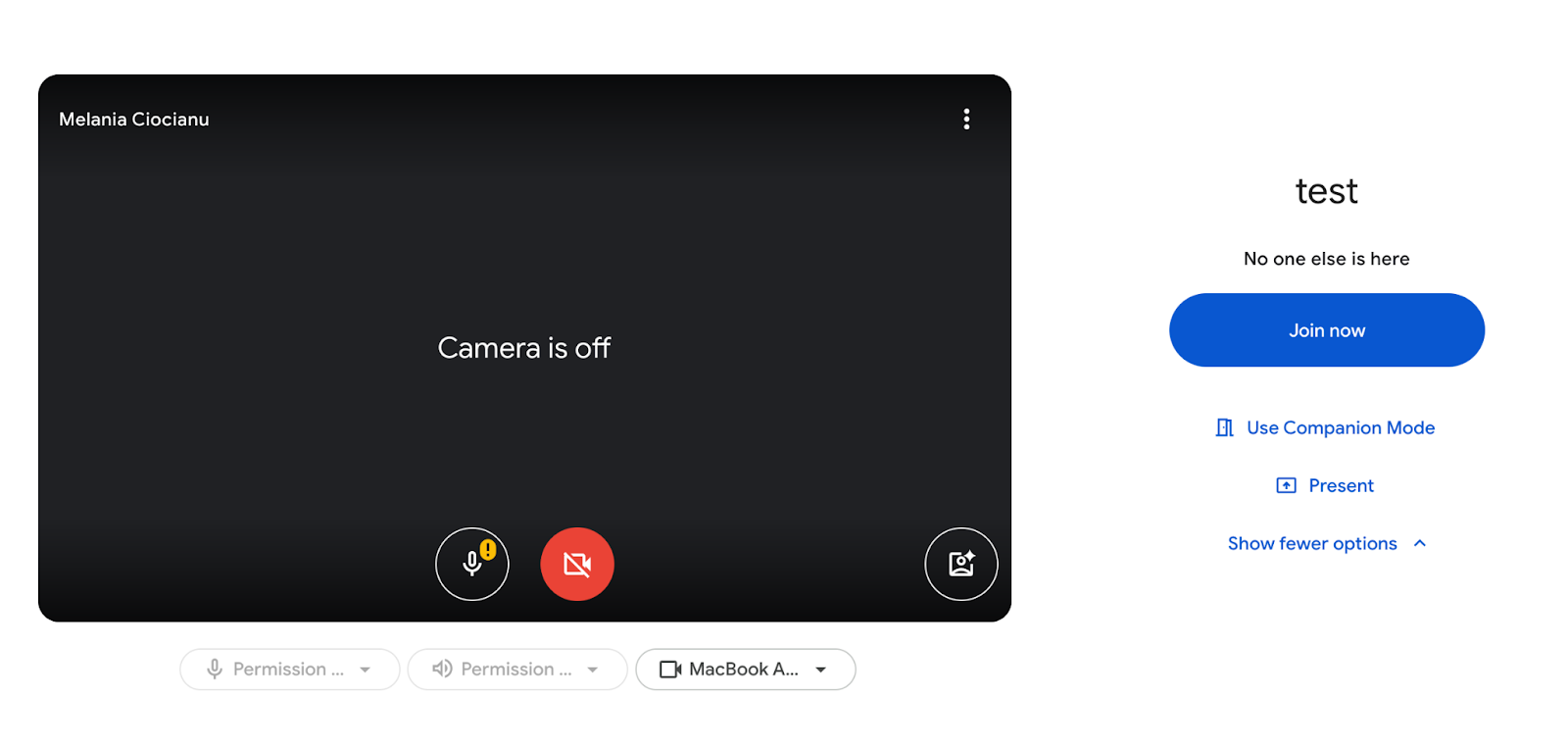
  1. On the pre-join screen (the “green room”), choose use companion mode
  1. Join the meeting

Google’s Help Center walks through Companion Mode joining from upcoming meetings and from invites, including where the “Use Companion mode” button appears under your self-view on mobile.

Option 2: Join with a meeting code

If you don’t have the link handy:

  1. Open Google Meet
  2. Enter the meeting code
  3. Select Companion Mode (or “Use Companion mode”) before you join

Option 3: Use g.co/companion (quick path)

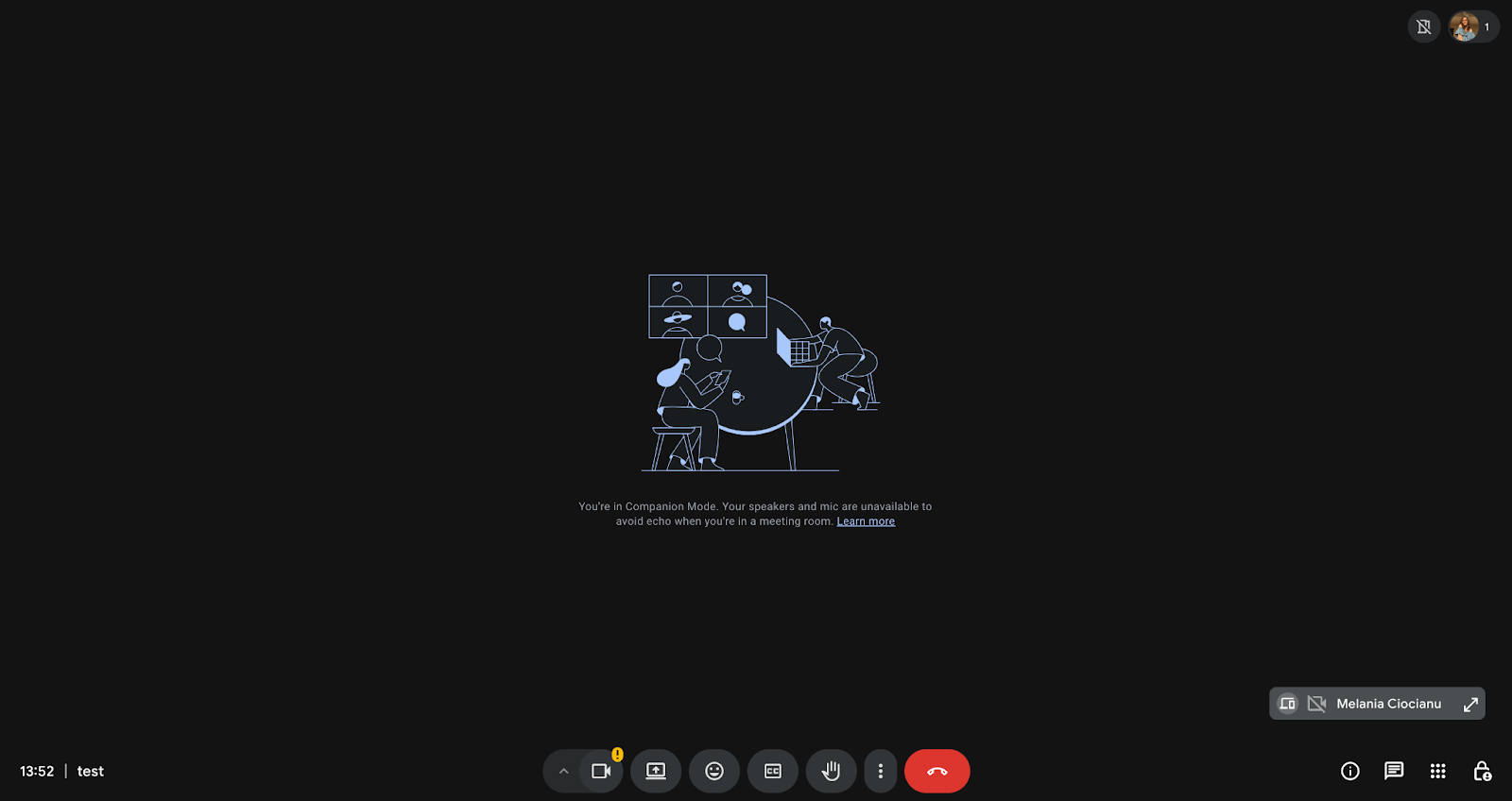
Many teams use g.co/companion as a quick entry point to Companion Mode (especially on laptops in conference rooms). Google has referenced joining companion mode via meet.google.com and g.co/companion in Workspace updates.
Option 4: Join from the Google Meet app (mobile)

On the Google Meet app:

  1. Open the Meet app
  2. Pick from upcoming meetings (or enter a code)
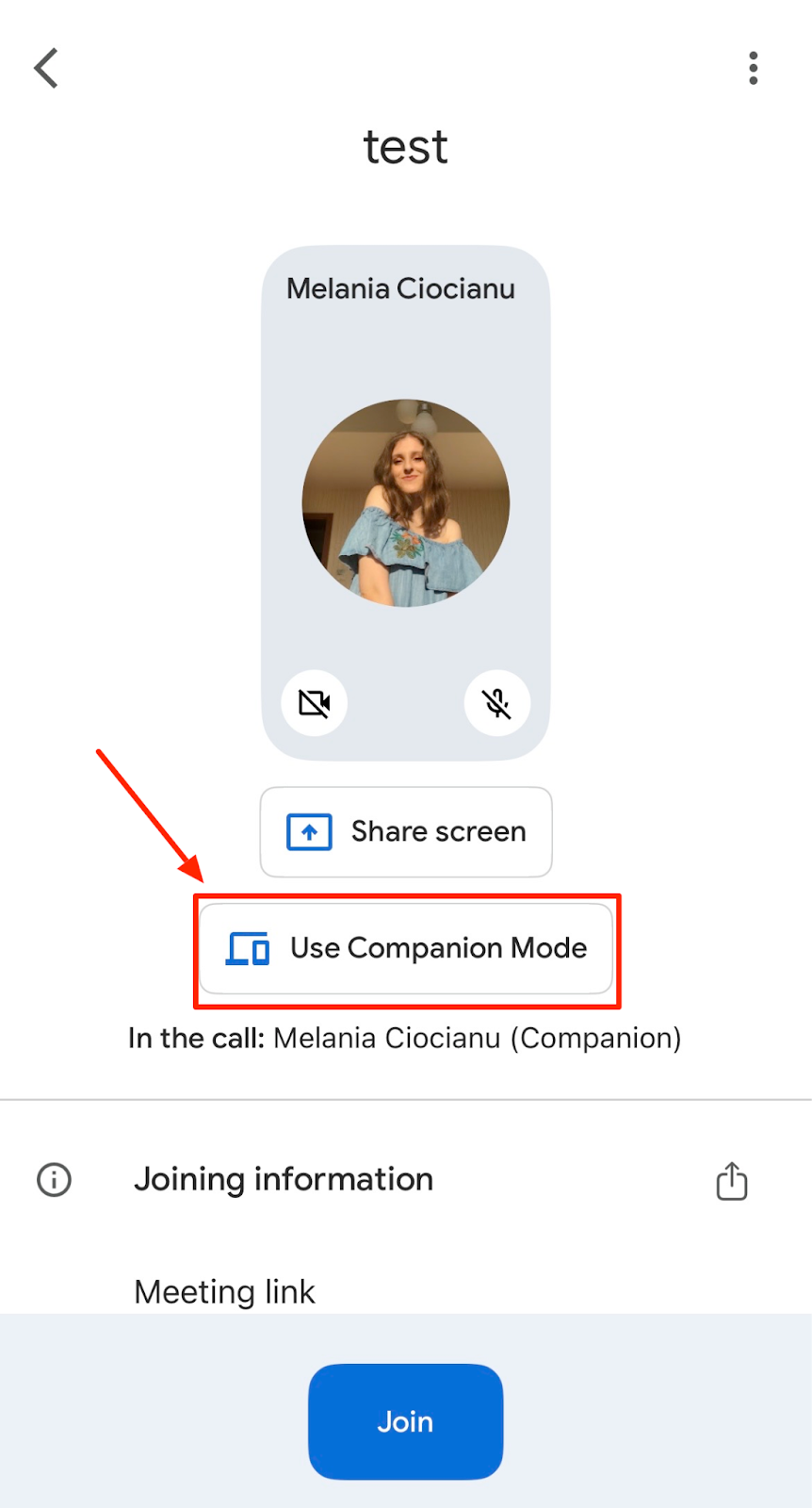
  3. Under your self-view, tap Use Companion mode
  1. Join

Google explicitly notes Companion Mode availability on Android devices like phones, tablets, and foldable devices from the Meet app. And it has expanded to iPads and Android tablets/foldables in Google Workspace announcements.

Proximity detection and automatic room check-in

If you’ve ever noticed Google Meet “nudging” you toward Companion Mode in a conference room, that’s not random. Google Meet can detect that you’re in a room using an ultrasonic signal from the room hardware and then surfaces a “Use Companion mode” option to help avoid echo.

Google also announced automatic room check-in via ultrasound proximity detection, which reduces steps for checking in when you join in a room with certified hardware. This is why Companion Mode often feels “built into the room experience,” not just a separate join option.

Companion Mode in practice: what to do in the room

Here’s the cleanest setup for hybrid rooms:

If you’re using meeting room hardware (recommended)

  • The room system joins the call and handles full audio and video
  • Each person in the room joins with Companion Mode on their own device
  • People use Companion Mode to:
    • send chat
    • raise hand
    • react
    • turn on captions
    • present from their laptop when needed

This keeps the meeting stable for remote attendees while giving in-room people full control.

If you don’t have room hardware

You can still use Companion Mode in a room, but you need a “primary” device handling audio. For example:

  • One laptop connects normally for room audio
  • Everyone else joins Companion Mode to avoid echo

Limitations to know before you rely on Companion Mode

Companion Mode is powerful, but it isn’t identical to a normal join.

Participant limit and companion mode count

Companion Mode connections count toward your meeting’s participant limit. Google explicitly states that Companion mode connections and presentations count toward participant limits. So yes, companion mode count matters, especially for large town halls where many people in a room might also join on their own devices.

Join/leave notifications still happen

People can see when Companion Mode users join and leave.

Host controls aren’t always the same

A meeting host can still use Companion Mode, but for some workflows (like managing large breakout rooms or advanced participant management), it may be easier to switch to a full join on a laptop.

Tile behavior can differ

Companion Mode is designed to avoid visual clutter and prevent duplicate room audio/video. The room camera stays dominant. Your personal video tile behavior may differ from a standard join, and you typically won’t become the meeting’s main visible camera the way a full-join device does.

Tips to get the most out of Companion Mode

  • Use the same account across devices: If you’re joining from a laptop, tablet, or mobile phone, make sure you’re signed in with the same account. This keeps your presence, permissions, and meeting features consistent across devices.
  • Pick a single device for presenting: When presenting from Companion Mode, keep the meeting room system stable for audio and video, and use one clear presenter device for screen sharing. This avoids confusion and accidental interruptions.
  • Use chat intentionally: Companion Mode makes it easy to exchange chat messages throughout the meeting. In larger meetings, it helps to agree on a few simple norms:
    • Use chat for links, references, and clarifying questions
    • Summarize decisions verbally so they’re clear for remote attendees and captured in the main conversation
  • Turn on captions when needed: Captions are one of the most useful accessibility features in Companion Mode. You can enable captions on your personal device without changing what’s shown on the room screen, making it easier to follow along without disrupting others.

Troubleshooting Companion Mode issues

“I can’t see the Use Companion mode option.”

Try these:

  • Make sure you’re on the latest Google Meet app (mobile)
  • Try Chrome on desktop
  • If you’re joining from an invite, open the meeting link again and check the pre-join screen

“We’re getting an echo anyway.”

Echo almost always means more than one device is handling audio.

Fix:

  • Ensure only the room system (or one primary device) is using the microphone/speakers
  • All other companion mode participants should stay muted

“Room check-in isn’t showing.”

Room check-in only appears when the room is actually connected to the meeting, and availability can depend on admin and device setup. Google notes room check-in appears when a conference room is connected to your meeting.

How to exit Companion Mode

To exit companion mode, click or tap Leave on that device and rejoin normally if you need full audio.

Remember: leaving Companion Mode can remove your room check-in association, so if you rejoin, you may need to check in again.

Final thoughts

Companion Mode is one of those features that seems small until you use it in a busy conference room, and suddenly, hybrid meetings feel less awkward.

It gives meeting room participants the ability to interact like remote attendees, without turning the room into an echo chamber. It supports collaboration equity, reduces friction around chat and presenting, and makes it easier for everyone to use the same meeting tools in the same call.

If your meetings still feel messy after the call ends, that’s the next layer to fix: capturing decisions, action items, and follow-up context. Companion Mode makes participation easier. Try MeetGeek for free and ensure the meeting outcomes don’t disappear once everyone clicks Leave.

Frequently asked questions

Does Companion Mode count toward the participant limit?

Yes. In Google Meet, each Companion Mode connection counts toward the total participant limit, just like a regular participant. This applies even though audio and video are muted by default to prevent echo. Companion Mode joins appear as a separate participant entry, helping Google manage capacity fairly in hybrid meetings.

Can I use Companion Mode on mobile devices?

Yes. Companion Mode is available on mobile devices, including smartphones, and is supported on Android and iOS tablets as well as foldable devices for eligible Google Workspace accounts. This allows in-room participants to join from a personal device and access interactive meeting features without using full audio or video.

Will other participants know I’m using Companion Mode?

Yes. Other participants can see Companion Mode users in the meeting participant list, and standard join and leave notifications still apply. Companion Mode connections appear as separate entries, making it clear who is participating from a secondary device during the meeting.
Article updated on 
December 29, 2025
Share the knowledge with your circle
Copied
Related posts

What is Companion Mode in Google Meet? Everything You Need to Know

Read on for a practical guide to using Companion Mode in Google Meet for clearer, more balanced hybrid meetings.

This is some text inside of a div block.

What Is a Skip-Level Meeting? How Leaders Use Skip-Levels to Improve Communication

An in-depth look at skip-level meetings and how they help leaders connect with teams and gain real insight.

This is some text inside of a div block.

What Is an AI Voice Agent? A Practical Guide to How Voice AI Really Works

This guide explains what an AI voice agent is, how it works, the benefits it offers, and where it fits best alongside human teams.

This is some text inside of a div block.

Stand-Up Meeting Guide: What They Are and How to Run Them

Discover what makes a stand-up meeting actually useful. This guide explains how to run daily stand-ups that stay short, surface blockers, and keep teams aligned.

This is some text inside of a div block.

Everything About Microsoft Teams AI Interpreter + How to Go Beyond Translation

Find out how Microsoft Teams AI Interpreter works, where it falls short, and how to go beyond translation.

This is some text inside of a div block.

Best Lecture Recording App in 2026: 5 Tools Students Actually Use

Let’s take an in-depth look at what students are using nowadays to record and organize their lectures, both online and offline.

This is some text inside of a div block.

Read AI Pricing Explained for 2026: Is It Worth It for Meeting Notes

Explore Read AI’s 2026 pricing, its core features, and how it handles meeting notes, transcription, and insights to support modern teams.

This is some text inside of a div block.

What Is a Searchable Knowledge Base and How Does It Work?

Explore how searchable knowledge bases improve access to information and see how MeetGeek turns your meetings into a fast, reliable knowledge hub.

This is some text inside of a div block.

How to Blur Background in Google Meet (Simple Guide for All Devices)

Discover how to blur your background in Google Meet on desktop and mobile, use visual effects, and get a cleaner, more focused look in every call.

This is some text inside of a div block.

How to Join Teams Meeting With Code: A Complete Step-by-Step Guide

Find out how to join Microsoft Teams meetings using a meeting code, as well as other options like a link or invite. This guide explains every method in a clear, step-by-step way.

This is some text inside of a div block.

5 Best NoteGPT Alternatives in 2026

Explore the top 5 NoteGPT alternatives that help you capture key insights, transcribe content, and boost productivity across learning and professional workflows.

This is some text inside of a div block.

What Is Perplexity AI? A Guide to the AI-Powered Search Engine Transforming How We Find Information

In this article we’ll take a close look at Perplexity AI, what it can do for you compared to traditional search engines, and some of its pros and cons.

This is some text inside of a div block.

Top tl;dv Alternatives to Streamline Your Meetings

Discover the top tl;dv alternatives and explore and compare their features to choose the right AI meeting tool for your organization.

This is some text inside of a div block.

ChatGPT Record Mode vs MeetGeek: Here's Everything You Need to Know

Curious how the ChatGPT recorder compares to MeetGeek? We looked at features, integration, and data security for recording meetings.

This is some text inside of a div block.

Fathom AI Pricing 2026: Is It Still Worth It for Modern Teams?

Explore Fathom AI pricing for 2026, including features, limits, and plan comparisons, plus how MeetGeek offers more flexibility for teams.

This is some text inside of a div block.

AI Meeting Agents: How Autonomous AI Is Transforming the Future of Work

Discover how AI meeting agents are redefining the future of work—handling scheduling, follow-ups, and even speaking on your behalf to save time and turn every meeting into real action.

This is some text inside of a div block.

Notta AI Review: Is This AI Transcription Tool Worth It in 2026?

Read this in-depth Notta AI review to see how well it transcribes meetings, handles multiple languages, and delivers AI summaries, plus where it falls short compared to smarter meeting assistants.

This is some text inside of a div block.

These 4 AI Tools for Nonprofits Will Make Every Hour Count

Make your nonprofit more efficient with AI tools that cut admin time, improve collaboration, and maximize every hour of impact.

This is some text inside of a div block.

Granola AI Notes Alternatives: The Best Options to Try in 2026

Explore the best Granola AI Notes alternatives for 2025 with smarter tools that go beyond transcription, offering automation, insights, and collaboration.

This is some text inside of a div block.

Follow-Up Email After Interview: How to Write It, When to Send It, and What to Say

Discover how to write an effective follow-up email after an interview. From timing and templates to tone and structure, this guide covers everything you need to stand out and stay memorable.

This is some text inside of a div block.

Tactiq Pricing Review 2026: Plans, Limits, and The Best Alternative

Explore the latest Tactiq pricing plans and find out how they stack up against MeetGeek’s all-in-one meeting assistant.

This is some text inside of a div block.

Ad Hoc Meeting Meaning and How to Run One

Discover the true ad hoc meeting meaning and learn how to make spontaneous discussions more focused and effective. Find out when to hold and manage them.

This is some text inside of a div block.

Virtual Meeting Etiquette: Essential Rules for Professionalism

In this article we will explore 15 practical virtual meeting etiquette tips to help you run smoother, more professional online meetings.

This is some text inside of a div block.

How to Blur Background in Zoom: Step-by-Step Guide

Discover how to use Zoom’s blur background feature for privacy and focus, plus tips, fixes, and when to switch to virtual backgrounds.

This is some text inside of a div block.

How to Share Screen on Google Meet: A Simple Step-by-Step Guide

Learn how to share your screen on Google Meet with clear steps for computer, iPhone, iPad, and Android.

This is some text inside of a div block.

MeetGeek’s MCP Server Explained: How It Enables AI Assistants to Transform Meetings

See how MeetGeek’s MCP Server helps AI assistants turn your meetings into smart, actionable insights, all from your local machine.

This is some text inside of a div block.

How to Change Name on Zoom (Before and After You Join a Meeting)

Learn how to change your Zoom name step by step on any device, plus tips for hosts, waiting rooms, and troubleshooting.

This is some text inside of a div block.

Note-Taking AI for Students: The Best Tools to Study Smarter in 2026

A guide to the best AI note-taking tools for students in 2026, with features, pros, and cons to help you choose the right app for learning.

This is some text inside of a div block.

Descript Pricing Review 2026: What It Offers, Where It Falls Short, and a Better Alternative

A closer look at Descript’s pricing tiers, their trade-offs, and why MeetGeek stands out as a smarter choice for creators.

This is some text inside of a div block.

Google Meet Time Limit: Everything You Need to Know

In this article, you’ll learn everything you need to know about Google Meet’s time limits and how you go beyond them.

This is some text inside of a div block.

How To Transcribe Voice Memos To Text (3 Different Ways)

In this article, you’ll learn how to transcribe voice memos in three different ways, weighing the pros and cons of each option.

This is some text inside of a div block.

Best ClickUp Alternatives for AI Note Taking

Learn about the best 5 ClickUp alternatives if you want to go beyond simple AI note-taking and find a comprehensive meeting assistant.

This is some text inside of a div block.

What Is an Objective Summary and How to Write One For Your Meetings

Objective summaries are a must when you need key information from lengthy meetings. We’ll discuss all about them in this article!

This is some text inside of a div block.

How to Record a Google Meet: All Options Explained

In this article, we break down how to record a Google Meet both natively and with the help of third-party tools like MeetGeek

This is some text inside of a div block.

The 7 Best Meeting Note-Taking Apps Of The Moment

Looking for the best meeting note-taking app for your team? We break down the features, pros, and cons of the 7 best ones right now.

This is some text inside of a div block.

How to Record a Zoom Webinar as a Host or Participant (2 Methods)

In this article, we will review how to record a Zoom webinar as host or participant using Zoom’s built-in recording and third-party tool with AI transcription.

This is some text inside of a div block.

7 Best Chrome Extensions for Salespeople and AMs

In this article, we will explore the best Chrome extensions for sales reps, focusing on tools that improve meeting intelligence, integrate with CRMs, and optimize productivity.

This is some text inside of a div block.

The Best Chrome Audio Capture Extensions and Tools in 2026 [Comparison]

We'll dive into a range of options, from basic recorders to advanced platforms that offer transcription, summaries, and seamless integrations.

This is some text inside of a div block.

7 Best Speech to Text Chrome Extensions: Comparison & Features

This guide breaks down the top 8 speech-to-text Chrome extensions for 2025, reviewing their key features, pricing, and ideal use cases to help you make an informed decision.

This is some text inside of a div block.

Meeting Overload Isn’t the Real Problem - Bad Meeting Design Is

When meeting overload becomes obvious, there are soma small changes that can transform your entire meeting culture.

This is some text inside of a div block.

The Best Conversational Intelligence Software for Coaching and Meeting Analytics in 2026

By leveraging AI, these conversational intelligence platforms provide the analysis needed to refine sales or investor pitches, improve coaching, and influence revenue.

This is some text inside of a div block.

How to Add Meeting Notes to Google Docs [3 Easy Ways]

Let's explore 3 ways of how to add your meeting notes to Google Docs - manually or automatically.

This is some text inside of a div block.

Find the Best Zoom Alternative in 2026

Looking for a Zoom alternative? Check out the best options for 2026 and find the perfect fit for your meetings!

This is some text inside of a div block.

How to Extend the Zoom Time Limit: Paid & Free Solutions

Need more time for your Zoom meeting? Learn how to easily extend your session with this simple guide.

This is some text inside of a div block.

How to Install Microsoft Teams for Mac (Beginner Friendly Guide)

Setting up Microsoft Teams on Mac is easy! Follow our quick guide to start collaborating seamlessly.

This is some text inside of a div block.

How To Record WhatsApp Calls, Step by Step

Discover the easiest way to record WhatsApp calls with our clear, step-by-step instructions.

This is some text inside of a div block.

Top 5 Integrations for AI Meeting Assistants in 2026

Looking to boost your meeting productivity? Explore the top AI meeting assistant integrations of 2026 that seamlessly connect with your favorite tools and apps.

This is some text inside of a div block.

7 Ways AI Meeting Assistants Save Time for Sales Teams in 2026

Learn how AI meeting assistants transform sales productivity in 2026 by eliminating manual tasks, streamlining workflows, and enabling reps to focus on selling.

This is some text inside of a div block.

All Zoom Price Plans Explained & Alternatives

Get a clear breakdown of all Zoom pricing plans, plus smart tips to save or use features for free.

This is some text inside of a div block.

Can I Take a Screenshot in Teams? Your Questions, Answered

Wondering how to take a screenshot in Teams? We break down what works, what doesn’t, and what to watch for.

This is some text inside of a div block.

Google Meet Pricing & Plans, Simplified

Find the right Google Meet plan for your team with our clear breakdown and smart cost-saving tips.

This is some text inside of a div block.

Where Are Teams Recordings Stored? All Locations, Explained

Wondering where your Microsoft Teams recordings end up? Here’s every storage option clearly explained.

This is some text inside of a div block.

The 4-Day Workweek: How Companies Are Winning the Talent War

Why working less might be the smartest move for companies chasing productivity, innovation, and talent retention.

This is some text inside of a div block.

Find the Best Speech to Text App for Work in 2026 (Free & Paid)

Looking for a speech to text app in 2026? We’ve rounded up top picks to boost productivity and save time at work.

This is some text inside of a div block.

Managing Security and Compliance Risks Related to AI Note-Takers

Keep your AI-powered meetings secure and compliant! Learn how to manage security and compliance risks, protect sensitive data, and ensure privacy in your virtual meetings.

This is some text inside of a div block.

How to Write a Business Meeting Follow-Up Email + Templates & ChatGPT Prompts

Learn how to write clear, professional business meeting follow-ups with templates and ChatGPT prompts to save time and boost responses.

This is some text inside of a div block.

How to Use Microsoft Teams AI for Meetings

Learn how to automate notes, improve team collaboration and knowledge exchange, and make Teams meetings more productive with AI-powered features.

This is some text inside of a div block.

How to Take Minutes for a Meeting Like a Pro [+ Free Customizable Template]

Take flawless meeting minutes every time! Learn expert tips to capture key points, track action items, and impress your team with professional note-taking skills.

This is some text inside of a div block.

The 5 A's of Effective Communication: A Startup Guide to Better Team Collaboration

Startup success isn’t just about great ideas—it’s about how well your team communicates. Discover the 5 A’s framework to improve collaboration, reduce friction, and turn conversations into action.

This is some text inside of a div block.

Teams Meeting Attendance Report: What It Is & How to Use It

Demystify the Teams Meeting Attendance Report! Learn how to access, interpret, and leverage it to track engagement and improve your virtual meetings effortlessly.

This is some text inside of a div block.

How to Create & Use Google Meet Breakout Rooms

Master Google Meet breakout rooms! Learn how to create, manage, and use them to foster collaboration and engagement in your virtual meetings.

This is some text inside of a div block.

How to Record Yourself on Zoom, Step-by-Step

Master the art of recording on Zoom with our straightforward guide. Learn how to capture your meetings or personal notes effortlessly.

This is some text inside of a div block.

30+ Sales KPIs to Track in 2026

Unlock the secrets to sales success in 2026 with this guide to over 30 essential sales KPIs. Learn what to track to drive your team’s performance and revenue growth.

This is some text inside of a div block.

How to Create a Zoom Transcript: 3 Ways

Discover how to effortlessly create Zoom transcripts with our guide on three simple methods, perfect for capturing every key discussion point.

This is some text inside of a div block.

Find the Perfect Employee Performance Review Template

Discover the best employee performance review templates to streamline your evaluation process and boost workplace productivity.

This is some text inside of a div block.

Best 60+ Sales Motivational Quotes for Your Sales Team in 2026

Looking for sales motivation? Find the best sales quotes for 2026 to empower your team, encourage a positive mindset, and keep everyone focused on hitting targets.

This is some text inside of a div block.

How to Professionally Handle Any Schedule Conflict

Learn how to handle schedule conflicts professionally. This guide offers practical tips to manage overlaps, reschedule meetings, and maintain strong relationships.

This is some text inside of a div block.

Easy Guide for Installing Zoom for Windows

New to Zoom? Follow this simple guide to install Zoom on your Windows computer. Get set up in no time and start joining meetings with ease. Perfect for beginners.

This is some text inside of a div block.

How to Generate ChatGPT Meeting Notes [+Free ChatGPT Prompts]

Discover simple steps to generate meeting notes with ChatGPT. Follow this guide to capture key points, action items, and more for organized and efficient meeting records.

This is some text inside of a div block.

7 Best Loom Alternatives in 2026

Discover the top 7 Loom alternatives in 2026. Find the best tools for video messaging and team collaboration.

This is some text inside of a div block.

Microsoft Teams vs Zoom: What Works Better in 2026?

Discover which is better for you in 2026: Zoom or Microsoft Teams? Compare features and make the best choice for your needs!

This is some text inside of a div block.

Land More Appointments With a Meeting QR Codes

Read this handbook to learn all about meeting QR Codes. Dive into their practical use cases, benefits, and step-by-step instructions to create these for your needs.

This is some text inside of a div block.

Fireflies vs. Otter: Which One’s the Best

Compare Fireflies.AI and Otter.AI to find out which meeting transcription tool fits your needs best. Explore features, pricing, and more to make the right choice!

This is some text inside of a div block.

How to Make the Most of the Zoom AI Companion as Your AI Meeting Assistant

Learn how to use Zoom AI Companion features to enhance your meetings, save time, and boost productivity with helpful features and tips for a smoother workflow.

This is some text inside of a div block.

How to Use the Google Meet AI Note-Taker

Learn how to make the most of Google Meet’s AI note-taker to automatically capture meeting details, stay organized, and save time on follow-ups and summaries!

This is some text inside of a div block.

Where to Find Google Meet Recordings + How to Manage Them

Discover where to find your Google Meet recordings with this complete guide. Learn how to access, manage, and share your recordings easily and efficiently.

This is some text inside of a div block.

Where Do Zoom Recordings Go? 3 Places You Should Check

Find out where your Zoom recordings are stored with this easy guide. Learn how to locate, access, and manage your recorded meetings in just a few simple steps.

This is some text inside of a div block.

15 Effective Leadership Goals for Team Leaders

Discover 15 effective leadership goals that can help team leaders enhance their skills and improve team performance.

This is some text inside of a div block.

Free AI Email Generator for Meetings

Explore MeetGeek's free AI email generator: an easy solution for automating meeting follow-up communications.

This is some text inside of a div block.

Como Gerar uma Transcrição do Microsoft Teams como um Usuário Padrão

Desbloqueie o poder de cada palavra falada em suas reuniões com nosso guia para Transcrição do Microsoft Teams – clareza total em todas as conversas!

This is some text inside of a div block.

How to Cancel a Meeting [+ Meeting Cancellation Message Example]

Learn how to cancel meetings with our guide and message examples to ensure clear communication and maintain professionalism.

This is some text inside of a div block.

Best Sales Training Software in 2026: Pros, Cons & Pricing

Uncover the leading sales training software of 2026 with our analysis on their advantages, disadvantages, and pricing options.

This is some text inside of a div block.

What Is the Best AI Assistant in 2026?

Explore the top AI assistants of 2026! Find your perfect match with our comprehensive guide on the best AI technologies available.

This is some text inside of a div block.

12 Effective Sales Team Management Strategies

Discover 12 powerful strategies for managing your sales team more effectively. Boost productivity, enhance teamwork, and drive sales success!

This is some text inside of a div block.

How to Schedule a Zoom Meeting in Outlook on Any Device

Learn to schedule Zoom meetings in Outlook across devices with our step-by-step guide. Streamline your planning process for efficient meetings.

This is some text inside of a div block.

How to Generate a Podcast Transcript: A Complete Guide

Discover easy steps to generate a podcast transcript with this comprehensive guide. Boost accessibility and engagement for your audience today!

This is some text inside of a div block.

How to Generate a Microsoft Teams Transcription as a Standard User

Unlock the power of every word spoken in your meetings with our guide to Microsoft Teams Transcription – perfect clarity in every conversation!

This is some text inside of a div block.

Collaboration in the Workplace: Benefits and Strategies Unveiled

Let's uncover some actionable strategies to promote workplace collaboration and the numerous benefits that it brings along. 

This is some text inside of a div block.

How to Send a Teams Meeting Invite from Any Device

Discover how to invite people to your Teams meetings in only a few steps with this guide!

This is some text inside of a div block.

How to Switch to and from DST Using a Time Zone Meeting Planner

Unlock seamless time transitions with a time zone meeting planner! Effortlessly switch between DST and standard time. Plan better, stress less!

This is some text inside of a div block.

Every Way You Can Transcribe Audio to Text: A Comparative Guide

Explore the best ways to transcribe audio to text, covering options to suit every need and budget. Simplify your approach to productivity today!

This is some text inside of a div block.

How to Ace Remote Closing in 2026: Top Tips & Strategies

Discover how to stand out in the remote closing industry with these expert-approved tips and strategies!

This is some text inside of a div block.

5 Best Fireflies.AI Alternatives in 2026: Top Picks

Explore the top 5 alternatives to Fireflies.AI Notetaker in 2026, offering innovative features and tools to enhance your virtual meeting performance.

This is some text inside of a div block.

How to Write a “Thank You” Email After a Sales Meeting with Examples

Learn to craft compelling thank you emails after sales meetings with examples, to accelerate deals and foster strong client relationships.

This is some text inside of a div block.

AI-Enabled Customer Support to Boost Service Excellence

Know how AI-powered customer support becomes more efficient in handling customer concerns and helping businesses flourish.

This is some text inside of a div block.

How to Ask Someone for Their Availability for a Meeting with Examples

Effortlessly schedule meetings: How to ask for availability, with practical examples to ensure smooth and respectful coordination.

This is some text inside of a div block.

How to Create the Ultimate Interview Transcript in 2026

Unlock the secrets to creating the ultimate interview transcript: expert tips on accuracy, formatting, and technology for flawless documentation.

This is some text inside of a div block.

The 2026 Guide to Asynchronous Communication

Master asynchronous communication in 2026! Discover tools, techniques, and best practices for efficient remote collaboration and productivity.

This is some text inside of a div block.

6 Best Otter.AI Alternatives in 2026: Top Picks

Explore the top 6 alternatives to Otter.AI in 2026 to find an all-in-one solution for all your online meetings.

This is some text inside of a div block.

How to Write a Follow-Up Email After a Meeting (+ Templates)

Unlock the secrets of writing follow-up emails after meetings with this professional guide. Learn key tips for impactful, effective communication.

This is some text inside of a div block.

Get Started with MeetGeek

Turn meetings from a necessary evil into a positive and rewarding experience
Sign up for free
No credit card required.