


The best Granola AI alternatives in 2026 are MeetGeek, Otter, Avoma, Fathom and tl;dv, and they all close the same gap: Granola keeps your transcript and your notes, and nothing else. It does not capture video and it does not save audio files, so there is no call to replay, no clip to send to whoever missed it, and no recording to hand a new hire in week one.
Granola earned its following honestly. It is a bot-free desktop app for macOS and Windows that listens to your computer's audio, stays out of the participant list, and cleans up your typed notes after the call. Nothing on this list is quieter.
The friction shows up later. The free plan only shows the last 30 days, billing is monthly only with no annual option, and transcription covers 10 languages on desktop. If you want a head to head on just these two products rather than a shortlist, read the MeetGeek and Granola comparison.
5 Best Granola AI Alternatives in 2026
Disclosure: MeetGeek is our product and it ranks first below. Every figure in this table comes from each vendor's own pricing page or help centre, checked on July 31, 2026, so check our columns against the others rather than taking the ranking on trust.
| Tool | Best for | Free plan | Paid from, billed annually | Saves the recording | Languages |
|---|---|---|---|---|---|
| MeetGeek | Teams that need the recording, not just notes | 3 hours of transcription per month | Pro $9.99 per user per month | Audio on every paid plan, HD video from Business | 100+ |
| Otter | Solo users and small teams on a budget | 300 minutes per month, 30 minutes per conversation | Pro $8.33 per user per month | Audio yes, video no | Limited |
| Avoma | Sales and customer success teams being coached | None, 14-day trial | Startup $19 per recorder seat per month | Yes | Multiple |
| Fathom | Fast recaps with unlimited free recording | Unlimited recordings and transcripts | Premium $16 per user per month | Yes, unlimited storage | 38 |
| tl;dv | Sharing clips instead of summaries | Unlimited recordings, 10 meetings with AI notes | Pro €18 per seat per month | Yes | 30+ |
Table last updated: July 31, 2026.
tl;dv prices in euros. Avoma charges per recorder seat and has no free tier. For context, Granola sits at $14 per user per month, billed monthly only.
1. MeetGeek (Best Overall for Teams That Need Recordings)
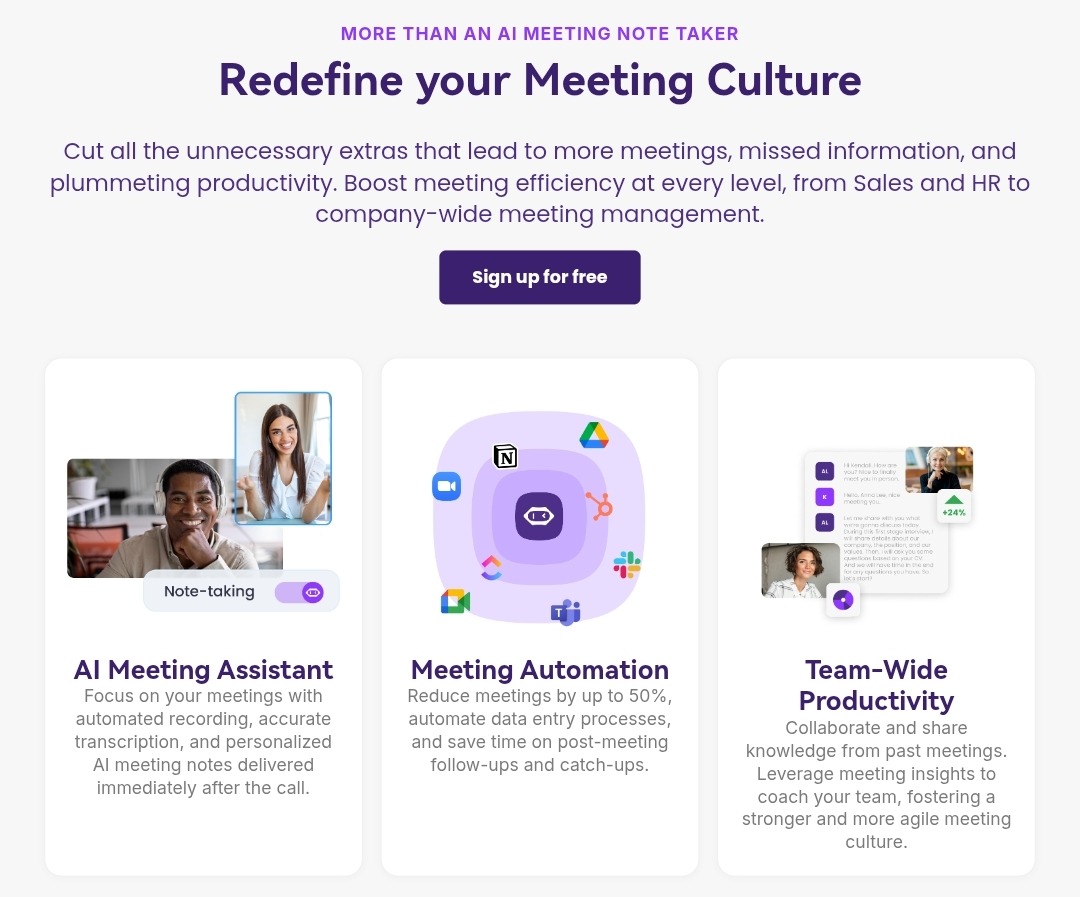
MeetGeek is an AI meeting assistant that records, transcribes and summarises calls, then pushes what came out of them into the tools a team already uses. Where Granola stops at a polished note, MeetGeek keeps the asset: the audio, the video on higher plans, the searchable archive, and the automations that fire afterwards.
It joins as a notetaker on Zoom, Google Meet and Microsoft Teams, and it also records without a bot through the browser and desktop app, which is the closest thing on this list to how Granola feels day to day.
Pros:
- Records audio and video, so a call can be replayed, clipped or handed over rather than only summarised
- Transcribes 100+ languages with automatic language detection on every plan, against Granola's 10 on desktop
- Voice Agents on every plan that can run routine calls such as screening interviews and collect the answers
- 20+ native integrations, plus Zapier, Make and n8n, against Granola's 6 native integrations
- API and MCP access on every plan, including the free one, plus webhooks
- Engagement analytics, sentiment and speaker coaching on all plans, which Granola does not offer
- SOC 2 Type II, GDPR and CCPA, with a HIPAA BAA available and EU or US data residency on Enterprise
Cons:
- More surface area than a pure note taker, so a team that only wants tidy notes will not use most of it
- HD video recording starts on Business, not on the free or Pro plans
Pricing:
The free Basic plan covers 3 hours of transcription a month, 100+ languages, 3 months of transcript storage and 1 month of audio storage. Pro is $9.99 per user per month billed annually, or $15.99 monthly, and raises that to 20 hours. Business is $17 billed annually, or $27 monthly, and removes the transcription cap. Recording length is capped per meeting at 2 hours on Basic and Pro, 3 hours on Business and 4 hours on Enterprise.
If you want the recording as well as the notes, the free plan covers 3 hours a month with no card.
2. Otter (Best for Solo Users and Small Teams on a Budget)

Otter turns live conversations into searchable, speaker-tagged transcripts and is the cheapest paid plan in this list. It suits freelancers, students, educators and small teams who want a reliable transcript without setting up a workflow around it.
Pros:
- Real-time transcription with speaker identification and timestamps
- Works with Zoom, Google Meet and Microsoft Teams
- Transcripts and summaries can be searched and edited collaboratively
- The lowest entry price here at $8.33 per user per month on annual billing
Cons:
- The free plan is the tightest on this list: 300 minutes a month, 30 minutes per conversation, and only your 25 most recent conversations
- Pro still caps meetings at 90 minutes, which cuts a long workshop in half
- No video storage, so like Granola you get the words but not the call
- Multilingual coverage is narrow next to MeetGeek's 100+ languages
- Thin on workflow automation and meeting intelligence
Pricing:
Basic is free. Pro is $8.33 per user per month billed annually, or $16.99 monthly, with 1,200 recording minutes. Business is $19.99 billed annually, or $30 monthly, and lifts the per-meeting ceiling to 4 hours.
3. Avoma (Best for Sales and Customer Success Teams)
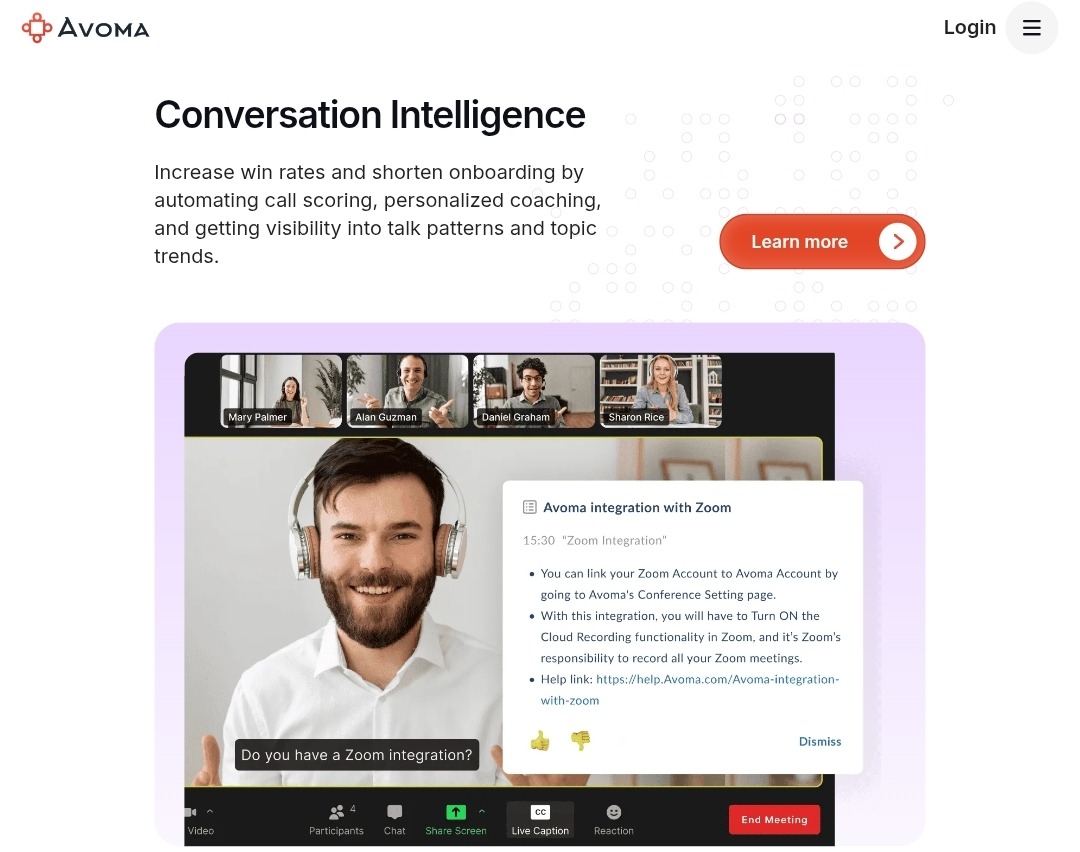
Avoma is a meeting assistant built around revenue conversations rather than notes. It records, transcribes and scores calls, then feeds the result into a CRM so a manager can coach against it. This is the entry on the list with the most distance from Granola, and that is the point: it answers a different question.
Pros:
- Records, transcribes and summarises with search across the whole call library
- Deep CRM and sales engagement integrations
- Call and meeting analytics built for coaching, not just recall
Cons:
- No free plan at all, only a 14-day trial
- Priced per recorder seat, and Conversation Intelligence and Revenue Intelligence are separate add-ons at $29 to $35 per seat
- Enterprise is annual only with a 10-seat minimum
- Built for sales and customer success, so the analytics are wasted on other teams
Pricing:
An unrestricted 14-day trial of the Organization plan with every add-on enabled and no credit card. Startup is $19 per recorder seat per month billed annually, or $29 monthly. Organization is $29 annually, or $39 monthly. Enterprise is $39, billed annually only.
4. Fathom (Best for Fast Recaps and Unlimited Free Recording)
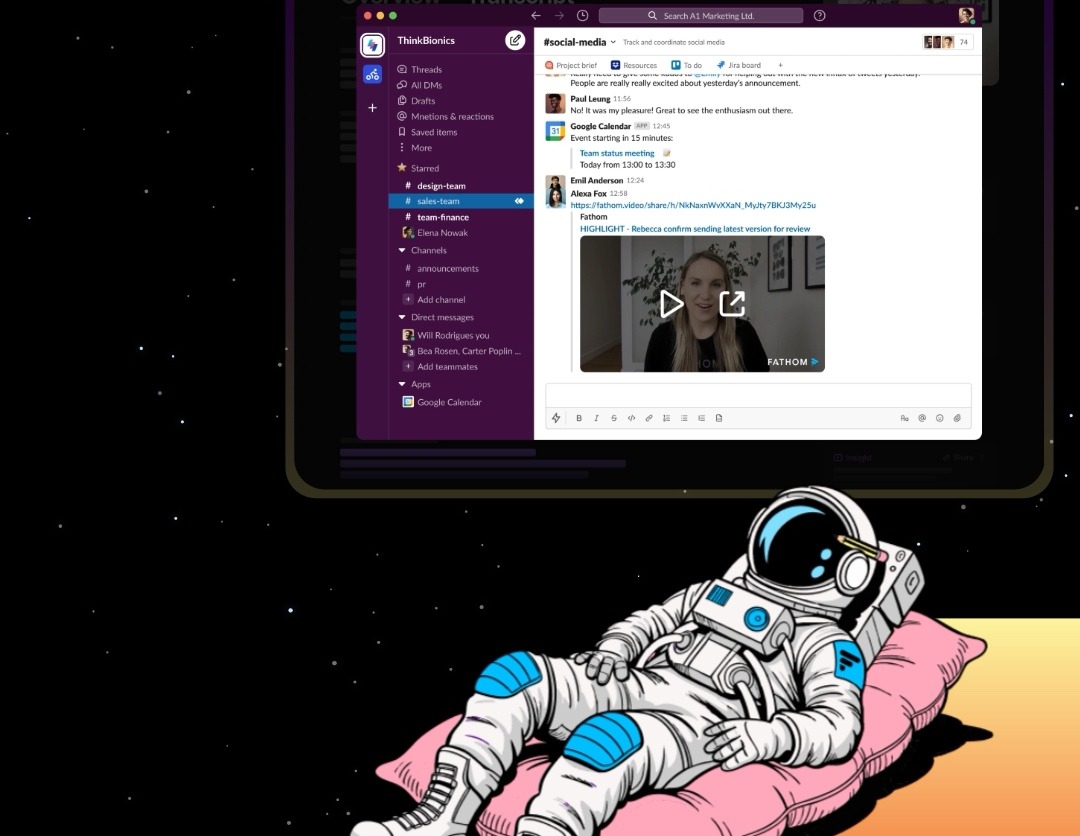
Fathom records calls on Google Meet, Zoom and Microsoft Teams and turns them into clean summaries with highlights and timestamps. Its free plan is the most generous here on raw volume, which makes it the natural first stop for someone leaving Granola who mainly wants the recording back.
Pros:
- Unlimited recordings and transcripts on the free plan, with unlimited audio, video and transcript storage across every tier
- Fast, readable summaries that remove the need to rewatch
- Offers bot-free capture as well as a bot, which keeps some of the Granola feel
- Desktop apps on Mac and Windows, plus a Chrome extension
Cons:
- Bot-free capture is a beta feature on Mac only, so Windows users still get the bot
- The free plan limits you to 5 advanced AI summaries a month, and advanced action items to your first 5 calls
- 38 languages, well short of MeetGeek's 100+
- Lighter on meeting analytics and shared team workspaces
- 20+ native integrations, against MeetGeek's 28
Pricing:
Free covers unlimited recordings and transcriptions. Premium is $16 per user per month billed annually, or $20 monthly. Team is $15 annually, or $19 monthly. Business is $25 annually, or $34 monthly.
5. tl;dv (Best for Sharing Clips Instead of Summaries)
tl;dv is built for teams whose meeting output is a video moment rather than a paragraph: a demo objection, a customer quote, a walkthrough step. It records video and audio and gives you timestamps, clips and a searchable library on top.
Pros:
- Tag a moment and share just that section instead of the whole call
- Works across Microsoft Teams, Zoom and Google Meet
- Connects to HubSpot and Pipedrive so transcripts attach to the right contact
- Unlimited video recordings on the free plan, with transcription in 30+ languages
Cons:
- The free plan caps AI notes at 10 meetings and Ask AI at 10 queries
- Strong on capture and highlights, thinner once you want workflows built on top
- Priced in euros, which adds an exchange-rate step for teams budgeting in dollars
Pricing:
Free covers unlimited recordings and transcription in 30+ languages. Pro is €18 per seat per month and Business is €29 per seat per month, both billed annually. Enterprise is custom.
Three More Names Worth Knowing
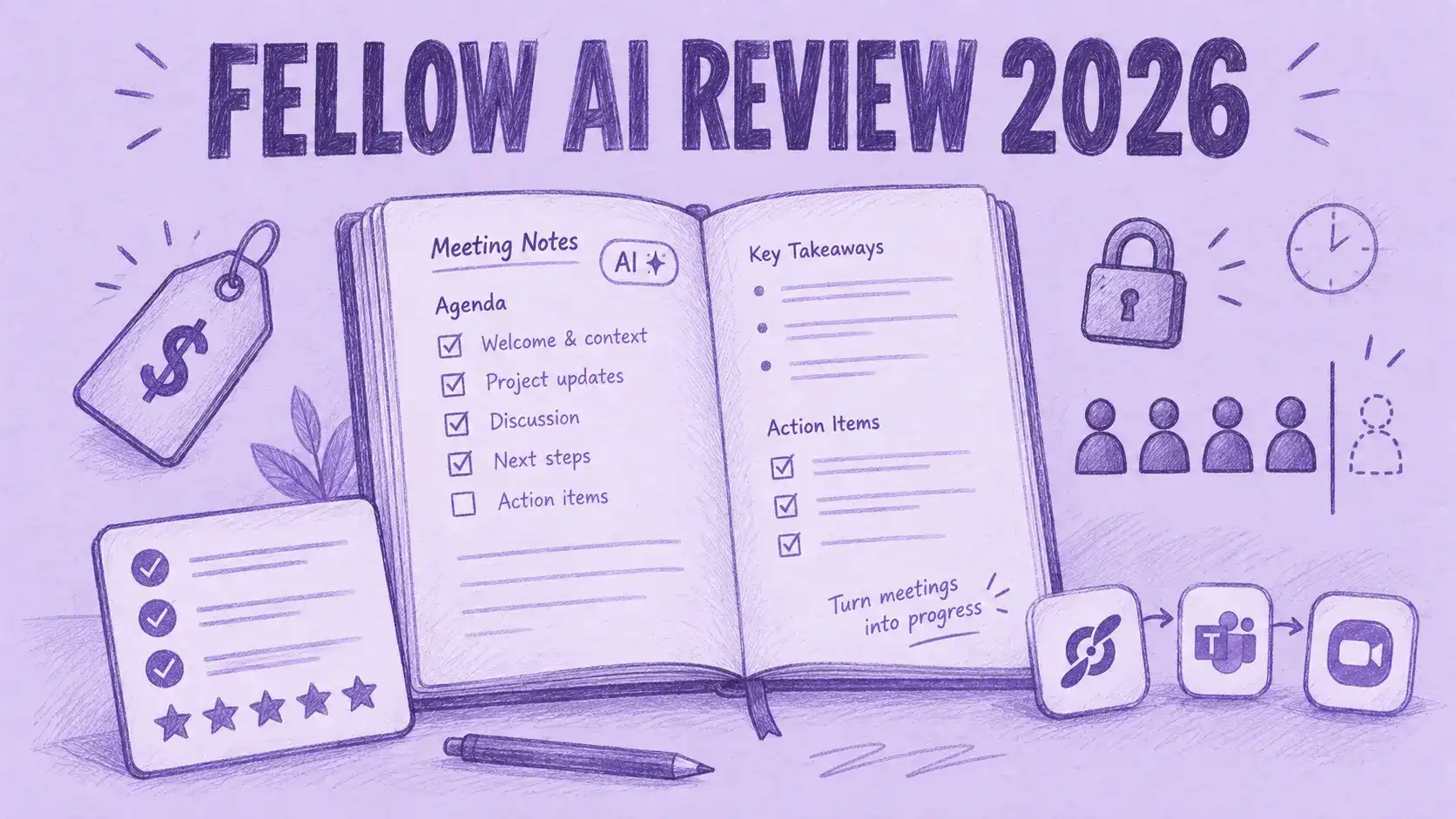
Three other tools come up constantly in Granola threads and are worth a look before you commit. Jamie is the closest match in spirit, bot-free and privacy-first, with notes and transcripts in 99+ languages and a free tier capped at 10 meetings a month at 30 minutes each. Circleback captures what is shown on screen as well as what is said. Fellow is built around meeting agendas rather than notes, so it fits teams that already run structured recurring meetings.
What Users Actually Say About Granola
Granola holds 4.7 out of 5 on G2 across 34 reviews as of July 2026, which is a strong score and worth saying plainly. The complaints that do show up cluster tightly, and they are not about the writing quality.
What people like:
- "No awkward 'there's a bot in this call' energy." G2 review, 2026. This is the reason people pick it and the reason they stay.
- "The summaries it produces are actually good, not just a raw transcript dump." G2 review, 2026.
- "Biggest benefit over gong imo is you can interact with it live." A seller in r/techsales, 2026, on asking Granola mid-call what to probe next.
What frustrates them:
- "It only produces notes for ~60% of my calls." A founder in r/ArtificialInteligence, 2026.
- "There was no error message. No alert." Same thread, from a user describing two calls that were never captured. This is the cost of a tool that leaves no trace in the meeting: when it fails, nothing tells you until the call is over.
- "It would be nice if it can provide an entire transcript." Executive assistant, G2 review, 2026.
The pattern is consistent. People praise the notes and the quiet, and they get burned by having no recording to fall back on when capture goes wrong. A tool that records leaves you something to recover from. A tool that only transcribes does not.
Why Teams Leave Granola
Granola is not a weak product, and most people who move on are not unhappy with the notes. They hit a limit the design was never meant to cover.
- No recording, only a transcript. Granola transcribes in real time and stores transcripts and notes only. Audio and video are never saved. Teams that onboard with recordings, review tone on sales calls, or need to send a clip to someone who missed the meeting hit this on day one.
- The free plan forgets after 30 days. Basic gives a rolling 30-day window. Older notes are stored but stay locked until you upgrade, so your searchable history is always a month deep.
- Monthly billing only. Granola sells no annual plans. Every other tool here discounts an annual commitment by 20% to 50%, and on a team budget that gap compounds every renewal.
- 10 languages on desktop. Granola covers 10 languages on macOS and Windows and 17 once you count mobile-only additions. For a team spread across more markets than that, it is a ceiling rather than a preference.
- Not currently HIPAA compliant. Granola's own documentation states this, with no published timeline. It is SOC 2 Type 2 certified and GDPR compliant, which is enough for most teams and not enough for some.
- Automation stops halfway. A Zapier folder trigger fires when a note lands in a chosen folder, but the API is poll-only and webhooks are still on the roadmap.
Granola at a Glance
Everything below comes from Granola's own pricing page and help centre, checked on July 31, 2026.
| Question | Granola |
|---|---|
| Free plan | Basic, $0. Rolling 30-day window of note access. Older notes stay stored but stay locked until you upgrade. |
| Paid plans | Business $14 per user per month. Enterprise $35 per user per month. |
| Billing | Monthly only. Granola sells no annual plans. |
| Languages | 10 on macOS and Windows, 17 once mobile-only additions are counted. Desktop lets you switch language mid-meeting, mobile picks one language per meeting. |
| Platforms | Desktop app on macOS 13 or above and Windows, plus iPhone, Android and Apple Watch. It is not a browser tool. |
| Records video | No. Granola transcribes but does not capture video. |
| Saves audio files | No. Only the transcript and your notes are stored. |
| Chrome extension | The Granola Companion extension starts notes and posts meeting notices. It does not record, and you do not need it to take notes. |
| Sign-in and calendar | Google, and Microsoft or Outlook with read-only calendar access. |
| Bot in the call | None. Granola captures your device's audio locally, so nothing appears in the participant list. |
| In-person meetings | Yes, captured locally, though it needs a network connection to transcribe. |
| Native integrations | 6: Slack, Notion, Zapier, HubSpot, Attio and Affinity, from the Business plan. |
| Compliance | SOC 2 Type 2 and GDPR, with a DPA available. Not currently HIPAA compliant. |
Table last updated: July 31, 2026.
How to Choose Between Granola and the Alternatives
Granola is the right call if you want notes and nothing else, work in one or two languages, and never need to replay a call.
Three things change that answer. If you need the recording itself, Fathom is the cheapest way to get it back and MeetGeek is the one that does something with it afterwards. If a rolling 30 days of free history is too shallow, Fathom and tl;dv both keep more for nothing. If your team works across more than 10 languages, only MeetGeek's 100+ closes that gap outright.
Beyond that, match the tool to the artefact your team actually passes around. If it is a coaching note on a sales call, Avoma. If it is a 40-second clip, tl;dv. If it is a task, a CRM field or a Slack message that should appear without anyone doing it by hand, MeetGeek.
One last thing to check before the monthly total: the per-meeting cap. It is the limit people hit first and the one vendors publish least often.
If you want your meetings to produce work and not just a written record, MeetGeek is free to start.
Key Takeaways
- Granola stores transcripts and notes only. Audio and video are never saved, which is the single reason most teams start looking.
- It scores 4.7 out of 5 on G2 across 34 reviews. The recurring complaint is not note quality, it is calls that silently fail to capture with no recording to fall back on.
- Its free plan gives a rolling 30-day window, and it bills monthly with no annual option.
- Fathom has the most generous free tier here, with unlimited recordings and unlimited storage on every plan.
- Otter has the cheapest paid plan at $8.33 per user per month annually, but caps meetings at 90 minutes on Pro.
- MeetGeek is the pick when the meeting is supposed to trigger work afterwards: 100+ languages, 20+ native integrations, API and MCP on every plan, and a HIPAA BAA available.
- Check the per-meeting recording cap before you compare monthly prices.
Frequently Asked Questions
What Is Granola AI?
Granola is a bot-free AI note taker that runs as a desktop app on macOS and Windows. It captures your computer's audio during a call, transcribes it in real time, and turns your typed notes into a structured summary afterwards. It never joins the meeting as a participant, so nothing appears in the attendee list.
Does Granola Have a Chrome Extension?
Yes, but you do not need it to take notes. The Granola Companion extension starts notes and posts meeting notices to the people in the call, and it does not record anything. Granola's own documentation is clear that no browser extension or plugin is required for the core capture, which happens in the desktop app.
Does Granola Record Video?
No. Granola transcribes in real time and stores the transcript and your notes only. It does not capture video and it does not save audio files, so there is no recording to replay afterwards. MeetGeek records audio on paid plans and HD video from the Business plan.
Does Granola Work with Outlook?
Yes. Granola supports Microsoft and Outlook sign-in and reads your Outlook Calendar to detect upcoming meetings. The permissions it requests are read-only, so it cannot write to your calendar or to any other Microsoft 365 data.
Does Granola Work with Zoom, Google Meet and Microsoft Teams?
Yes, and it handles all three the same way. Granola captures your computer's audio locally instead of joining the call, so the meeting platform never sees it. That also means it works for in-person conversations and for platforms it has no integration with, though it needs a network connection to transcribe.
Where Are Granola AI Notes Stored?
Granola stores notes in your Granola account in the cloud and syncs them across the desktop and mobile apps. It is not a browser tool, so nothing is kept in browser storage, and the audio is never stored at all.
Is Granola Free to Use?
Yes, Granola has a free Basic plan. It gives a rolling 30-day window of note access, so anything older stays stored but locked until you upgrade. Business is $14 per user per month and Enterprise is $35, both billed monthly. Granola sells no annual plans.
How Many Languages Does Granola Support?
Granola transcribes 10 languages on macOS and Windows, and 17 once you count the mobile-only additions on iPhone and Android. Desktop lets you switch language mid-meeting, while mobile picks a single language per meeting based on what it detects. MeetGeek transcribes 100+ languages with automatic detection on every plan, including the free one.
Is Granola HIPAA Compliant?
No. Granola's documentation states that it is not currently HIPAA compliant, with no published timeline. It is SOC 2 Type 2 certified and GDPR compliant, with a DPA available. MeetGeek is SOC 2 Type II, GDPR and CCPA compliant and offers a HIPAA BAA.




.avif)