


An applicant tracking system (ATS) is recruiting software that collects applications from every job board in one place, moves candidates through defined hiring stages, and stores interview feedback against each profile. The best applicant tracking systems match how your team already hires, rather than forcing a heavier process on it.
TL;DR
- Workable: The best all-around applicant tracking system for most small and medium-sized businesses, thanks to its balance of usability, automation, and recruiting features.
- Greenhouse: Best for organizations with mature, structured hiring processes that need standardized interview scorecards and collaborative hiring workflows.
- Ashby: A great choice for fast-growing startups that want powerful recruiting analytics and detailed hiring reports.
- Lever: Best for companies that proactively build talent pipelines with strong ATS and CRM capabilities for candidate relationship management.
- Zoho Recruit: Ideal for small businesses, recruitment agencies, and teams already using the Zoho ecosystem.
- Breezy HR: The easiest ATS for small teams that hire occasionally and want a simple platform with a free plan.
- Teamtailor: Best for companies that prioritize employer branding and creating a standout candidate experience.
- Workday Recruiting: The right fit for large enterprises that already use Workday and need advanced workflows, compliance, and global hiring support.
Finding the best applicant tracking systems means finding software that matches how your team hires today and where it's headed next.
If you hire a handful of people each year, you probably don't need enterprise-grade approval workflows and advanced analytics. If you're filling dozens of roles across multiple departments, spreadsheets and manual follow-up emails quickly become impossible to manage.
In this guide, we'll look at the best ATS software for different hiring scenarios, explain what actually matters when comparing applicant tracking systems, and help you avoid paying for features you'll never use.
The biggest mistake companies make when choosing an ATS
Most buying guides compare applicant tracking systems by counting features, such as:
- Resume parsing.
- AI-generated job descriptions.
- Workflow automation.
- Interview scheduling.
- Reporting capabilities.
- Career site management.
The reality is that most ATS platforms already include these core capabilities. The better question is whether those features fit your recruitment process.
A small business hiring five people a year has very different needs than a company with dedicated recruiting teams managing dozens of active job postings across multiple departments. Before comparing software, think about your hiring volume, average time to hire, the hiring tasks you want to automate, and whether your recruiters rely on tools like LinkedIn Recruiter System Connect for candidate sourcing.
We've seen companies invest in enterprise platforms simply because they topped comparison lists, only to find that hiring managers avoided using them because every approval required multiple steps.
At the same time, companies that wait too long to adopt an ATS often struggle with scattered candidate data, inconsistent candidate screening, duplicate records, and manual updates throughout the recruitment process.
The problem isn't just attracting applicants. According to SHRM, more than half of recruiting leaders still struggle with talent shortages, making it even more important to identify and engage qualified candidates efficiently.
A good applicant tracking system should simplify recruiting, help hiring teams match candidates against clear job criteria, and eliminate unnecessary work. It shouldn't create more of it.
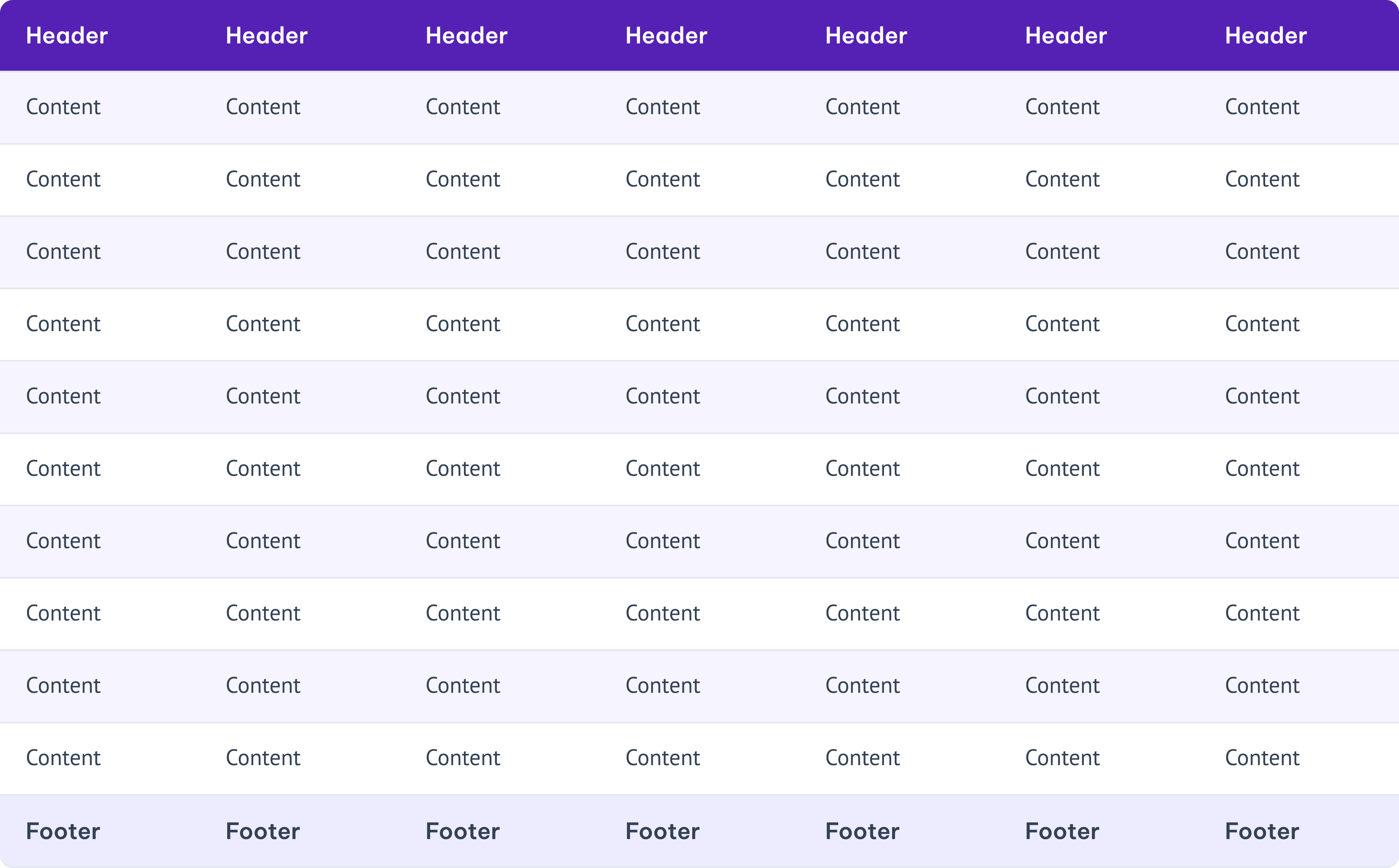
Best applicant tracking systems at a glance
Where MeetGeek fits into your hiring workflow
An applicant tracking system tells you what happened during the hiring process.
It rarely captures why a hiring decision was made.
That's where MeetGeek complements your ATS.
MeetGeek works as an AI note taker that automatically records interviews, transcribes conversations, generates interview summaries, extracts action items, and creates searchable meeting notes. Recruiters no longer have to rely on handwritten notes or memory when reviewing candidate interviews.
Using Zapier, you can automatically send interview summaries, candidate scorecards, and interview notes into ATS platforms like Greenhouse, Lever, Workable, Zoho Recruit, and thousands of other business apps. Instead of copying feedback into candidate profiles after every interview, recruiters can keep their applicant tracking software updated automatically while preserving the full interview context.
Our picks for the best applicant tracking systems
Here are the tools we think could help, and who each one is for:
1. Workable
Best for: Growing businesses hiring across multiple departments
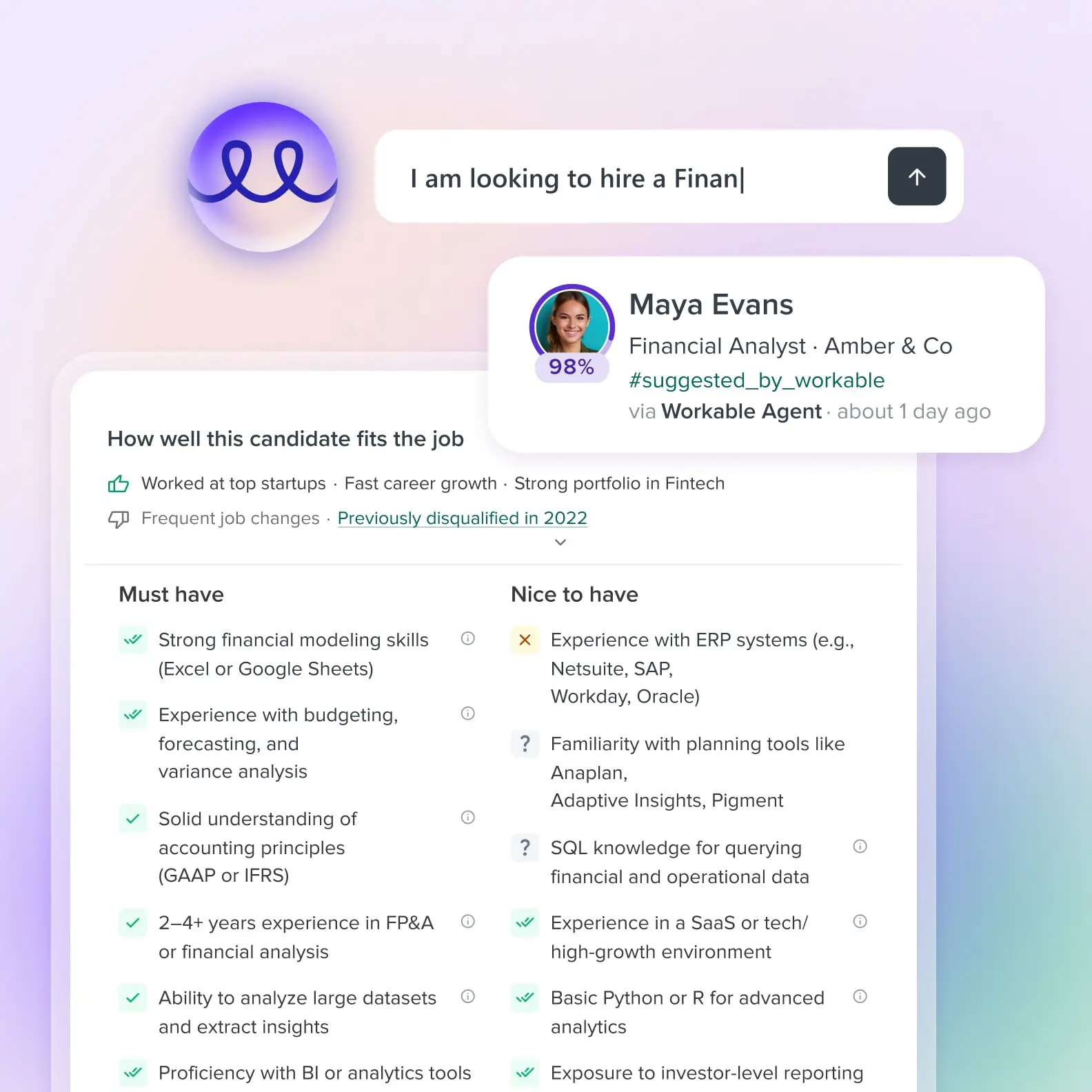
If we had to recommend one ATS to the average company, Workable would probably be it.
It covers the fundamentals exceptionally well. Recruiters can post jobs to multiple boards, distribute openings to major and international job boards, organize candidates, schedule interviews, and manage candidate communication from one place.
Its recruiting module includes resume parsing, candidate search, screening candidates, AI-generated job descriptions, interview scheduling, and custom reports that help recruiting teams understand what's affecting time to hire. Workable also makes it easy to manage active job postings across different hiring stages without jumping between multiple tools.
For most small and medium-sized businesses, it offers the best balance of usability and functionality. While there are more specialized ATS platforms available, Workable includes the key features most hiring teams need without overwhelming them with unnecessary complexity.
Pricing starts at $360/month, billed monthly.
2. Greenhouse
Best for: Companies with mature hiring processes
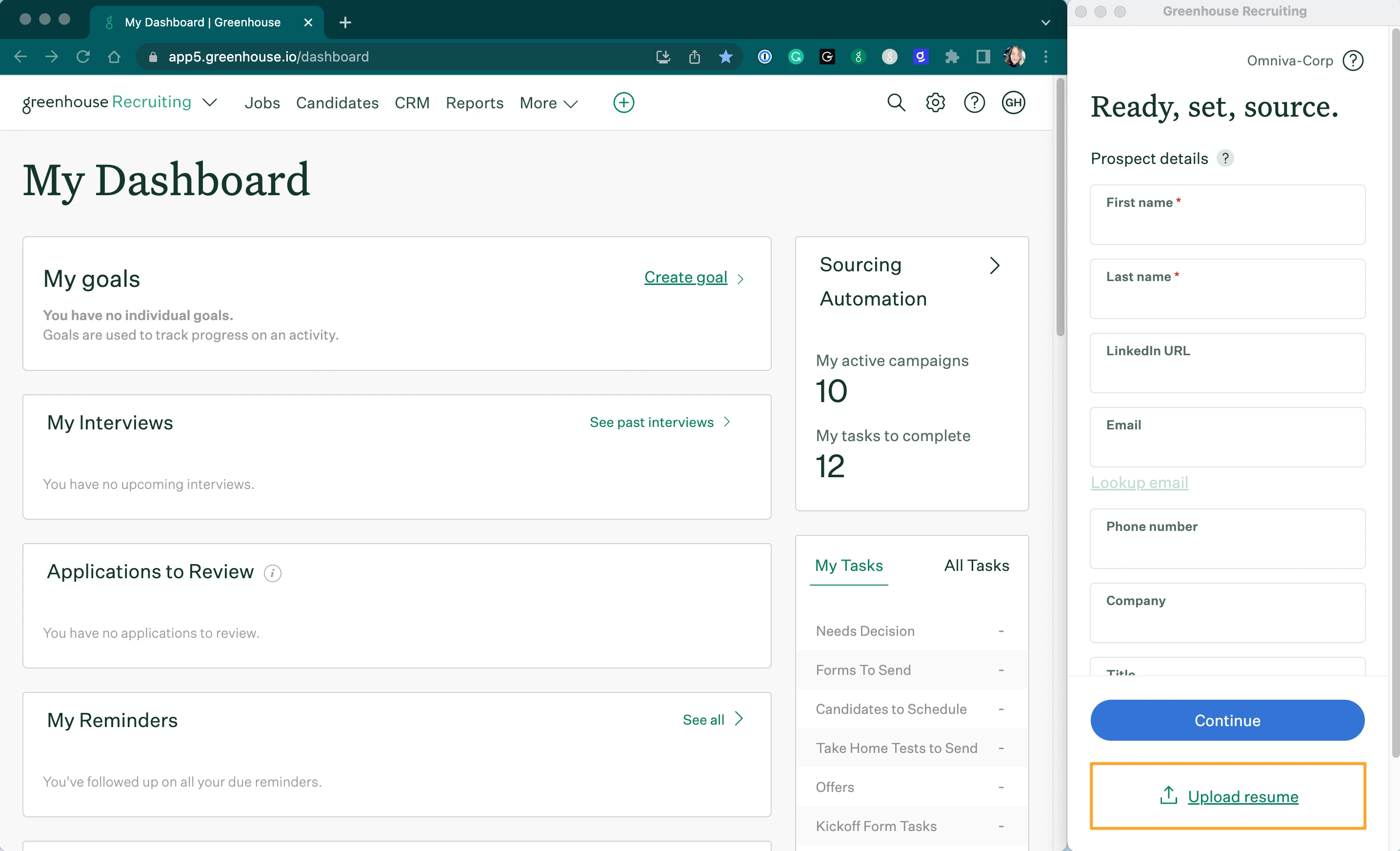
Greenhouse has earned its reputation as one of the top applicant tracking systems by focusing on structured hiring.
Rather than encouraging recruiters to make instinctive decisions, it helps hiring teams evaluate candidates using predefined job criteria, standardized interview scorecards, and collaborative hiring workflows. This creates a more consistent recruitment process while making it easier to compare qualified applicants fairly.
Greenhouse also includes collaboration tools, approval workflows, interview kits, and custom reports that give dedicated recruiting teams visibility into hiring performance and recruiting efficiency.
If your organization has multiple hiring managers involved in every decision, Greenhouse provides the structure needed to keep everyone aligned. Smaller companies with simpler hiring needs may find it more complex than necessary.
Pricing isn't public on their website, so you'll have to contact them.
3. Ashby
Best for: Fast-growing startups
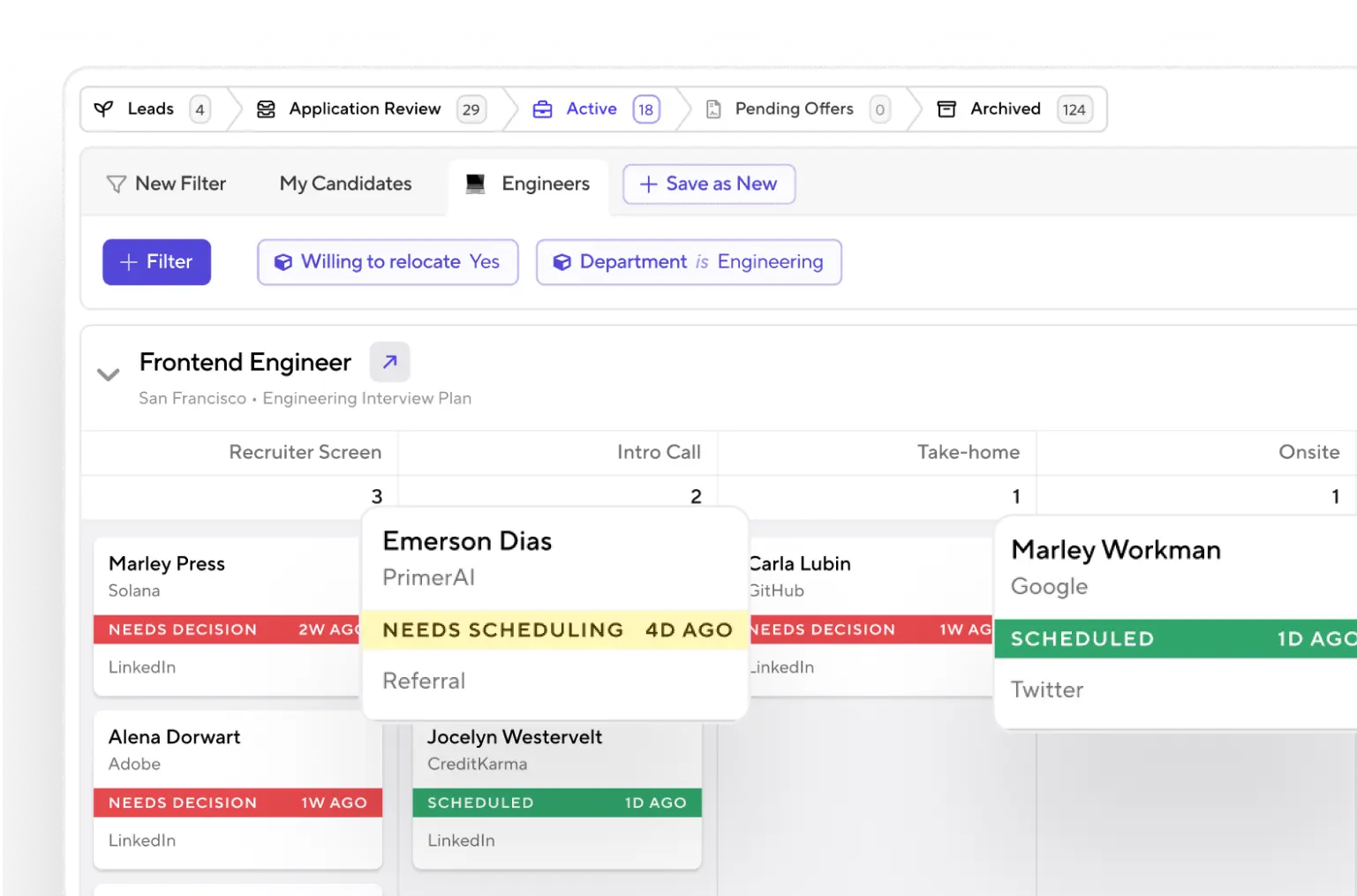
Ashby has built a strong reputation by combining applicant tracking with powerful recruiting analytics.
Recruiters can track candidates through every hiring stage while leadership gains visibility into hiring cycles, sourcing channels, recruiter performance, and hiring funnel conversion rates.
If your hiring strategy depends on improving recruiting efficiency through data, Ashby is one of the strongest options available.
It's especially popular among venture-backed startups that expect hiring volume to increase quickly.
Pricing starts at $300/month, billed monthly.
4. Lever
Best for: Companies that recruit proactively
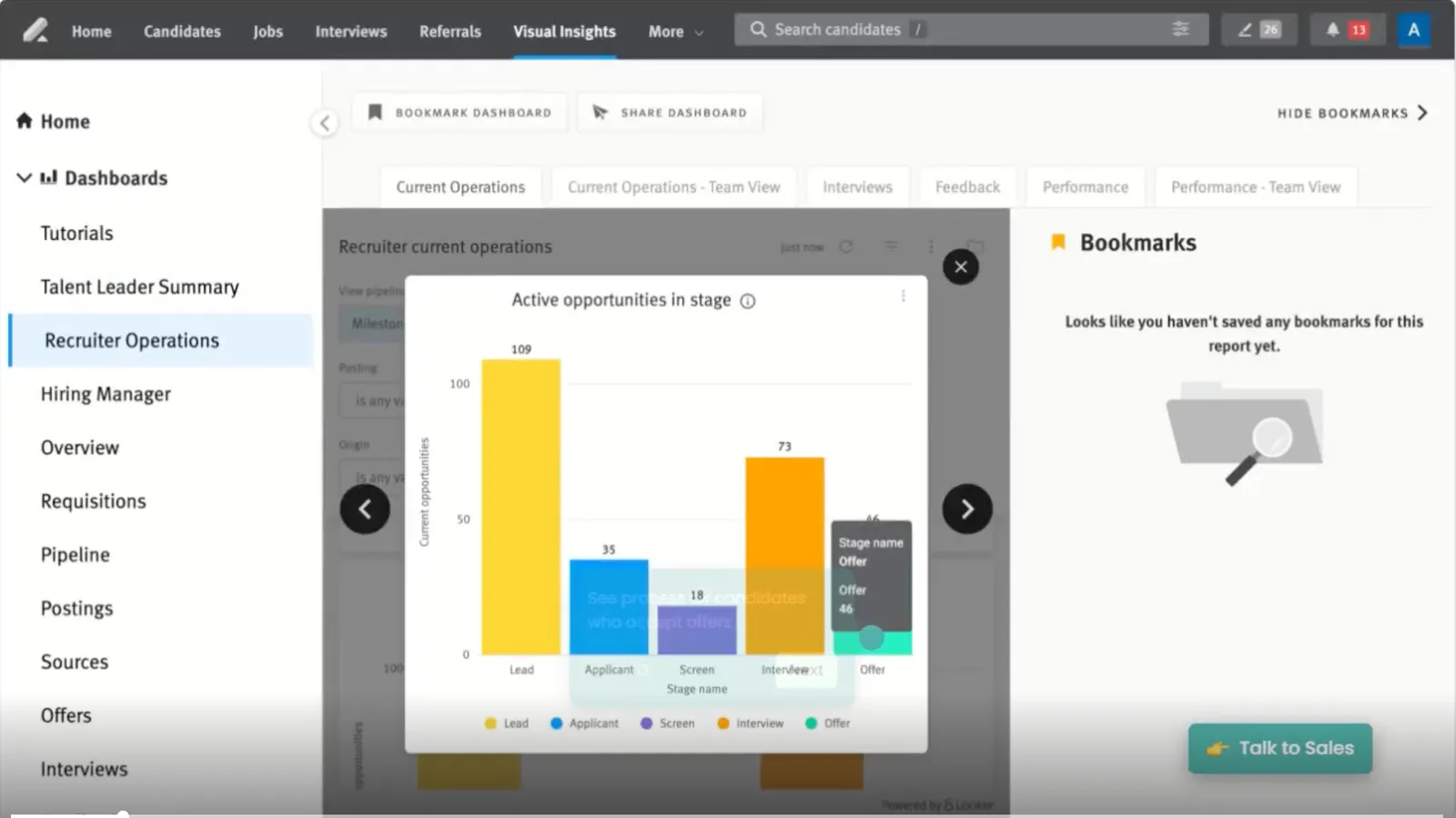
Lever stands out because it combines applicant tracking with candidate relationship management.
Instead of only helping recruiters manage active applicants, it makes it easy to build relationships with passive candidates, organize long-term talent pools, and reconnect with previous applicants when new opportunities become available.
Its ATS and CRM capabilities allow recruiters to track candidates throughout the hiring process while maintaining a searchable talent database. If your recruiting strategy depends on ongoing candidate engagement instead of simply filling open positions, Lever is one of the strongest options available.
Companies with dedicated talent acquisition teams generally benefit the most from Lever's recruiting workflows.
Lever's pricing is based on custom quotes.
5. Zoho Recruit
Best for: Small businesses and recruitment agencies
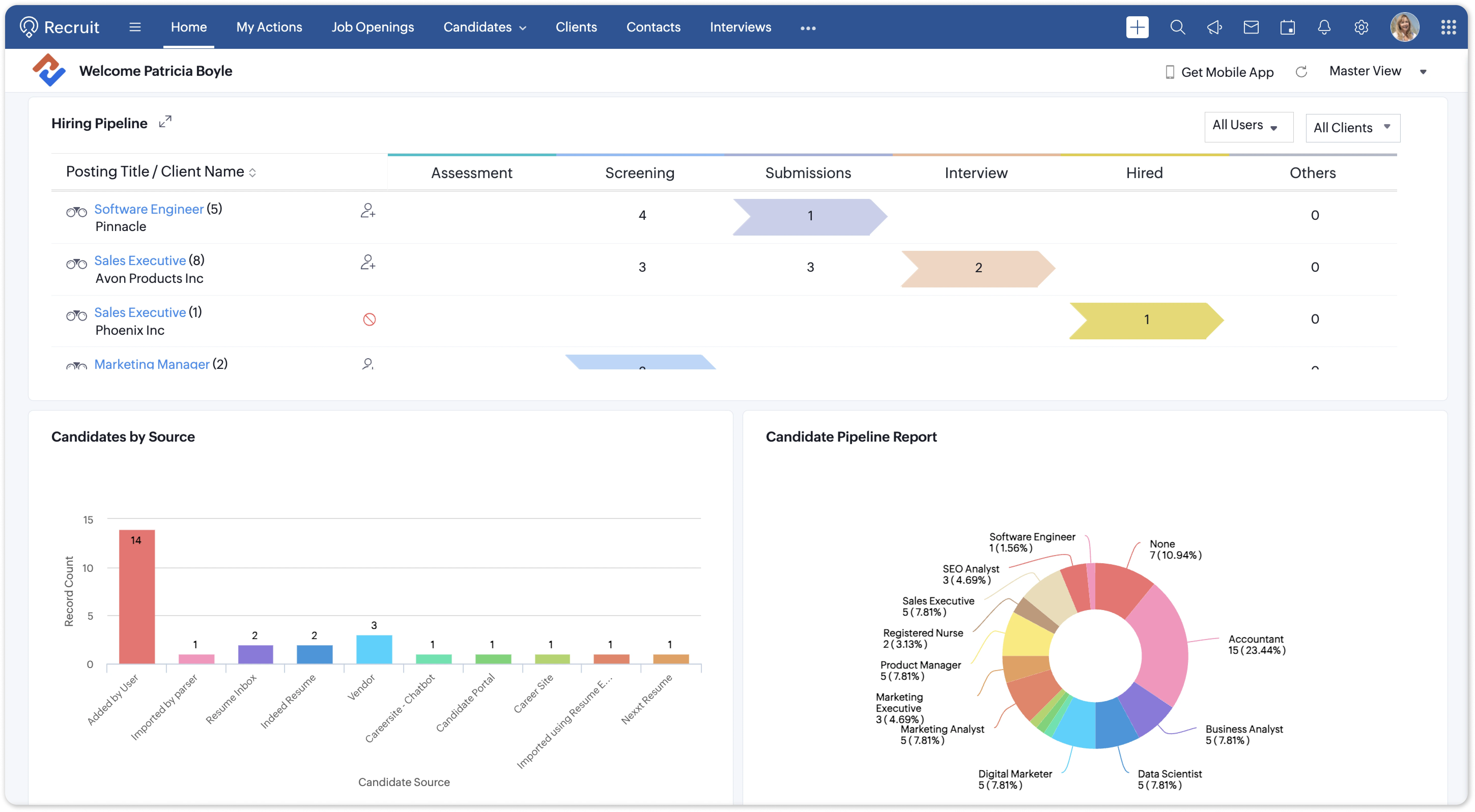
Zoho Recruit is one of the strongest choices for businesses already invested in the Zoho ecosystem.
Beyond applicant tracking, it includes recruiting CRM functionality, workflow automation, interview scheduling, resume parsing, candidate management, and integrations with the rest of Zoho's business applications.
Recruitment agencies and staffing firms particularly benefit from flexible job distribution, support for unlimited jobs on higher-tier plans, and integrations with LinkedIn Recruiter System that simplify sourcing and candidate management.
If your organization already relies on Zoho products, Recruit feels less like another standalone ATS and more like a natural extension of your existing workflow.
Zoho Recruit offers a free forever plan, and paid plans start at €30/recruiter/month, billed monthly.
6. Breezy HR
Best for: Small businesses hiring occasionally
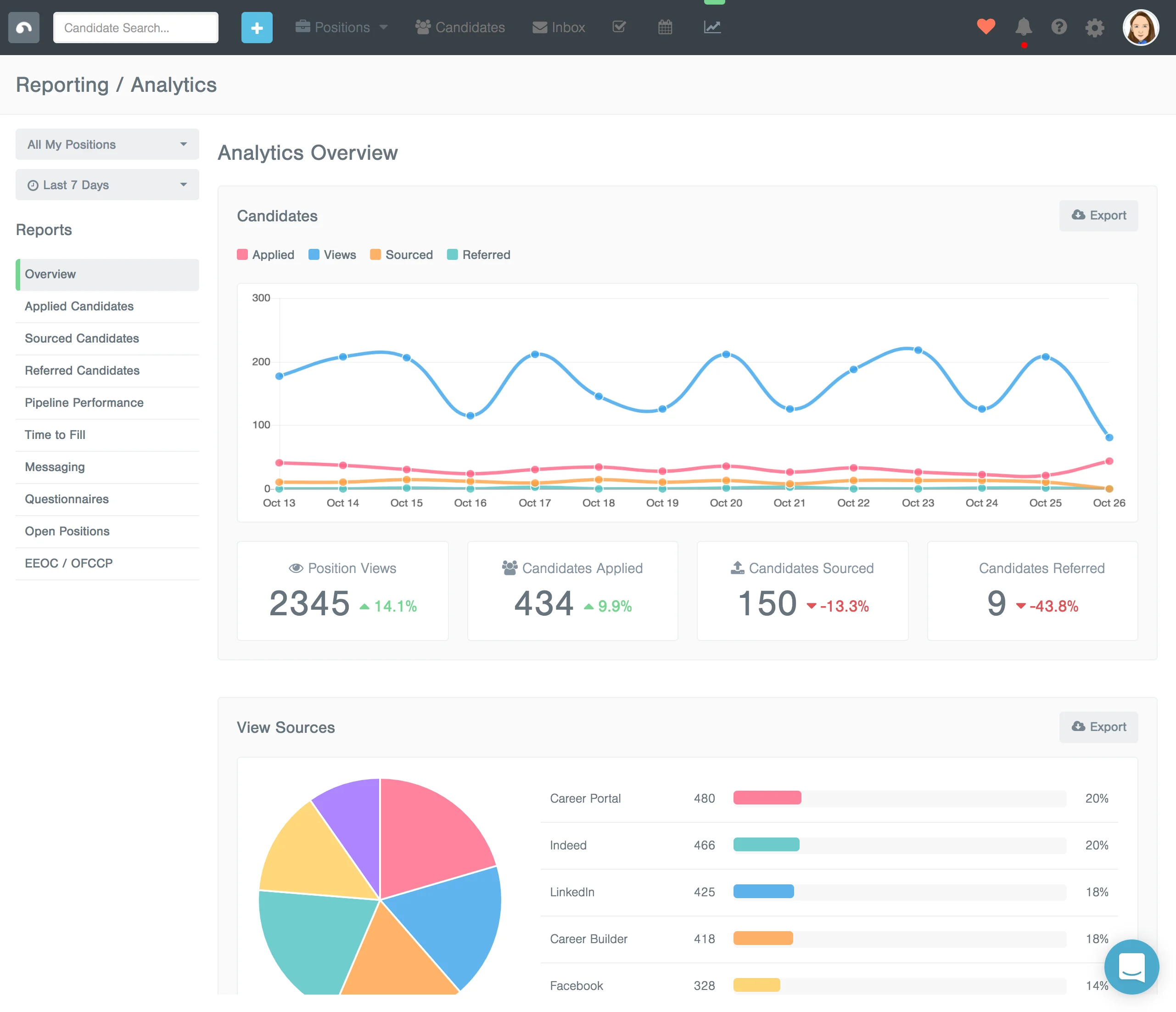
Not every company needs enterprise recruiting software.
Breezy HR focuses on simplicity.
The interface is easy to learn, hiring managers can move candidates through each hiring stage with minimal training, and the free plan makes it attractive for businesses with limited hiring needs.
If you're hiring fewer than twenty people annually, Breezy is often a better fit than more complex ATS platforms.
Breezy HR offers a free forever plan, and paid plans start at $189/month, billed monthly.
7. Teamtailor
Best for: Employer branding
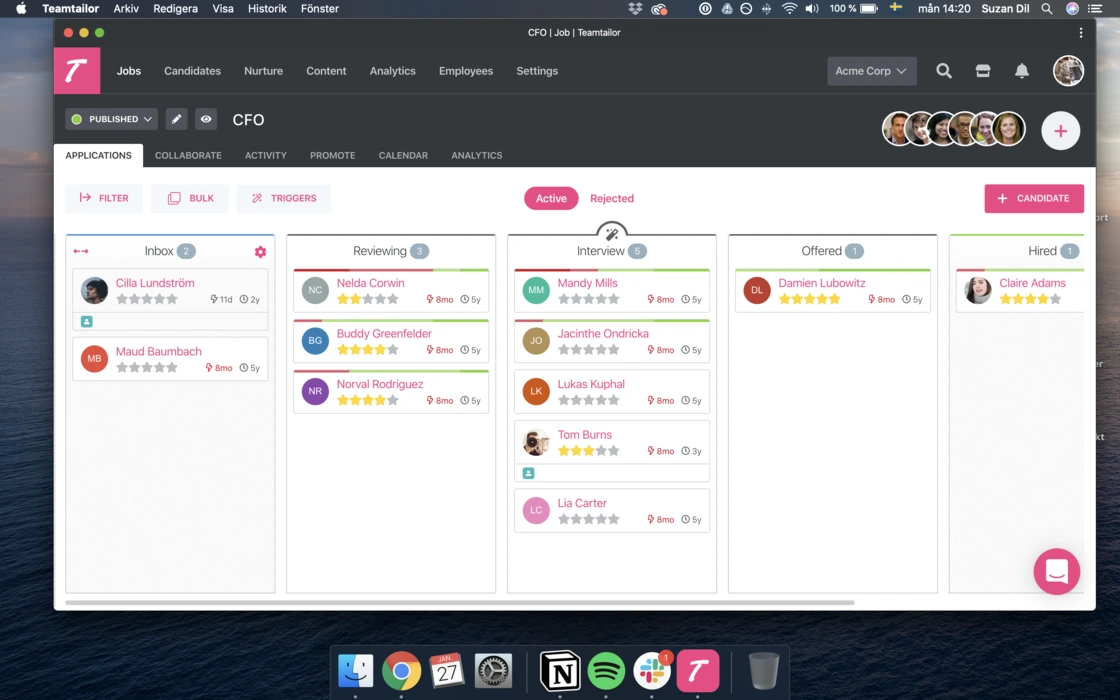
Some companies compete for talent as much as they compete for customers.
That's where Teamtailor is different from its competition.
Its branded career sites, candidate engagement tools, and strong candidate experience make it particularly appealing for companies investing heavily in employer branding.
If attracting top talent is one of your biggest hiring challenges, Teamtailor deserves a look.
Teamtailor's pricing is based on custom quotes.
8. Workday Recruiting
Best for: Large enterprises
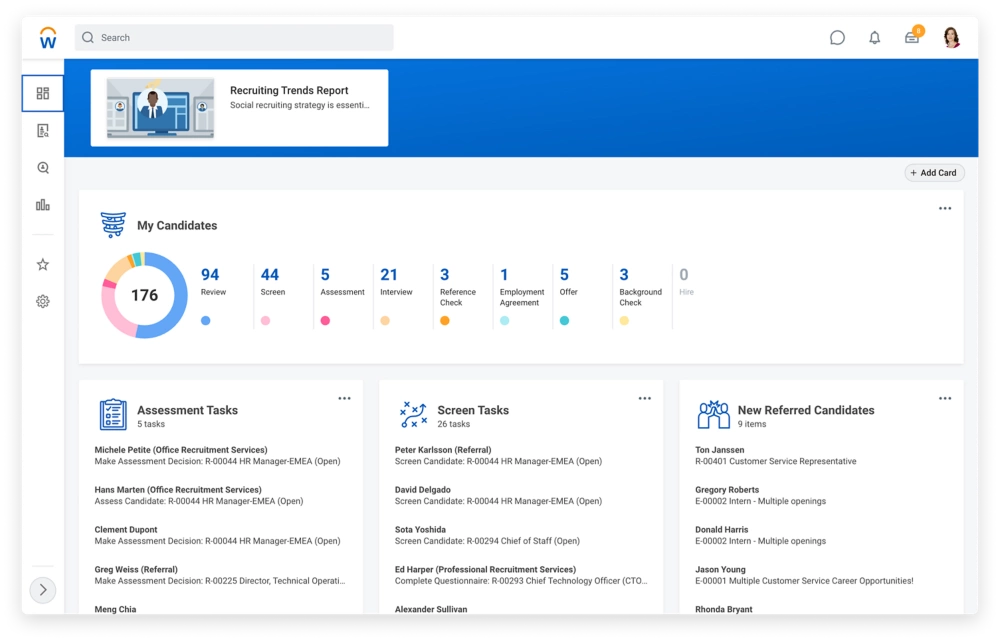
Workday Recruiting is designed for organizations with complex hiring needs, global hiring requirements, and existing Workday HR systems.
It handles approval workflows, compliance management, employee records, reporting and analytics, and recruiting at enterprise scale.
It's powerful software.
It's also far more than most small businesses need.
Unless your organization already uses Workday or plans to adopt its broader HR platform, there are usually simpler and more affordable alternatives.
Workday Recruiting is priced as an annual, per-employee-per-month (PEPM) subscription, but the rates aren't public; you have to contact sales.
Which ATS is right for you?
Instead of asking which platform has the most features, ask which one matches your hiring process.
Features that actually matter (and those that don't)
Most ATS platforms advertise dozens of advanced capabilities, but only a handful consistently improve recruiting outcomes.
According to SmartRecruiters' 2025 recruitment benchmarks, the global median time to hire is 38 days. That is the number the features you pay for have to move. Anything that doesn't take days out of that cycle, or work out of your recruiters' week, is a nice-to-have.
We'd prioritize these key features first:
- Fast job distribution to multiple job boards
- Reliable resume parsing
- Efficient screening built on structured HR screening questions
- Interview scheduling and calendar integrations
- Structured interview scorecards
- Candidate communication
- Collaboration tools for hiring managers
- Workflow automation that removes repetitive administrative work
- Reporting, custom reports, and analytics that reduce time to hire
- Tools that help recruiters match candidates consistently against predefined job criteria
Consistent interview questions to ask keep scorecards comparable across interviewers, which is what makes an ATS's scorecard data worth anything.
Features we'd treat as secondary include AI-generated job descriptions, highly customizable dashboards, and large integration libraries.
Those capabilities can be useful, but they won't improve hiring decisions on their own. The best applicant tracking software supports recruiters throughout the hiring process without adding unnecessary complexity.
Build a better hiring workflow with MeetGeek
The best applicant tracking system won't make hiring decisions for you, but it will give your team the structure to move candidates through the hiring process faster and more consistently.
Choose a platform that matches your hiring volume, recruiting workflow, and long-term goals instead of paying for features you'll never use.
Once you've found the right ATS, make it even more valuable by automatically capturing interview conversations, generating AI summaries, and syncing interview notes and scorecards directly to candidate profiles.
Built for HR and recruiting teams who run candidate interviews at volume.
Try MeetGeek for free to automate interview documentation and keep your ATS updated without the manual admin.
Key takeaways
- Choose an ATS based on your hiring complexity, not the length of its feature list.
- Workable is our top recommendation for most growing businesses.
- Greenhouse excels at structured hiring, while Ashby is ideal for data-driven recruiting teams.
- Small businesses often get better value from simpler tools like Breezy HR or Zoho Recruit.
- MeetGeek complements your ATS by automatically documenting interviews and syncing notes through Zapier.
Frequently asked questions
What is the best applicant tracking system for a small business?
For most small businesses, Workable and Breezy HR offer the best combination of affordability, ease of use, and hiring features. If you already use Zoho products, Zoho Recruit is also a strong choice.
Is a standalone ATS enough?
For many companies, yes. A standalone ATS handles job postings, applicant tracking, interview scheduling, and candidate management. Larger organizations may eventually want broader HR software that includes onboarding, payroll, benefits administration, and performance management.
What's the difference between an ATS and a recruitment CRM?
An ATS manages active applicants during the hiring process. A recruitment CRM focuses on building relationships with passive candidates and long-term talent pools before jobs become available. Some platforms, such as Lever, combine both capabilities.
At what point do you need an ATS?
Once you're hiring across multiple roles, using several job boards, or involving multiple hiring managers in recruiting decisions, an ATS becomes valuable. It helps organize candidates, reduce manual work, and create a more consistent hiring process.
Can an ATS improve hiring quality?
An ATS won't automatically help you hire better people. What it can do is support structured hiring by standardizing interview feedback, keeping candidate data organized, improving collaboration, and making it easier to compare qualified candidates objectively.
Can the best applicant tracking software reduce time to hire?
Yes, provided your hiring process is already well structured. The best applicant tracking software speeds up screening candidates, interview scheduling, candidate communication, and collaboration between recruiters and hiring managers. It also reduces repetitive administrative work so recruiting teams can spend more time evaluating qualified candidates instead of managing spreadsheets.



.avif)